
What Makes a Goal Short-Term or Long-Term?
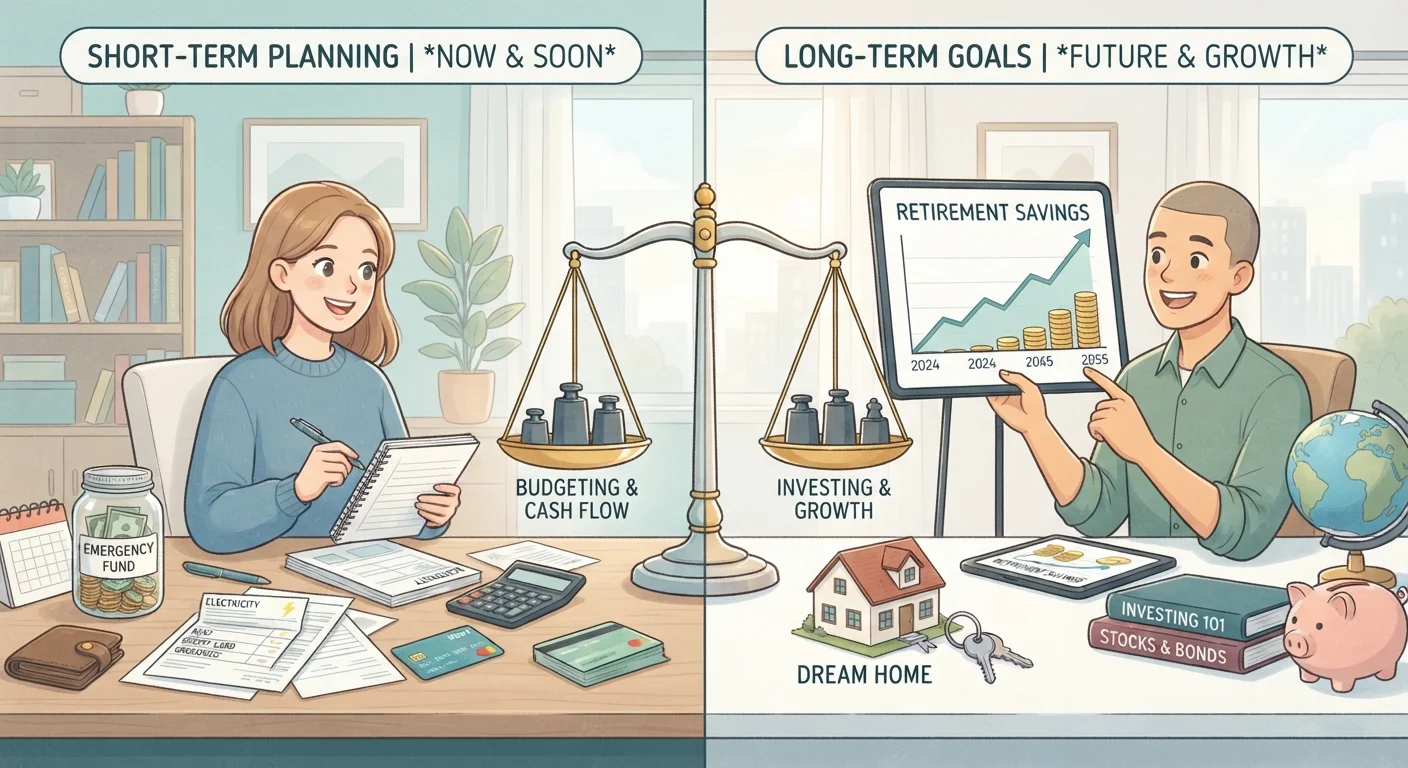
The distinction is mostly about time horizon and the type of financial behavior each goal demands. Short-term goals generally sit within a one-to-three-year window - things like paying off a credit card, building a three-month emergency fund, saving for a vacation, or covering an upcoming car expense. Long-term goals extend beyond five years and often involve significant accumulated capital: retirement savings, buying a home, funding a child's college education, or reaching financial independence.
The tension between them is real. Money directed toward paying down debt today is money not going into a retirement account. A dollar saved for next year's home down payment is a dollar not compounding in an index fund for 25 years. Neither decision is inherently wrong - but treating these goals as either-or tends to create problems in both directions. See how saving and investing differ for a clearer sense of which vehicles fit which time horizons.
Why You Can't Ignore Either Category
Neglecting short-term goals while chasing long-term targets leaves you financially fragile in the present. Without an emergency fund, a single unexpected expense - a medical bill, a job loss, a car breakdown - forces you to take on high-interest debt or liquidate investments at the wrong time. That kind of financial shock can set back long-term goals by years.
On the other side, ignoring long-term goals while obsessing over short-term stability is equally costly. Every year of delayed retirement contributions is a year of compound growth lost. For someone in their 30s, that opportunity cost can be significant over a multi-decade horizon. Compound growth rewards time more than almost any other variable - which is why even modest early contributions can outperform much larger ones made later.
| Criterion | Short-Term Goals | Long-Term Goals |
|---|---|---|
| Time horizon | Under 1-3 years | 5+ years (often decades) |
| Primary vehicle | Savings accounts, debt payoff | Retirement accounts, investments |
| Key risk of neglect | Financial fragility, rising debt | Lost compound growth, underfunded retirement |
| Flexibility | Highly adjustable month to month | Benefits from consistent, long-run commitment |
| Motivational feedback | Fast - visible progress in months | Slow - payoff measured in years or decades |
| Sequencing priority | Typically first when finances are unstable | Accelerated once short-term stability is established |
The practical takeaway: both categories need active attention, even if the emphasis shifts depending on your current financial position. A structured financial plan helps you assign proportions deliberately rather than by default.
How to Sequence Your Priorities Without Getting Stuck
Most financial planners suggest a tiered approach rather than a strict either-or choice. A commonly referenced sequence looks roughly like this:
- Cover basic expenses and avoid new high-interest debt. If you're spending more than you earn, no savings or investment strategy will outrun the damage.
- Build a starter emergency fund. Even $1,000 provides a buffer that prevents small emergencies from becoming large debt problems.
- Capture any employer retirement match. This is effectively free money - contributing at least enough to receive the full match is widely considered a priority before other investing.
- Aggressively pay down high-interest debt. Debt carrying interest rates above roughly 6-7% often costs more than most investments return, making payoff the higher-priority move. See how to choose between an emergency fund and debt payoff for a more detailed breakdown.
- Expand emergency savings and long-term contributions. Once high-rate debt is cleared, redirect those payments toward building a fuller three-to-six-month fund and increasing retirement contributions.
56%
Americans without 3 months of emergency savings
According to a 2023 Bankrate survey, more than half of U.S. adults lack sufficient emergency savings to cover three months of expenses.
$0
Employer match left uncaptured by some eligible workers
Research from Vanguard and others has consistently found that a meaningful share of 401(k)-eligible employees contribute below the match threshold, forfeiting employer contributions.
20-30 years
Compound growth advantage of starting retirement saving early
Financial education materials frequently illustrate that contributions made in one's 20s can outgrow contributions made in one's 40s by a factor of two or more, given typical long-run market assumptions.
This sequence isn't rigid - life stage, income, and specific debt types all affect it. But it gives most households a rational way to move forward without abandoning either goal category.
Practical Tools for Running Both Tracks Simultaneously
The most reliable way to fund both short- and long-term goals is automation - setting up direct deposits or automatic transfers that allocate money before discretionary spending can absorb it. Automating even a small retirement contribution and a monthly transfer to a dedicated savings account removes the willpower variable entirely.
Budgeting frameworks can also help allocate limited income across multiple goals. The 50/30/20 rule, for example, dedicates 20% of take-home pay to savings and debt repayment - a structure that creates room for both goal types without requiring constant active decision-making. Tracking fixed vs. variable expenses separately helps identify where spending flexibility actually exists.
Finally, set a calendar reminder to review your priorities every six months. Income changes, debt balances shift, and life circumstances evolve. What made sense as a priority last year may not be the right emphasis today. Regular review habits are what keep both short- and long-term goals progressing in parallel rather than drifting apart.
This article is for general informational and educational purposes only. It is not personalized financial advice. Please consult a qualified financial adviser or planner for guidance tailored to your individual circumstances.