What Problem Does a Sinking Fund Solve?
Most budget setbacks don't come from emergencies - they come from expenses you technically knew were coming but didn't plan for. Annual car registration. Holiday gifts in December. The family vacation you've been loosely talking about for months. These aren't surprises, but they still derail budgets because the money wasn't set aside in advance.
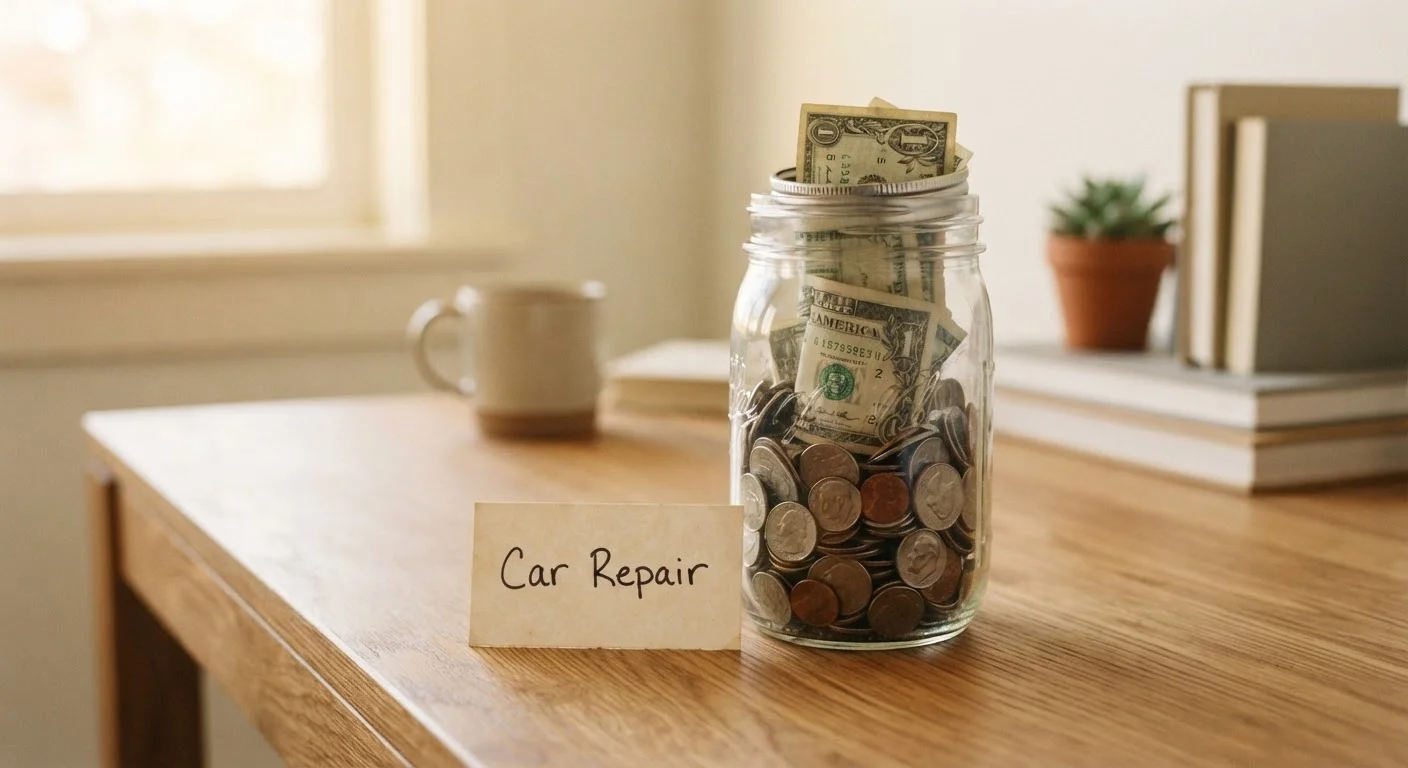
A sinking fund solves this by spreading the cost across time. Instead of facing a $900 car repair bill all at once, you contribute $75 a month starting nine months before you expect to need the work. When the expense arrives, the money is already there. Your budget absorbs a small, predictable amount each month rather than a jarring lump sum.
This approach is a cornerstone of practical budgeting basics because it eliminates the gap between how we actually spend money (in irregular bursts) and how most budgets are designed (around regular monthly categories).
34%
Americans with no savings for irregular expenses
A Federal Reserve report on the economic well-being of U.S. households found that a substantial share of adults would struggle to cover an unexpected expense of even a few hundred dollars, highlighting how common the gap between irregular costs and financial preparation remains.
$1,400+
Average annual car maintenance cost per vehicle
AAA estimates that the average American driver spends over $1,400 per year on vehicle maintenance and repairs - a largely predictable cost that a sinking fund can systematically address.
How Sinking Funds Differ From Emergency Funds
People sometimes conflate sinking funds with emergency funds, but the two serve distinct roles. An emergency fund is your financial safety net for genuinely unpredictable events - a layoff, an unexpected medical bill, or a sudden appliance failure. You don't know when or whether these events will happen, so the fund sits idle until needed.
A sinking fund, by contrast, is for expenses you have reasonable certainty about. You know your car insurance renews every six months. You know your child's school tuition is due in August. The event is predictable; only the monthly cash flow management is uncertain without a sinking fund.
Running both simultaneously is not only possible but recommended. The emergency fund guide covers how large that safety net should be, while sinking funds handle the known side of irregular expenses. If you're weighing which to prioritize first, our article on emergency fund vs. debt payoff explores that trade-off directly.
Setting Up a Sinking Fund in Practice
Getting started requires three decisions: what you're saving for, how much you need, and when you need it. From there, the monthly contribution is simple division.
- Name the expense. Be specific - "car maintenance," "holiday gifts," or "home insurance deductible" rather than a vague "savings" category.
- Estimate the total. Use past bills, online estimates, or known renewal amounts. Rounding up slightly gives you a buffer.
- Count the months. Divide the total by the months remaining. That's your monthly contribution.
- Open a dedicated account or label. Keeping sinking funds separate from your regular checking prevents accidental spending. Some banks let you create multiple savings buckets within one account.
- Automate the transfer. Scheduling an automatic monthly transfer removes the decision entirely. Automating your savings is one of the most reliable ways to stay consistent without relying on discipline alone.
Start With Your Most Predictable Expense
If you're new to sinking funds, pick the single recurring expense that most reliably caught you off guard last year. Fund just that one category for three months before adding more. A small, well-maintained fund outperforms an elaborate system you struggle to keep up with.
For readers also working on debt reduction, a sinking fund for foreseeable expenses - like annual insurance or a vehicle registration - can actually protect your debt payoff plan by preventing you from redirecting debt payments toward surprise bills. See our guide on building a budget around both savings and debt for a practical framework.
Common Sinking Fund Categories to Consider
There is no universal list, but certain categories consistently catch households off guard without a dedicated fund:
- Vehicle costs - registration, tires, routine maintenance, or a known repair
- Home repairs and upkeep - HVAC servicing, roof patching, appliance replacement
- Annual insurance premiums - paying annually often costs less than monthly installments
- Holidays and gifts - December is the same date every year, yet it still surprises budgets
- Medical or dental costs - scheduled procedures, deductibles, or eyewear expenses
- Travel and vacations - a known trip benefits enormously from months of gradual saving
You don't need a sinking fund for every possible category at once. Start with the one or two irregular expenses that most reliably disrupted your budget in the past year. Building the habit with a small, well-defined fund is more effective than an ambitious multi-bucket system you abandon. As the practice becomes routine, consider expanding to other categories. Consistent habits compound over time in the same way consistent contributions do.