Why the Label Matters
Debt is often talked about as if it's a single thing - a burden to eliminate as fast as possible. But financial educators have long distinguished between debt that works for you and debt that works against you. Understanding which category your obligations fall into helps you make smarter choices about repayment, saving, and borrowing in the future.
The core question isn't simply "do I owe money?" - it's "what am I getting in return, and at what cost?" That framing shifts debt from a moral failing into a financial tool, one that can be used well or poorly depending on the circumstances.
The "Good Debt" Label Has Limits
Calling something good debt doesn't mean it should be ignored or deprioritized indefinitely. Even low-interest debt affects your cash flow and borrowing capacity. Labeling debt as "good" is a starting point for evaluation - not a reason to stop thinking critically about it.
What Makes Debt "Good"
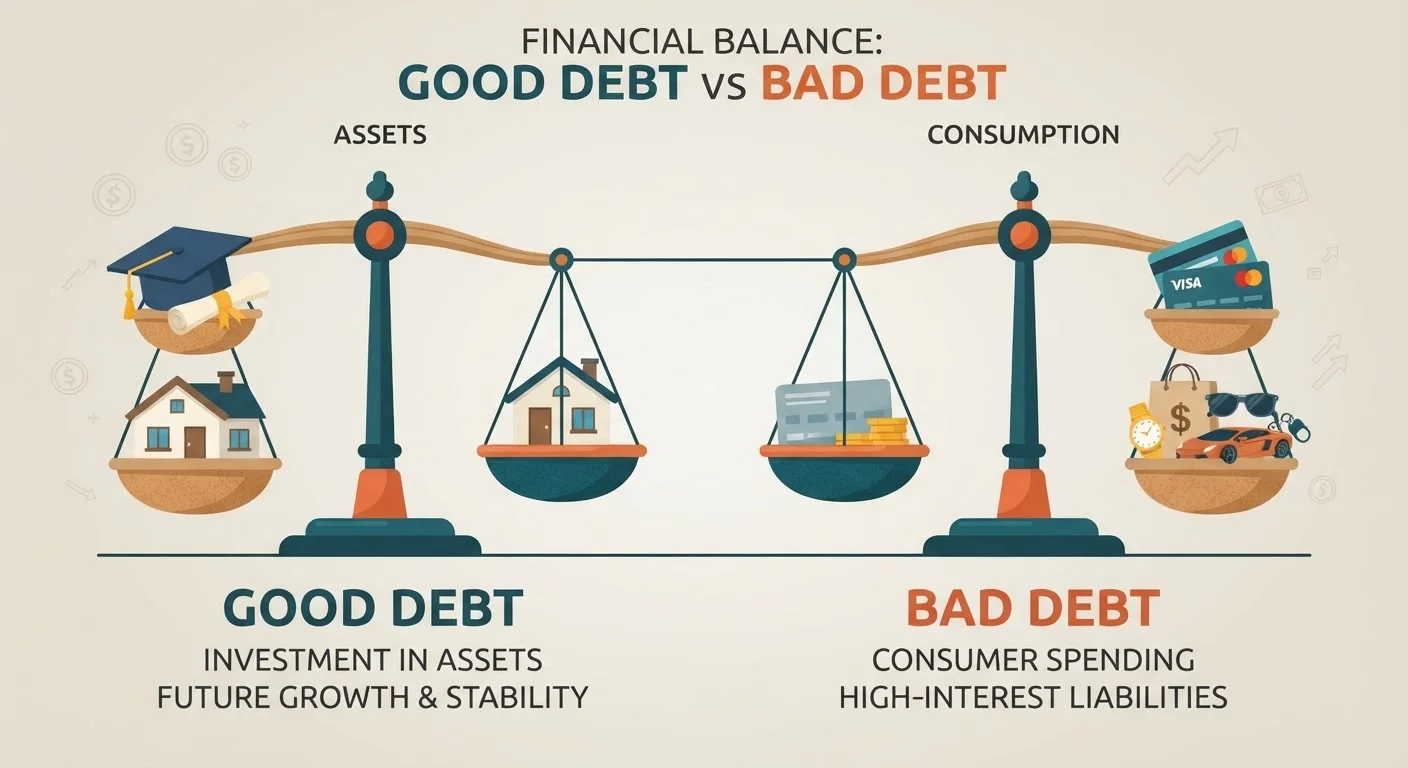
Good debt generally shares two characteristics: it finances something with lasting value, and the cost of borrowing is reasonable relative to the benefit received. The most commonly cited examples are mortgages, federal student loans, and small business loans.
A mortgage, for instance, helps you build equity in an asset that may appreciate over time. A student loan, in theory, increases your earning capacity over a career. A business loan can generate revenue that far exceeds its cost. None of these are guaranteed outcomes, but the underlying logic is sound: the debt is intended to produce more value than it consumes.
Interest rate plays a central role here. Low fixed-rate debt - especially when the financed asset appreciates or generates income - can be a rational financial decision rather than a problem to solve immediately. For a broader look at how lenders evaluate your total debt picture, see what the debt-to-income ratio actually measures.
~$11,000
Average U.S. household credit card balance
According to Federal Reserve data, average revolving credit card balances have grown steadily, reflecting ongoing reliance on high-interest consumer debt.
36%
Commonly recommended maximum debt-to-income ratio
Many financial planners and mortgage lenders use 36% as a guideline for total debt payments relative to gross monthly income.
~7%
Approximate threshold separating low and high-cost debt
Financial educators often suggest that debt below roughly 6-7% interest may be managed gradually, while higher-rate debt typically warrants faster payoff.
What Makes Debt "Bad"
Bad debt typically finances consumption - things that are used up or lose value quickly - often at high interest rates. Credit card balances carried month to month, payday loans, and financing for luxury items or depreciating goods are classic examples.
The math is straightforward: if you borrow at 20% APR to buy something that provides no financial return, you're paying a significant premium for a purchase that's already been consumed. Over time, that cost compounds and reduces your financial flexibility. Common myths about carrying a credit card balance explores some widely held misconceptions about how revolving balances affect your finances.
It's also worth noting that bad debt often signals a cash flow problem - borrowing to cover everyday expenses rather than investing in future value. That pattern is worth addressing at the budgeting level, not just the debt level.
The Gray Area: When Good Debt Goes Bad
The good/bad framework has real limits. A mortgage taken on at a payment that strains your monthly budget isn't straightforwardly "good" - it can crowd out savings, retirement contributions, and emergency reserves. A student loan for a credential with poor employment outcomes may not pay off the way traditional framing suggests.
Context matters enormously. The same debt instrument can be sensible for one person and damaging for another, depending on income, job stability, existing obligations, and financial goals. If you're weighing whether extra money should go toward debt payoff or savings, this guide on emergency fund vs. debt payoff walks through the tradeoffs. And if your debt is starting to reshape your financial life rather than support it, these warning signs of a structural debt problem are worth reviewing.
Before Taking On Any New Debt
Ask yourself three questions: What is the interest rate? Will this purchase build lasting value or income? Can I absorb this payment without cutting into savings or emergency reserves? If the answers point toward a high cost and no lasting return, that's a signal to pause before borrowing.
This article is for general informational and educational purposes only and does not constitute personalized financial or investment advice. Consult a licensed financial adviser for guidance specific to your situation.