
Why Low-Impact Movement Deserves More Credit
The phrase "low-impact" sometimes gets misread as "easy" or "not serious enough" - but those aren't synonyms. Low-impact simply means the exercise places reduced force on your joints, particularly the knees, hips, and ankles. That distinction matters enormously for people managing joint pain, recovering from injury, or beginning an exercise routine for the first time.
Research consistently shows that regular moderate-intensity aerobic exercise - regardless of impact level - delivers meaningful cardiovascular, metabolic, and mental health benefits. The movement doesn't have to be punishing to be productive. In fact, for many people, low-impact exercise is the most sustainable path to long-term physical activity - which is ultimately what health outcomes hinge on.
If you're curious about how different movement styles compare in broader terms, our overview of walking vs. running research offers useful context. Below, we've outlined five evidence-supported low-impact options and the types of exercisers likely to benefit most from each.
Swimming
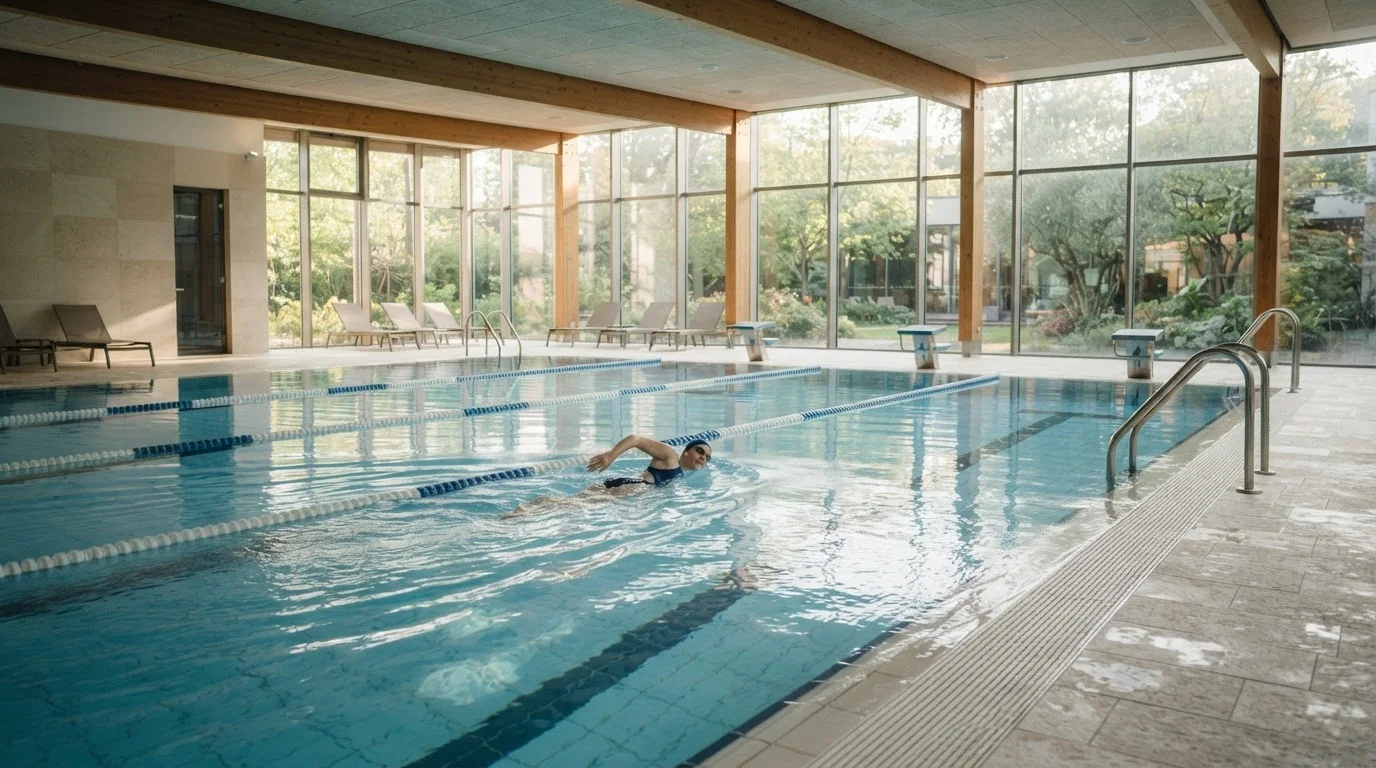
Swimming is widely regarded as one of the most complete low-impact exercises available. Water buoyancy supports up to 90% of body weight in chest-deep water, dramatically reducing the load on joints while still engaging most major muscle groups. Cardiovascular, muscular endurance, and flexibility benefits are all achievable through regular swimming.
Best for: People with arthritis, joint replacement recovery (with medical clearance), obesity-related joint stress, or anyone who finds land-based exercise painful. It's also an effective option for older adults seeking both aerobic fitness and muscle maintenance. Pool access and comfort in water are practical considerations.
Water buoyancy can support up to 90% of body weight, making swimming one of the most joint-friendly exercises available.
Cycling (Stationary or Outdoor)
Cycling - whether on a stationary bike or outdoors - offers strong cardiovascular conditioning with minimal impact on the knees and hips compared to running. The seated position distributes load effectively, and resistance can be adjusted to match a wide range of fitness levels. Stationary cycling removes the balance and traffic variables of road cycling, making it accessible to a broader population.
Best for: Individuals with knee pain or lower-limb injuries who want aerobic conditioning, older adults, and those building fitness progressively. Stationary bikes are also well-suited to people who prefer indoor, controlled environments. Proper seat height adjustment is important to avoid knee strain - a fitness professional or physical therapist can help set this up correctly.
Cycling delivers strong cardiovascular benefits while placing far less stress on the knees and hips than running.
Walking
Walking is low-impact by nature and requires no equipment, no gym membership, and no learning curve. It's accessible at nearly any fitness level and can be easily adjusted in duration, terrain, and pace. Research supports regular brisk walking as beneficial for cardiovascular health, blood sugar regulation, mood, and cognitive function.
Best for: Beginners, older adults, people managing chronic conditions, and anyone building a baseline of daily movement. Walking is also an excellent complement to more structured exercise. Our article on what counts as exercise explores how even routine walking contributes meaningfully to overall physical health. For adults over 50, see our guide to exercising after 50 for additional considerations.
Walking requires no equipment and no fitness baseline - and research backs its benefits for heart, metabolic, and mental health.
Yoga
Yoga combines gentle movement, controlled breathing, and sustained holds that improve flexibility, balance, and muscular strength - particularly in the core and stabilizing muscles. It also has a documented association with reduced stress and improved sleep quality, making it appealing beyond purely physical goals. Style matters: restorative and Hatha yoga are significantly gentler than power or hot yoga.
Best for: People managing stress, those looking to improve balance and mobility alongside general fitness, and individuals who benefit from a mind-body approach to movement. Yoga also complements other exercise forms well. For more on the physical qualities yoga targets, our piece on flexibility vs. mobility is a helpful companion read.
Yoga builds flexibility, balance, and core strength while offering documented benefits for stress and sleep quality.
Water Aerobics
Water aerobics uses the resistance of water to build muscular endurance and cardiovascular fitness without the joint loading of land-based group exercise. Classes typically involve rhythmic movement, arm exercises, and light equipment like foam dumbbells or pool noodles. The social, group-based format also supports accountability and enjoyment, which research links to better long-term exercise adherence.
Best for: Older adults, people with fibromyalgia or widespread joint pain, those who find swimming technically challenging, and individuals who respond well to group exercise settings. Water aerobics is often offered at community recreation centers and YMCAs, making it relatively accessible. If group vs. solo movement is a consideration for you, see our look at the tradeoffs of working out alone vs. with others.
Water aerobics uses water resistance to build fitness without joint stress - and the group format tends to improve long-term adherence.
Finding the Right Fit for Your Life
The best form of exercise is ultimately the one you'll return to consistently. Low-impact modalities give you a wide range of entry points - whether you're managing a chronic condition, rebuilding after time away, or simply looking for movement that feels good rather than punishing.
Start Where You Are, Not Where You Think You Should Be
Low-impact doesn't mean you need to start at a high volume or intensity. Even short, regular sessions - 15 to 20 minutes a few times a week - can establish a foundation that grows over time. The goal is consistency, not perfection. Tracking how you feel after sessions (energy, soreness, mood) can help you identify which modality suits you best and guide gradual progression.
If you're coming back from illness or injury, it's worth reading our guide to returning to exercise safely before increasing intensity. And if building a routine from scratch feels daunting, practical strategies for making movement a habit can help you start without overwhelm.
This article is for general informational purposes only and is not a substitute for personalized medical advice. Consult a qualified healthcare professional before starting any new exercise program, particularly if you have an existing health condition, injury, or are returning to activity after a prolonged break.