Why a Framework Beats a Meal Plan
Rigid meal plans fail most people - not because of a lack of willpower, but because life doesn't follow a script. A practical framework, by contrast, gives you a repeatable mental model you can apply to any meal, any cuisine, and any budget. If you're new to thinking about nutrition, the foundational concepts of macros, micros, and food variety are worth understanding first.
The plate method - popularized in part by dietary guidance from institutions like the USDA - is one of the most evidence-supported frameworks for achieving nutritional balance without calorie counting or complicated tracking. It translates nutritional science into a visual, intuitive structure that works at the dinner table, in a restaurant, or in a meal-prep context.
Flexibility Is Part of the Framework
The plate method is designed to flex, not to restrict. If a meal leans heavily in one direction - say, a pasta night - balancing it with a large side salad and a protein addition brings it into the framework without requiring a separate 'healthy' meal. Small consistent adjustments compound over time.
What Goes on a Balanced Plate
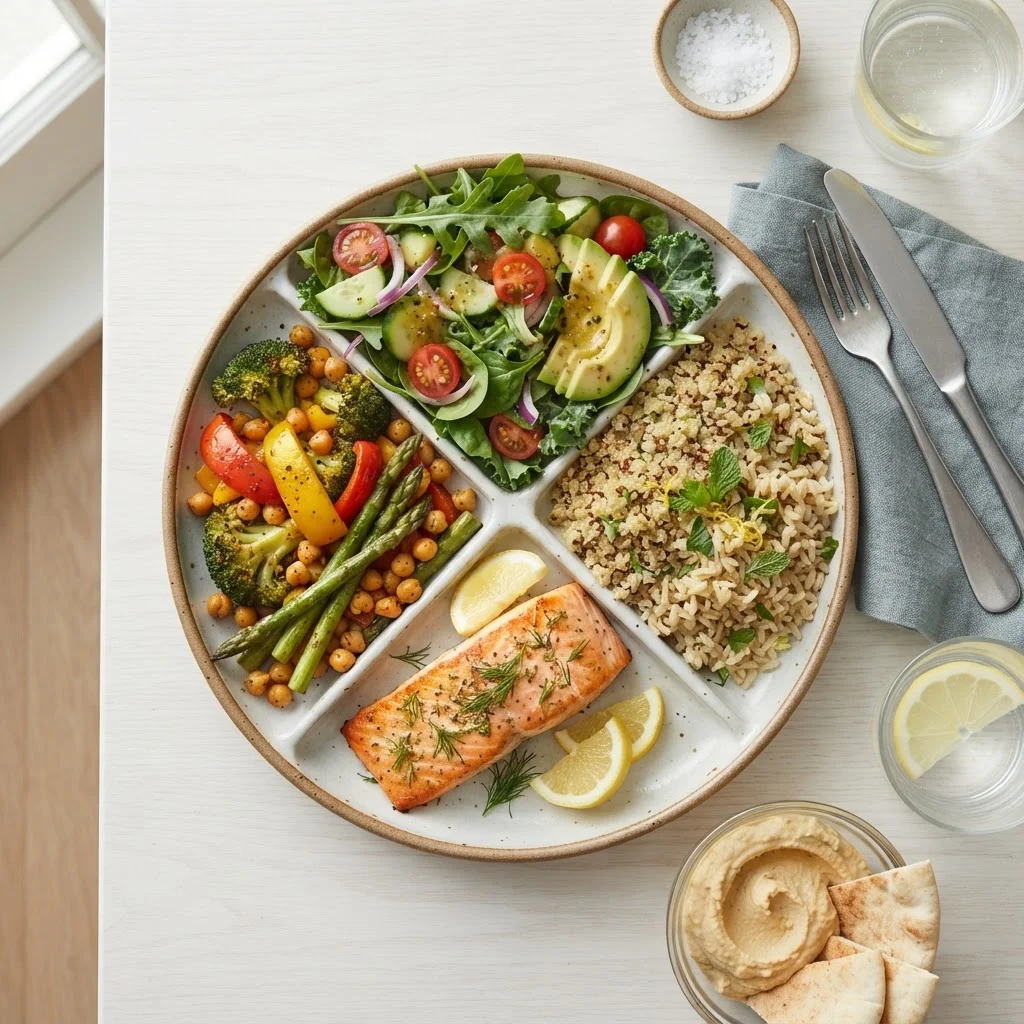
A balanced plate is typically divided into four functional zones, each serving a distinct nutritional purpose:
- Vegetables and fruit (roughly half the plate): This is the most impactful shift most people can make. Vegetables and fruit deliver fiber, potassium, folate, vitamin C, and a wide range of antioxidants. Variety in color is a practical proxy for nutrient diversity.
- Whole grains or starchy vegetables (roughly one quarter): Foods like brown rice, quinoa, oats, whole-wheat pasta, sweet potatoes, and legumes provide complex carbohydrates that support steady energy. They also contribute fiber and B vitamins that refined grains lack.
- Quality protein (roughly one quarter): Protein supports tissue repair, immune function, and satiety. Sources include legumes, fish, eggs, poultry, tofu, tempeh, and lean meats. For a deeper look at how plant and animal sources compare, see this side-by-side nutritional comparison.
- Healthy fats (a small but meaningful addition): Olive oil, nuts, seeds, and avocado support cardiovascular health and help the body absorb fat-soluble vitamins. These are additions rather than a plate zone - think of a drizzle of oil, a handful of nuts, or half an avocado.
Beverages matter too. Water, unsweetened tea, or low-fat milk are consistent recommendations in dietary guidance. Sugary drinks add calories without nutritional benefit.
How to Build Your Plate: Step by Step
Start with the vegetable half
Before anything else, fill approximately half your plate with non-starchy vegetables or a combination of vegetables and fruit. Leafy greens, broccoli, bell peppers, tomatoes, cucumbers, roasted root vegetables, or berries all count. Prioritize variety - different colors signal different phytonutrients.
Add your whole grain or starchy vegetable
Portion roughly one quarter of the plate with a whole grain or starchy vegetable. Brown rice, farro, quinoa, whole-wheat couscous, barley, lentils, sweet potato, or corn all work well. These provide sustained energy and contribute meaningfully to your daily fiber intake.
Choose and portion your protein source
Devote the remaining quarter of the plate to a protein source. Aim for variety across the week rather than defaulting to the same protein daily. Legumes (beans, lentils, edamame), fish, eggs, tofu, tempeh, and lean poultry are well-supported choices across most dietary guidance frameworks.
Incorporate a small amount of healthy fat
Add a modest amount of unsaturated fat to complete the nutritional picture. This might be a drizzle of olive oil used in cooking, sliced avocado, a small handful of nuts or seeds, or a tahini-based dressing. These fats support the absorption of fat-soluble vitamins and contribute to meal satisfaction.
Choose a supportive beverage
Water is the default best choice with any meal. Unsweetened sparkling water, herbal tea, or low-fat milk are also consistent with balanced eating. If you consume juice, treat it as an occasional addition rather than a routine substitute for whole fruit, which provides fiber that juice lacks.
Once you internalize this structure, it becomes second nature - and it applies whether you're cooking from scratch or assembling a meal from leftovers. For guidance on stocking the right ingredients, this aisle-by-aisle grocery walk-through can help you shop with the framework in mind.
Avoid Overcorrecting Toward Restriction
Frameworks like this are tools for inclusion, not exclusion. Cutting out entire food groups or dramatically restricting intake to 'eat clean' can introduce nutritional gaps and is difficult to sustain. Research consistently shows that overly restrictive approaches tend to backfire - explore why extreme restriction undermines long-term goals. If you're managing a health condition that requires dietary restriction, work with a registered dietitian.
Adapting the Framework to Real Life
Bowls, wraps, stir-fries, and soups all work with this framework - it doesn't require a literal divided plate. A grain bowl with roasted vegetables, chickpeas, and tahini hits every zone. So does a vegetable-heavy stir-fry served over brown rice with a side of edamame.
The framework also integrates with broader evidence-backed eating patterns. Research consistently links diets rich in plants, whole grains, and quality proteins with better long-term health outcomes - you can explore what recurring dietary patterns the evidence supports in more depth. And if you want to know how to make sense of packaged foods that fit into this framework, reading a nutrition label clearly is a practical companion skill.
Perfection is not the goal. A meal that skews vegetable-light one evening is easily balanced by a vegetable-forward breakfast or lunch. Consistent patterns over time - not individual meals - are what shape nutritional outcomes. For more on the foods that deliver the most nutritional value within this structure, see this guide to nutrient-dense foods.
This article is for general informational and educational purposes only and is not a substitute for personalized nutrition or medical advice. Consult a registered dietitian or qualified healthcare professional before making significant changes to your diet, especially if you have a health condition or specific nutritional needs.