
Why Nutrition Basics Matter
Most people have a rough sense that eating well is important - but far fewer have a clear picture of why, or what that actually looks like in practice. Nutrition is the science of how food provides the substances your body needs to function, grow, and repair itself. Understanding even a handful of core concepts can shift eating from a source of confusion into something far more manageable.
You do not need to memorize every nutrient or track every bite. What helps is having a working framework: knowing what the major nutrient categories do, why variety matters, and which popular rules are grounded in evidence versus marketing. That is exactly what this guide covers. For a similarly grounded introduction to building good financial habits, the approach in our financial planning starter guide mirrors many of the same principles - start with fundamentals, not complexity.
This Article Is General Education, Not Medical Advice
The information here covers broadly accepted nutrition concepts and is intended for educational purposes only. Individual nutritional needs vary based on age, health status, activity level, and other factors. Please consult a qualified healthcare professional or registered dietitian for guidance tailored to your personal situation.
Macronutrients: Your Body's Main Fuel Sources
Every food you eat is made up of some combination of the three macronutrients. Understanding what each one does removes a lot of the anxiety around food choices.
Macronutrients
The three large categories of nutrients - carbohydrates, protein, and fat - that supply your body with energy and raw materials for growth and repair.
Micronutrients
Vitamins and minerals that the body needs in smaller amounts to regulate processes like immunity, bone health, and energy production.
Dietary fiber
A type of carbohydrate found in plant foods that your body cannot fully digest; it supports gut health, satiety, and stable blood sugar.
Nutrient density
A measure of how many beneficial nutrients a food provides relative to the number of calories it contains - higher is generally better.
Hydration
The process of maintaining adequate fluid levels in the body, primarily through water intake, to support digestion, circulation, and brain function.
Whole foods
Foods that are minimally processed and close to their natural state - such as fruits, vegetables, legumes, whole grains, and unprocessed meats.
Carbohydrates
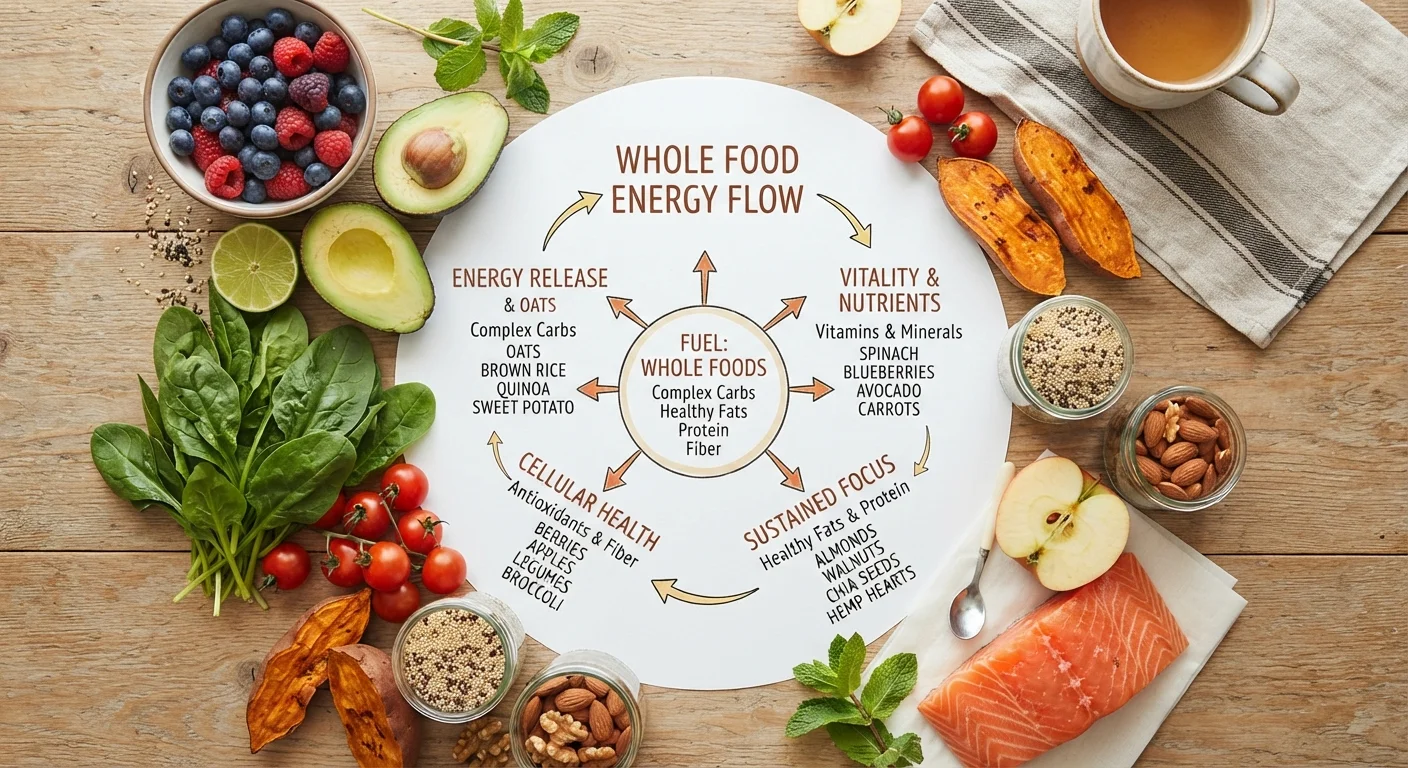
Carbohydrates are the body's primary energy source, particularly for the brain and working muscles. They include sugars, starches, and fiber. Whole-food sources - vegetables, legumes, whole grains, and fruit - deliver carbs alongside fiber, vitamins, and minerals. Heavily processed carbs tend to deliver energy with fewer of these accompanying nutrients.
Protein
Protein is essential for building and repairing tissues, producing enzymes and hormones, and supporting immune function. It is made of amino acids, nine of which are classified as essential because your body cannot produce them - they must come from food. Animal products generally supply all nine; plant-based eaters can meet their needs by eating a variety of protein-rich plant foods throughout the day.
Fat
Dietary fat is not the villain it was once portrayed to be. Fat supports hormone production, helps absorb fat-soluble vitamins (A, D, E, and K), and is essential for brain health. Unsaturated fats - found in foods like nuts, seeds, avocados, and olive oil - are widely regarded by nutrition researchers as beneficial. Trans fats, largely removed from the U.S. food supply through regulation, and excessive saturated fat intake are associated with less favorable cardiovascular outcomes in population studies.
Micronutrients and Hydration: The Supporting Cast
While macronutrients supply energy and structure, micronutrients - vitamins and minerals - regulate the processes that keep everything running. Your body needs them in much smaller amounts, but deficiencies can affect everything from immune function to bone density to mood.
Common vitamins include vitamin C (immune and skin health), the B vitamins (energy metabolism and nerve function), and vitamin D (bone health and immune regulation). Key minerals include calcium, iron, magnesium, and potassium. A varied diet that includes plenty of vegetables, fruits, whole grains, and quality protein sources tends to cover most of these needs for generally healthy adults. For a closer look at which foods deliver the most nutritional value, our guide to nutrient-dense foods is a useful next step.
Hydration
Water is not a micronutrient, but its role in nutrition is equally fundamental. It transports nutrients, regulates body temperature, supports digestion, and affects cognitive performance. Most adults benefit from drinking water consistently throughout the day rather than waiting until thirst becomes urgent. Individual needs vary - factors like physical activity, heat, and certain health conditions all influence how much fluid a person requires. Plain water is the most straightforward source; beverages like unsweetened tea and water-rich foods like cucumbers and citrus also contribute to daily intake.
Building a Balanced Eating Pattern
Nutrition research consistently points to patterns of eating - not individual foods or nutrients - as the strongest predictor of long-term health outcomes. No single food is a cure, and no single food is a catastrophe. What matters is the overall composition of what you eat most of the time.
Use Your Plate as a Simple Guide
The USDA's MyPlate model - roughly half vegetables and fruit, one quarter whole grains, one quarter protein, plus a dairy or calcium-rich side - offers a practical, no-math way to portion a balanced meal. It is not a rigid prescription but a helpful visual anchor when you are just starting out.
Practically speaking, a balanced eating pattern tends to include:
- A wide variety of vegetables and fruits, aiming for color diversity across the week
- Whole grains as a primary carbohydrate base, such as oats, brown rice, or whole wheat
- Adequate protein from sources that suit your preferences and health - beans, lentils, eggs, seafood, poultry, or lean meats
- Healthy fats from whole-food sources like nuts, seeds, and olive oil
- Minimally processed foods as the foundation, with heavily processed options as occasional additions rather than defaults
If you are ready to put this into practice during your next grocery run, our practical grocery shopping guide walks through how to navigate a store with these principles in mind.
Common Nutrition Myths to Let Go Of
Nutrition is one of the most myth-saturated fields in everyday conversation. A basic grasp of the science makes it easier to evaluate the constant stream of diet claims.
Avoid Eliminating Entire Food Groups Without Guidance
Cutting out a full food group - such as all fats or all carbohydrates - can create nutrient gaps that are difficult to compensate for through other foods alone. If a medical condition or personal goal leads you to consider major dietary restrictions, work with a registered dietitian or physician to do so safely.
- "Eating fat makes you fat."
- Body weight is influenced by overall energy balance, food quality, hormones, sleep, stress, and genetics - not fat consumption in isolation. Dietary fat is essential and does not automatically translate to stored body fat.
- "You need to detox your body."
- Your liver and kidneys perform continuous detoxification as part of normal physiology. No juice cleanse or supplement has been demonstrated in rigorous clinical research to meaningfully enhance this process in healthy individuals.
- "Eating after 8 p.m. causes weight gain."
- Meal timing has some nuance in nutrition research, but the evidence does not support a hard cutoff time as a universal rule. Total daily food intake and diet quality are far more significant factors for most people.
- "Superfoods will fix your diet."
- Foods marketed as superfoods are often genuinely nutritious - but no single food compensates for an otherwise poor eating pattern. Variety across many foods is a more reliable strategy than relying on a handful of trendy items.
This article is for general informational and educational purposes only and does not constitute medical or dietary advice. Nutritional needs vary by individual. Please consult a qualified healthcare professional or registered dietitian before making significant changes to your diet.