
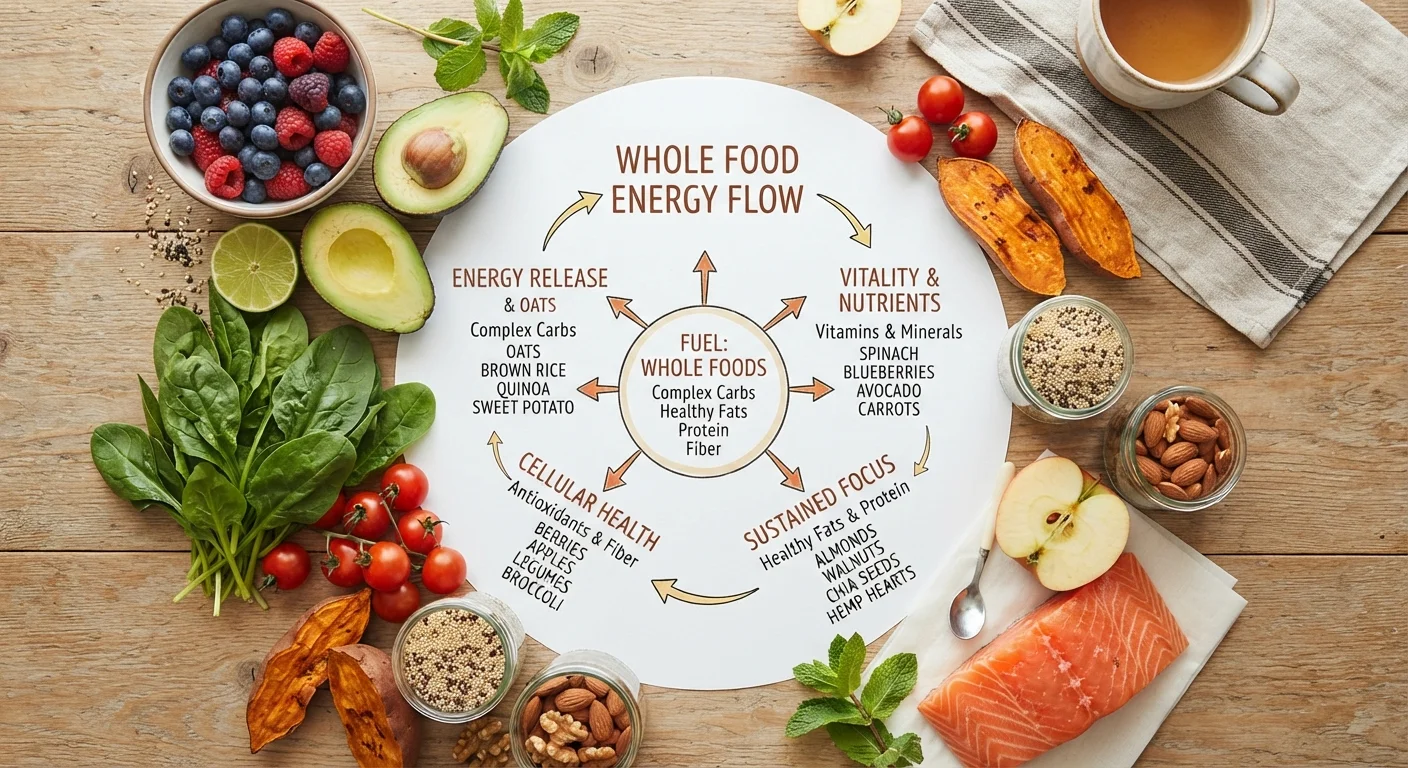
What a Calorie Actually Is
The word 'calorie' appears on every food package, yet its meaning is often misunderstood. A calorie is not an ingredient or a substance - it is a unit of measurement. Specifically, it measures the amount of energy stored in food that your body can extract and use.
Think of it like gasoline in a car: the gallon measure tells you how much fuel is available, but it says nothing about the engine doing the work. Food calories work the same way - they represent potential energy. Once consumed, your digestive system breaks food down into its components, and those components enter the bloodstream to be used, stored, or burned.
To understand what you're actually eating in any given meal, it helps to know how to interpret nutrition information. Reading a nutrition label accurately is the first step to making sense of calorie information in context.
How the Body Turns Food Into Fuel
After you eat, digestion begins breaking food into simpler molecules: glucose from carbohydrates, amino acids from proteins, and fatty acids from fats. These molecules are absorbed through the small intestine and delivered via the bloodstream to cells throughout the body.
Inside each cell, a process called cellular respiration converts these molecules - primarily glucose - into ATP, the molecule that actually powers cellular activity. ATP fuels everything from muscle contractions during exercise to the electrical impulses that let you think and speak. This conversion process requires oxygen, which is why your breathing rate increases during physical exertion.
When energy intake exceeds immediate needs, the body stores the surplus. Short-term storage happens as glycogen in the liver and muscles. Longer-term surplus is converted to body fat, which serves as an energy reserve the body can tap when food intake is low.
~60-75%
Daily calories burned at rest (BMR)
According to general exercise physiology research, basal metabolic rate typically accounts for the majority of total daily energy use in sedentary to moderately active adults.
4 kcal/g
Energy from carbohydrates and protein
Both carbohydrates and protein provide approximately 4 kilocalories per gram - a foundational figure in nutritional science used on all U.S. nutrition labels.
~10%
Energy used for digesting food
The thermic effect of food - the energy cost of digesting, absorbing, and metabolizing nutrients - accounts for roughly 10% of total daily energy expenditure on average.
Metabolism: Your Body's Energy Engine
Metabolism is the collective term for every chemical reaction your body runs to stay alive - and it operates around the clock. Even while you sleep, your body is burning energy to maintain body temperature, repair cells, circulate blood, and keep organs functioning. This baseline energy use is called your basal metabolic rate (BMR), and it typically accounts for the largest share of total daily energy expenditure.
Beyond BMR, energy is used for the thermic effect of food - the energy required to digest and absorb nutrients - and for physical activity, which ranges from casual walking to vigorous exercise. Together, these three components make up your total daily energy expenditure (TDEE).
Several factors influence how many calories a person burns at rest, including age, muscle mass, hormonal function, and genetics. This is why calorie needs are highly individual and why a one-size-fits-all approach to eating rarely reflects sound nutrition science.
“The body is not a simple calculator. Hormones, sleep, stress, and the composition of your diet all influence how efficiently energy is used and stored. Focusing only on calorie numbers misses most of the story.”
— Registered Dietitian Nutritionist, Clinical nutrition specialist and public health educator
Not All Calories Are Created Equal
Each macronutrient provides energy at a different rate: carbohydrates and protein each supply approximately 4 calories per gram, while fat supplies about 9 calories per gram. Alcohol, though not a nutrient, provides roughly 7 calories per gram. Understanding these differences is foundational to reading and using nutrition information effectively.
But energy density is only part of the picture. The quality of calories - where they come from and what else they bring along - significantly affects how the body processes them. Fiber-rich carbohydrates slow glucose absorption, supporting steadier energy levels. Protein requires more energy to digest than fat or carbohydrate, contributing to a higher thermic effect. Healthy fats support hormone production and nutrient absorption.
For a deeper look at what each macronutrient actually does in the body, macronutrients explained goes beyond calorie counts to explore the distinct roles each plays in a balanced diet.
This article is for general informational and educational purposes only and is not a substitute for professional medical or dietary advice. Consult a qualified healthcare provider or registered dietitian before making significant changes to your diet or nutrition plan.