
Carbohydrates: The Body's Primary Fuel
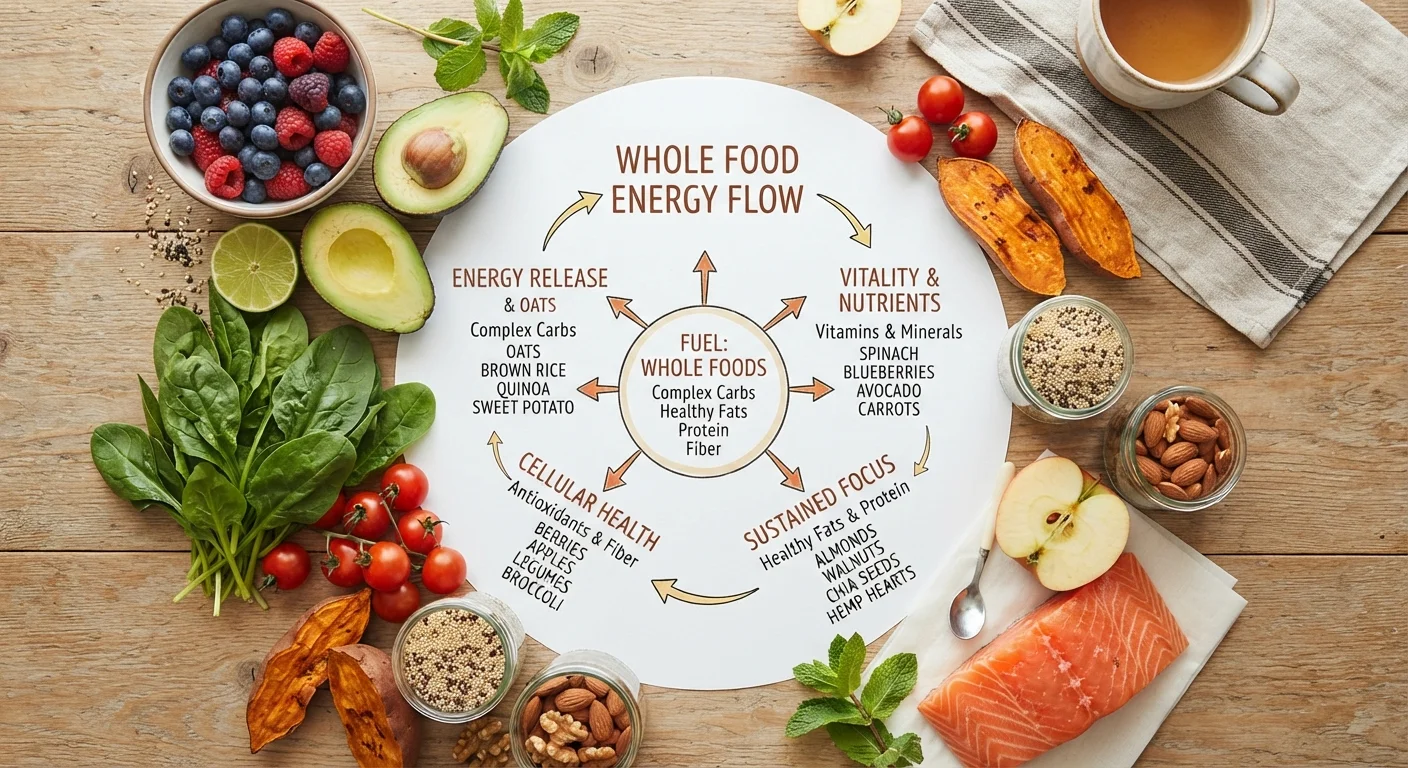
Carbohydrates often attract controversy, but from a physiological standpoint, they are the body's preferred energy source. When you eat carbohydrates - whether from oatmeal, an apple, or a slice of bread - your digestive system breaks them down into glucose, a simple sugar that circulates in the bloodstream and powers cells throughout your body.
The brain is particularly dependent on glucose. It consumes a disproportionate share of available blood sugar relative to its size and does not store meaningful reserves, which is why inadequate carbohydrate intake can quickly affect concentration and mood. Muscles also rely heavily on glucose during moderate to high-intensity physical activity, drawing on glycogen (the stored form of glucose) as a rapid-access energy reserve.
Not all carbohydrates behave the same way in the body. Fiber - a form of carbohydrate found in vegetables, legumes, and whole grains - resists digestion, slowing glucose absorption and supporting digestive health. Refined carbohydrates, such as white bread or sugary beverages, are digested rapidly and offer limited nutritional value beyond quick energy.
~130g
Estimated daily glucose need for the adult brain
The Institute of Medicine's Dietary Reference Intakes identifies approximately 130 grams of carbohydrates per day as the Recommended Dietary Allowance for adults, based largely on average brain glucose utilization.
9
Essential amino acids humans must obtain from food
Of the 20 amino acids used by the human body, nine cannot be synthesized internally and must come from dietary protein sources, according to established nutritional science.
9 kcal/g
Caloric density of dietary fat
Fat provides more than twice the energy per gram compared to carbohydrates or protein, making it the body's most energy-dense macronutrient, per standard nutritional chemistry.
For a broader view of how food converts to usable energy, see our guide to calories and metabolism.
Protein: Builder, Repairer, and Regulator
Protein earns its reputation as the macronutrient of structure. Made up of chains of amino acids, protein provides the raw material your body needs to build and repair muscle fibers, synthesize enzymes and hormones, produce immune antibodies, and maintain the integrity of skin, hair, and nails.
Of the 20 amino acids, nine are classified as essential - meaning your body cannot manufacture them and must obtain them through food. Complete protein sources, such as meat, poultry, fish, eggs, and dairy, supply all nine essential amino acids. Many plant-based sources are incomplete on their own but can be combined across meals to meet full amino acid needs.
Choosing Complete vs. Incomplete Proteins
If you eat primarily plant-based foods, you can still meet all essential amino acid needs by eating a variety of protein sources across the day - such as legumes, grains, nuts, and seeds. You don't need to combine them at every single meal; overall daily variety is what matters most. A registered dietitian can help you plan an approach that fits your eating style.
Beyond structural roles, protein contributes to satiety. It triggers hormones that signal fullness and takes more energy to digest than carbohydrates or fat - a property sometimes described as the thermic effect of food. This does not make protein a weight-loss remedy, but it does explain why protein-rich meals often feel more satisfying.
Individual protein needs vary considerably based on age, body composition, activity level, and health status. Speaking with a registered dietitian is the most reliable way to assess what's appropriate for your specific situation.
Dietary Fat: Far More Than Stored Energy
Decades of diet culture branded fat as the enemy, but nutritional science tells a more nuanced story. Dietary fat is essential - it cannot be replaced by carbohydrates or protein for several critical functions.
Fat serves as the primary carrier for fat-soluble vitamins: A, D, E, and K. Without adequate dietary fat, these vitamins cannot be properly absorbed from food, regardless of how many vitamin-rich vegetables you eat. Fat also provides the structural material for cell membranes throughout the body and is a key building block for hormones, including sex hormones and those involved in inflammatory response.
Beyond micronutrient absorption, fat delivers a concentrated source of energy - roughly twice the caloric density of carbohydrates or protein - making it especially important for sustained, lower-intensity energy needs. The type of fat matters: unsaturated fats, found in olive oil, nuts, seeds, and fatty fish, are broadly associated with cardiovascular health in nutritional research. Our article on dietary fat myths and current science covers these distinctions in depth.
Putting All Three Together
Macronutrients do not operate in isolation. A balanced meal typically contains all three, and their interactions matter. Fat slows gastric emptying, which moderates the rate at which carbohydrate-derived glucose enters the bloodstream. Protein alongside carbohydrates supports steadier energy levels than carbohydrates alone. Each macronutrient shapes how the others are absorbed and used.
It's also worth remembering that macronutrients are only part of the nutritional picture. Vitamins, minerals, and phytonutrients - sometimes called micronutrients - work alongside macronutrients to support health. Our micronutrients reference guide offers a useful companion overview.
If you're newer to thinking about nutrition as a whole, Nutrition for Absolute Beginners lays out the full foundation in accessible terms. And don't overlook hydration - water plays an active role in digesting and absorbing the macronutrients you consume, as explored in our piece on hydration and nutrition.
This article is for general informational and educational purposes only and is not a substitute for personalized medical or nutritional advice. Consult a qualified healthcare professional or registered dietitian before making significant changes to your diet.