Why Water Is a Nutritional Player, Not Just a Beverage
Most people think of hydration and nutrition as parallel concerns - drink enough water, eat balanced meals, and check both boxes separately. But the relationship between water and the nutrients in your food is far more integrated than that.
Water is the medium in which digestion happens. Saliva, stomach acid, bile, and intestinal secretions - the fluids that chemically break down food - are all largely water. Without adequate hydration, the mechanical and chemical processes that convert food into absorbable nutrients become less efficient. In that sense, water isn't just accompanying your meal; it's actively participating in it.
This is foundational context for anyone building a better understanding of eating well. For a broader introduction to how these building blocks fit together, see our beginner's guide to nutrition.
~20-30%
Daily water intake from food sources
Nutrition research consistently estimates that food - particularly fruits, vegetables, and soups - supplies roughly 20-30% of total daily water intake for most adults.
60%
Approximate water content of the adult human body
According to the U.S. Geological Survey and medical physiology references, water makes up approximately 60% of adult body weight, underscoring its central role in all biological processes including nutrient transport.
~2-3%
Body water loss that impairs physical and cognitive function
Research published in sports medicine and nutrition journals indicates that a fluid loss equal to as little as 2-3% of body weight can meaningfully reduce physical performance, concentration, and metabolic efficiency.
How Water Supports Nutrient Absorption
Once food is broken down in the stomach and small intestine, nutrients must cross intestinal walls and enter the bloodstream. This process depends heavily on water as a transport medium. Water-soluble vitamins - including the full range of B vitamins and vitamin C - are absorbed directly into the bloodstream, where water carries them to cells throughout the body.
Fat-soluble vitamins (A, D, E, and K) require dietary fat rather than water for absorption, but water still plays an indirect role by supporting the digestive secretions (including bile) that emulsify fats. Minerals like sodium, potassium, and magnesium are electrolytes - they dissolve in water and rely on fluid balance to move between cells and regulate countless physiological functions.
Fiber is another nutrient category where hydration matters significantly. Soluble fiber absorbs water to form a gel-like substance in the gut that slows glucose absorption and supports cholesterol management, while insoluble fiber needs water to add bulk and keep things moving. Learn more about fiber's broader role in the diet beyond basic digestion.
Pair High-Fiber Meals with Consistent Hydration
If you're increasing fiber intake - through whole grains, legumes, or vegetables - make it a habit to drink water consistently throughout the day, not just at meals. Fiber needs water to do its job effectively in the digestive tract. Ramping up fiber without matching fluid intake can lead to discomfort rather than the digestive and metabolic benefits fiber is known for.
The Foods That Hydrate You
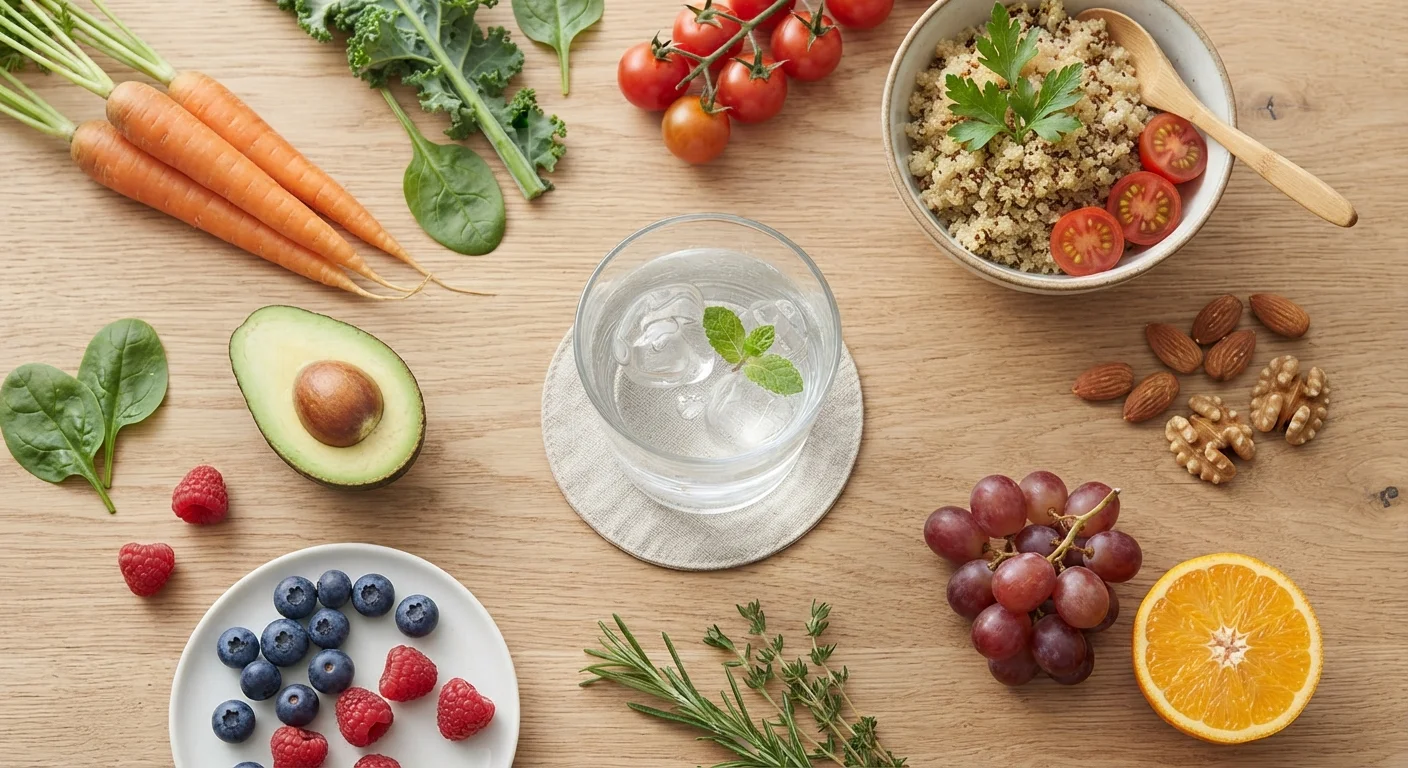
Hydration isn't limited to what you drink. Many whole foods contain substantial water by weight, making dietary choices a legitimate part of daily fluid balance. Cucumbers, lettuce, celery, and tomatoes are over 90% water by weight. Watermelon, strawberries, and oranges hover in the same range. Even cooked oatmeal and yogurt contribute meaningfully.
This matters practically: on days when fluid intake from beverages is lower - busy mornings, travel, or simply forgetting - a diet rich in fruits and vegetables provides a meaningful buffer. Conversely, a diet heavy in processed, low-moisture foods (crackers, chips, dried meats) contributes almost nothing to hydration and may increase the body's need for water.
Foods that are nutrient-dense often happen to be high-water foods as well - a useful overlap for those trying to optimize both nutrition and hydration in everyday meals.
When Nutrition Affects Hydration - and Vice Versa
The relationship runs in both directions. Just as water supports nutrient absorption, certain dietary patterns influence how effectively the body retains and uses fluids.
Sodium is the clearest example. High sodium intake - common in diets with processed foods and restaurant meals - draws water into the bloodstream and increases urinary water loss over time, raising hydration needs. Potassium, found in beans, leafy greens, and bananas, works to counterbalance sodium and supports fluid regulation at the cellular level.
Protein intake also affects hydration demands. Metabolizing protein generates nitrogen-containing byproducts that the kidneys filter out - a process requiring adequate water. This is one reason why fluid needs can increase on higher-protein eating patterns, though individual requirements vary based on activity, body size, and overall diet. For a clear breakdown of what protein and other macronutrients do in the body, see our macronutrients explainer.
Practical Implications for Everyday Eating
Understanding how water and nutrition interact doesn't require overhauling your approach to eating. A few practical principles follow logically from the science:
- Eat water-rich whole foods regularly. Fruits, vegetables, and legumes deliver both nutrients and meaningful hydration simultaneously.
- Pair fiber intake with consistent fluid intake. Fiber functions well only when hydration supports it; inadequate water with high fiber intake can cause discomfort rather than benefit.
- Consider sodium intake in the context of overall diet. High-sodium eating patterns may increase fluid needs, which is relevant to anyone trying to manage blood pressure or fluid retention - consult a healthcare provider for personalized guidance.
- Don't fear drinking water with meals. Moderate fluid intake during meals supports digestion and does not impair stomach acid production under normal physiological conditions.
These principles apply across a wide range of dietary patterns. Whether you follow a plant-forward approach or a more omnivorous one, the interaction between hydration and nutrition shapes how well your body can use what you eat. See how these concepts apply within evidence-supported long-term eating patterns.
This article is for general informational and educational purposes only and is not a substitute for professional medical or nutritional advice. Consult a qualified healthcare provider for guidance specific to your health needs.