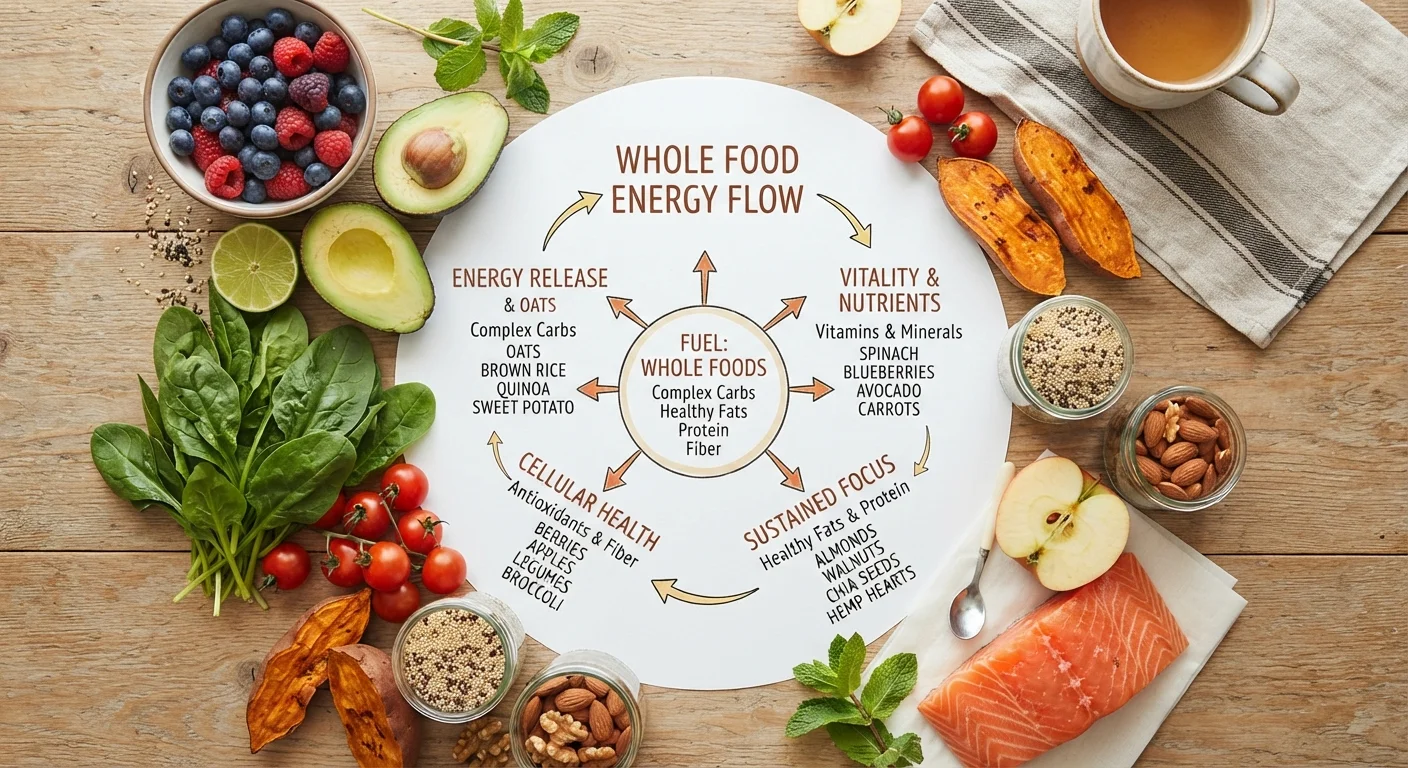

Why Patterns Matter More Than Individual Foods
Nutrition research has spent decades trying to isolate single nutrients - fat, carbohydrates, sugar - as the defining culprit or cure. What the evidence has repeatedly shown, however, is that overall dietary patterns are a far stronger predictor of long-term health outcomes than any individual food or nutrient in isolation.
A pattern reflects habitual choices: what you eat most days, across most meals. Two people eating identical amounts of protein can have dramatically different health trajectories if one draws that protein from legumes and fish while the other relies primarily on processed meats. Context, combination, and consistency are what the body actually experiences over years and decades.
This framing is important because it shifts the conversation away from guilt over individual meals and toward the more productive question: what does my overall eating pattern look like? See how to build a balanced plate for a practical starting framework.
What the Evidence Consistently Supports
While nutritional science is a field in active evolution, several eating patterns have accumulated substantial evidence across large, long-term population studies and clinical research.
Prioritize vegetables, fruits, legumes, and whole grains as the foundation of most meals.
Plant foods provide fiber, phytonutrients, and antioxidants linked to lower rates of cardiovascular disease, type 2 diabetes, and certain cancers across multiple large cohort studies. Fiber supports digestive health and has well-documented effects on blood glucose and cholesterol regulation. Making these foods the largest portion of your plate by volume - rather than a side - reflects how they appear in healthier dietary patterns globally.
Choose unsaturated fats, particularly from olive oil, nuts, seeds, and fatty fish, over heavily processed fat sources.
The distinction between fat types matters significantly. Monounsaturated and polyunsaturated fats - especially omega-3 fatty acids found in fish like salmon and sardines - are associated with better cardiovascular outcomes, while artificially produced trans fats are consistently linked to harm. The research on saturated fat is more nuanced than older guidelines suggested; context and overall dietary pattern appear to mediate its effects. For a full breakdown, see the truth about dietary fat.
Limit ultra-processed foods, added sugars, and high-sodium packaged products as a consistent habit - not just an occasional concern.
Ultra-processed foods - those manufactured with industrial additives, flavor enhancers, and refined ingredients not typical of home cooking - have been associated in observational research with higher risks of obesity, cardiovascular disease, and metabolic disorders. The mechanism is not fully understood, but displacement of more nutritious whole foods likely plays a significant role. Reducing regular exposure matters more than avoiding any single ingredient.
Eat protein from diverse sources, with emphasis on plant proteins and lean animal proteins over processed meats.
Protein source appears to matter alongside quantity. Legumes, tofu, fish, poultry, eggs, and dairy are consistently associated with neutral-to-positive health outcomes, while frequent consumption of processed meats such as bacon, sausage, and deli meats has been associated with elevated cardiovascular and colorectal cancer risk in large epidemiological studies. Diversifying protein sources also naturally increases fiber and micronutrient intake.
Maintain regular, structured meal timing rather than highly irregular or erratic eating schedules.
Emerging research in chronobiology - the study of biological rhythms - suggests that meal timing influences metabolism, insulin sensitivity, and appetite regulation. While the science is still developing, habitually skipping meals or eating large portions very late in the evening may work against the body's natural metabolic rhythms. Consistent meal timing supports more predictable hunger cues and reduces impulsive food choices driven by excessive hunger.
It is worth noting that most well-studied dietary patterns share a core of minimally processed, whole foods - regardless of whether they are labeled Mediterranean, plant-based, or DASH. This overlap is not a coincidence. For a closer look at foods that reliably deliver high nutritional value, see nutrient-dense foods worth including in any eating pattern.
Practical Steps to Start Shifting Your Pattern
Understanding what the evidence supports is useful - but it only becomes meaningful when translated into choices you can realistically sustain. The goal is not a complete overhaul starting tomorrow, but a gradual recalibration of daily habits.
Crash diets and extreme elimination plans tend to work against this goal. Why crash diets undermine long-term nutrition goals explains the metabolic and psychological trade-offs in detail. Sustainable change almost always outperforms dramatic short-term restriction.
When you're ready to put these principles into action at the store, grocery shopping with nutrition in mind offers a practical, aisle-by-aisle approach to making more informed choices without overhauling your routine.
This article is for general informational and educational purposes only and is not a substitute for personalized medical or nutritional advice. Consult a qualified healthcare professional or registered dietitian before making significant changes to your diet, especially if you have an existing health condition.