
The Appeal of the Quick Fix - and Why It Falls Short
Crash diets - typically defined as eating plans involving severe calorie restriction or the abrupt elimination of major food groups - have persistent appeal precisely because they appear to work quickly. The scale moves. Clothes fit differently. Progress feels tangible within days. What isn't visible in those early results is the metabolic cost accumulating beneath the surface.
When the body receives far fewer calories than it needs to maintain basic functions, it adapts. It reduces energy expenditure, draws on stored glycogen (which releases water, accounting for much of the rapid initial weight drop), and begins breaking down lean muscle tissue for fuel alongside fat. These are not signs of a diet working - they are signs of the body trying to survive a perceived scarcity.
If you're new to thinking about how food actually fuels these processes, our beginner's guide to eating well covers the core concepts in plain language before you go further.
This Is General Education, Not Medical Advice
The information in this article is intended for general educational purposes only. It is not a substitute for personalized guidance from a qualified healthcare provider or registered dietitian. If you are considering significant changes to your eating habits or have an underlying health condition, please consult a licensed professional first.
Five Mistakes That Make Crash Dieting Counterproductive
Understanding where crash diets go wrong - mechanically and behaviorally - is the most direct path to avoiding them. Each of the following errors is common, understandable, and correctable with the right framework.
Treating severe calorie restriction as the fastest path to lasting results.
Why it happens: Popular culture and social media often frame dramatic, rapid weight loss as desirable and achievable, making extreme cuts feel logical.
Ignoring protein intake during a restrictive phase, accelerating muscle loss.
Why it happens: Crash diets rarely provide structured macronutrient guidance - total calories become the only metric people track.
Eliminating entire food groups under the belief it speeds up results.
Why it happens: Many crash diets are built around simple rules - 'no carbs,' 'no fat' - which feel easier to follow than nuanced guidance.
Overlooking micronutrient gaps created by severely limited food variety.
Why it happens: Most crash diets focus exclusively on calories or a single macronutrient, leaving vitamin and mineral intake as an afterthought.
Abandoning a sustainable eating pattern after the crash diet inevitably fails.
Why it happens: When a highly restrictive diet proves unsustainable, many people feel they've failed personally rather than recognizing the diet itself was flawed.
The through-line across all five mistakes is the same: short-term restriction rarely addresses the habits, knowledge, or food environment that shape eating over years and decades. Building a practical, flexible approach to meals is more effective and far more durable. Our guide to building a balanced plate offers a straightforward framework for doing exactly that without rigid meal plans.
Repeated Restriction Can Signal a Deeper Issue
Cycling through crash diets repeatedly - often called 'yo-yo dieting' - is associated with psychological distress and, in some cases, disordered eating behaviors. If you find yourself unable to maintain any eating pattern without swinging to extremes, speaking with a registered dietitian or mental health professional is a meaningful step worth taking.
What the Research Actually Supports
The evidence base for crash diets as a long-term strategy is consistently weak. Studies tracking participants over multi-year periods find that very-low-calorie approaches produce strong initial results followed by high rates of weight regain, often accompanied by a lower resting metabolic rate than before the diet began - meaning the body becomes more efficient at storing energy, not less.
80%+
Weight regained after crash dieting
Research published in nutrition journals consistently shows the majority of weight lost through very-low-calorie diets is regained within one to five years.
25-30%
Muscle mass lost during crash diets
Studies examining severe calorie restriction found that a significant portion of total weight lost can come from lean tissue rather than fat alone.
~15%
Drop in resting metabolic rate
Metabolic adaptation research suggests resting energy expenditure can decrease meaningfully during prolonged extreme calorie restriction, complicating future weight management.
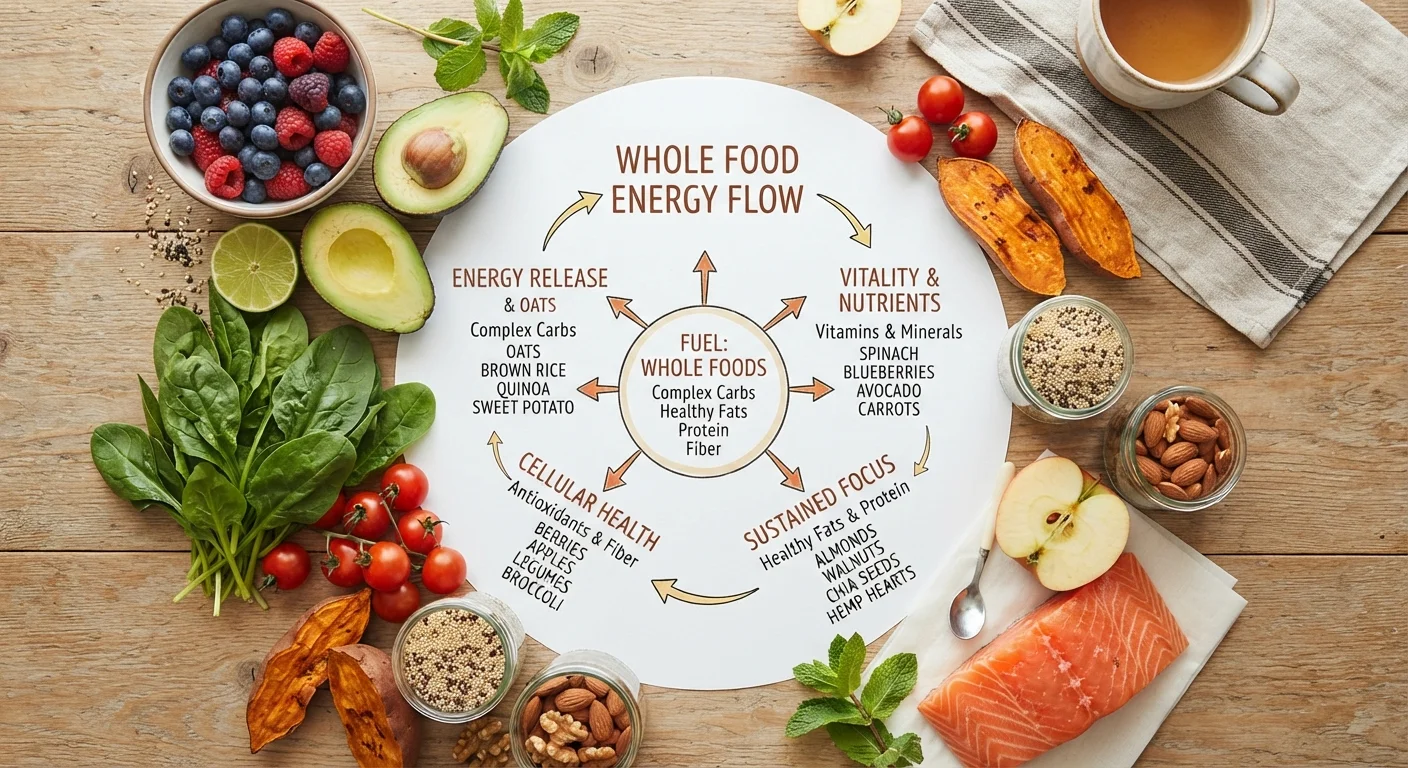
By contrast, eating patterns characterized by variety, adequate protein, whole-food carbohydrate sources, and healthy fats show stronger associations with sustained health outcomes across decades of population-level research. These aren't dramatic protocols. They're consistent, repeatable habits applied over time - which is precisely what makes them effective where crash diets fail.
This article is for general informational and educational purposes only and does not constitute medical or dietary advice. Always consult a qualified healthcare provider or registered dietitian before making significant changes to your eating habits, particularly if you have an underlying health condition.