
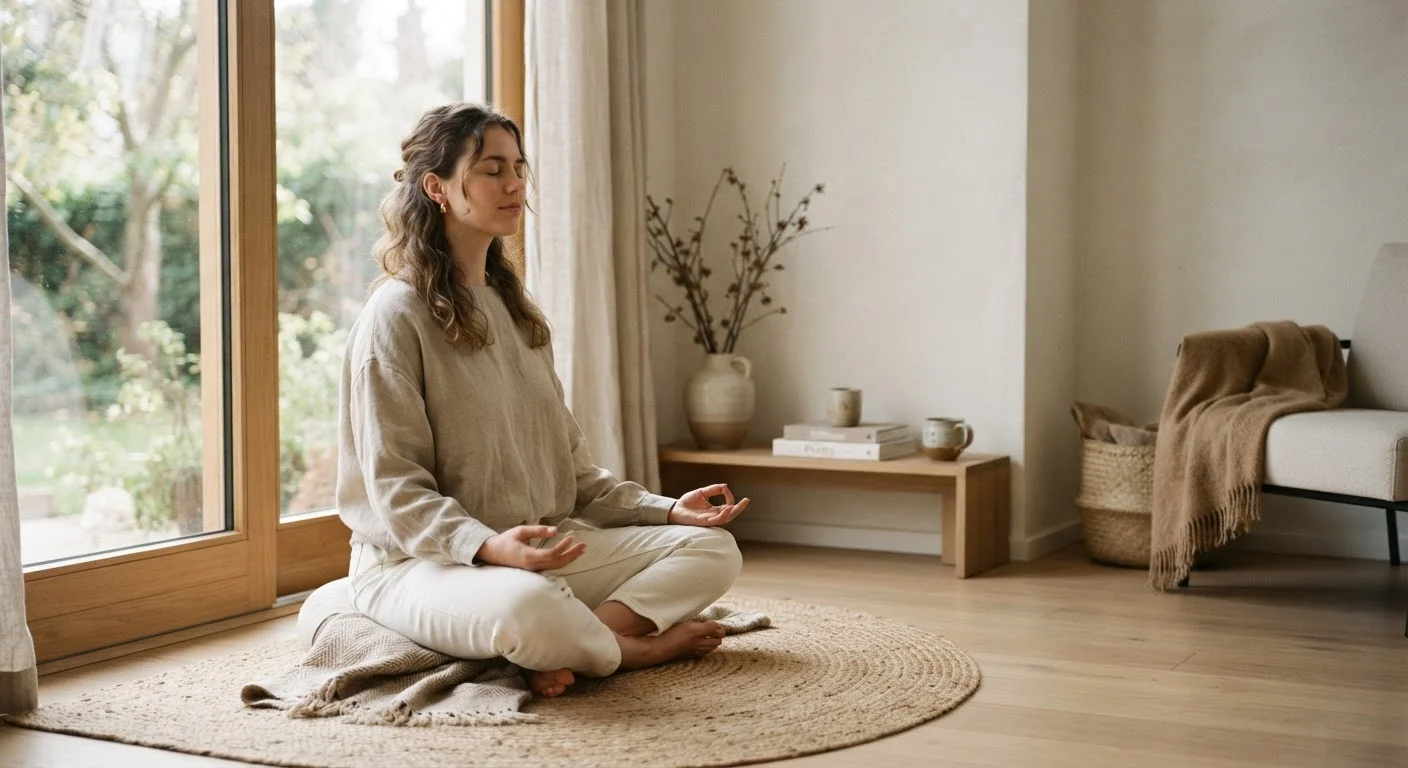
What Each Term Actually Means
Despite being used interchangeably in wellness culture, mindfulness and meditation describe two distinct things. Mindfulness is a quality of attention - specifically, the practice of intentionally noticing what is happening in the present moment without judgment. You can be mindful while washing dishes, waiting in traffic, or having a conversation. It requires no timer, no cushion, no app.
Meditation, by contrast, is a formal practice - a deliberate set of mental exercises performed during a designated period of time. There are many types: focused attention (such as breath awareness), open monitoring, body scan, loving-kindness, and visualization, among others. Many of these styles use mindfulness as their mechanism, but meditation itself is the container, not the content.
Think of it this way: mindfulness is a skill or state of mind; meditation is one method for training that skill. Just as physical flexibility can be developed through stretching, mindfulness can be deepened through meditation - but it is also something you can practice informally all day long. For a similar distinction in another domain, see how flexibility and mobility differ in physical wellness.
| Criterion | Mindfulness | Meditation |
|---|---|---|
| What it is | A quality of present-moment awareness | A structured mental practice |
| When it happens | Any time, integrated into daily life | During a dedicated session |
| Time required | No separate time needed | Typically 5-30 minutes per session |
| Learning curve | Low barrier; can start immediately | Moderate; benefits from guidance or instruction |
| Primary goal | Awareness and non-judgmental attention | Training the mind; varies by style |
| Overlap | Can be developed through meditation | Often uses mindfulness as its mechanism |
What the Research Says
Both practices have accumulated a meaningful body of scientific evidence, though the quality and scope of that research varies. Mindfulness-Based Stress Reduction (MBSR), an eight-week structured program developed at the University of Massachusetts Medical School, has been among the most studied interventions. Research published in peer-reviewed journals suggests that regular mindfulness and meditation practice may support reductions in perceived stress, improvements in attention, and modest benefits for symptoms of anxiety and depression in some populations.
It is important to note that findings vary across studies, effect sizes are often modest, and neither mindfulness nor meditation has been shown to replace treatment for diagnosed mental health conditions. If you are navigating a mental health concern, these practices may complement professional care - but they are not a substitute for it. For clarity on the professionals who provide that care, see what therapists, counselors, and psychiatrists each do.
8 weeks
Duration of standard MBSR program
The Mindfulness-Based Stress Reduction program, developed at UMass Medical School, spans eight weeks and remains one of the most clinically studied mindfulness interventions.
~14%
U.S. adults who meditate regularly
According to a National Health Interview Survey conducted by the CDC, meditation use among U.S. adults has grown substantially over the past decade.
200+
RCTs examining mindfulness interventions
A review in Psychological Bulletin identified over 200 randomized controlled trials examining mindfulness-based interventions across a range of mental and physical health outcomes.
Practical Differences in Daily Life
The most tangible difference between mindfulness and meditation comes down to how and when each fits into your day. Meditation typically requires setting aside uninterrupted time - even five to ten minutes - and choosing a practice format. It benefits from regularity: most frameworks suggest daily or near-daily sessions to build the mental habit effectively.
Mindfulness, by contrast, can be layered into existing activities. Paying close attention to the taste and texture of your food, noticing physical sensations during a walk, or pausing to observe your breathing for a few breaths before a stressful meeting - these are all informal mindfulness practices. They ask no additional time of you, only redirected attention.
Neither approach demands a particular spiritual framework or belief system. Both can be approached in entirely secular terms, and both are accessible to people regardless of prior experience. Familiarizing yourself with the broader vocabulary around mental well-being - including terms like rumination, cognitive distortion, and self-regulation - can help you engage more confidently with either practice. The article on common mental health terms and what they actually mean offers a useful plain-language reference.
Mindfulness Is Not a Cure-All
While mindfulness and meditation offer real, research-supported benefits for many people, they are not appropriate replacements for professional mental health treatment. Conditions such as depression, anxiety disorders, PTSD, and others benefit from evidence-based clinical care. These practices can complement treatment but should not be used to avoid or delay it. When in doubt, speak with a licensed mental health professional.
This article is for general informational and educational purposes only and is not a substitute for professional medical or mental health advice. If you are experiencing significant distress or a mental health condition, please consult a qualified healthcare professional.