
Understanding Your Financial Starting Point
Before you browse a single listing, your financial picture needs a clear-eyed review. Lenders evaluate two things above all else: your credit score and your debt-to-income (DTI) ratio - the percentage of your gross monthly income that goes toward debt payments. Most conventional lenders prefer a DTI at or below 43%, and the lower your existing debt, the more mortgage you can qualify for.
Pull your credit reports from all three bureaus (Equifax, Experian, TransUnion) for free at AnnualCreditReport.com and dispute any errors before applying. Even a modest credit score improvement can meaningfully change the interest rate a lender offers you.
Alongside credit, you'll need liquid savings - not just for a down payment, but for closing costs and a post-move cushion. If you haven't built a structured savings habit yet, the plain-English budgeting guide is a useful starting point before you take on a mortgage commitment.
Debt-to-income ratio (DTI)
The percentage of your gross monthly income that goes toward debt payments. Lenders use it to judge whether you can comfortably afford a mortgage on top of your existing obligations.
Pre-approval
A lender's written commitment to lend you up to a specific amount, based on verified income, assets, and credit - stronger than an informal pre-qualification estimate.
Escrow
An account held by a neutral third party (often your loan servicer) that collects a portion of your monthly payment to cover property taxes and homeowner's insurance when those bills come due.
Private mortgage insurance (PMI)
Insurance required by lenders when a borrower puts down less than 20% on a conventional loan. It protects the lender - not the buyer - against default risk.
Contingency
A condition written into a purchase contract that must be satisfied for the sale to proceed. Common examples include financing approval and a satisfactory home inspection.
Closing Disclosure
A standardized document your lender provides at least three business days before closing, detailing your final loan terms, monthly payment, and all closing costs.
How Mortgages Work
A mortgage is a loan secured by the property you're buying. You borrow a set amount, agree to an interest rate, and repay it over a term - most commonly 30 years, though 15-year terms are also common and carry lower total interest costs.
Interest rates come in two main forms. A fixed-rate mortgage locks your rate for the entire term, giving you predictable monthly payments. An adjustable-rate mortgage (ARM) starts at a fixed rate for a set period (commonly 5 or 7 years) and then adjusts periodically based on a market index. ARMs can be advantageous if you plan to sell or refinance before the adjustment period begins, but they carry more risk if rates rise.
Your monthly payment covers principal and interest, but in most cases also includes property taxes and homeowner's insurance collected through an escrow account. Private mortgage insurance (PMI) is typically required when your down payment is below 20% on a conventional loan - it protects the lender, not you, and adds to your monthly cost until you reach sufficient equity.
Getting pre-approved by a lender before you start seriously shopping is one of the most practical steps you can take. It establishes a realistic price range, signals to sellers that you're a credible buyer, and identifies any issues to resolve in advance. See the full walkthrough in The Home-Buying Process, Start to Finish.
Get Pre-Approved Before You Fall in Love
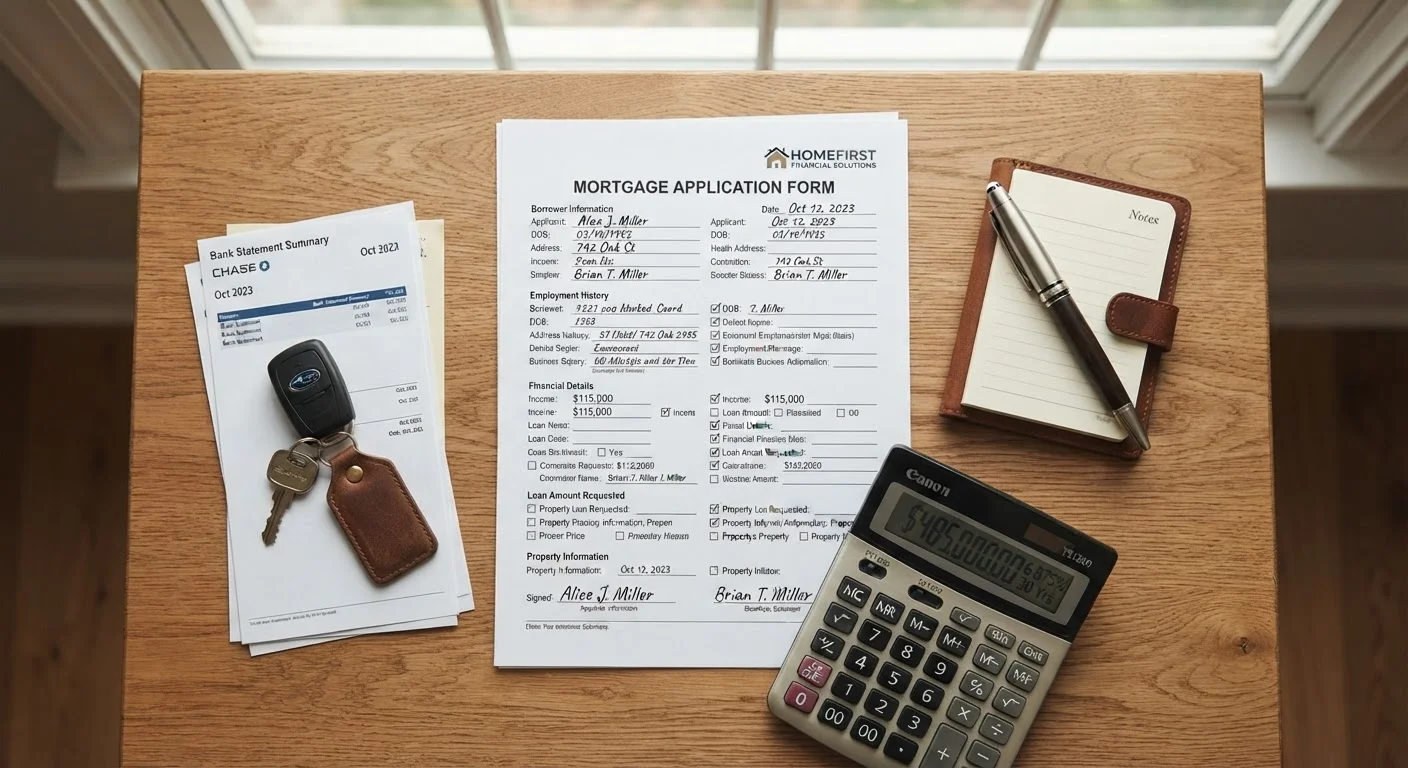
Pre-approval takes the guesswork out of your budget and tells you exactly what loan amount you're likely to qualify for. Sellers - and their agents - take pre-approved buyers more seriously, which matters especially in competitive markets. Gather your tax returns, pay stubs, bank statements, and ID before approaching lenders so the process moves quickly.
First-Time Buyer Programs and Assistance
Many first-time buyers assume a 20% down payment is non-negotiable. It isn't. Several loan programs are designed specifically for buyers with limited upfront cash.
- FHA loans (Federal Housing Administration): Allow down payments as low as 3.5% for borrowers with qualifying credit scores. They require mortgage insurance premiums for the life of the loan in most cases.
- Conventional 97 loans: Fannie Mae and Freddie Mac back loans with as little as 3% down for first-time buyers, with PMI that can be removed once you reach 20% equity.
- VA loans: Available to eligible veterans, active-duty service members, and some surviving spouses - often with no down payment and no PMI requirement.
- USDA loans: For buyers purchasing in eligible rural and suburban areas, with no down payment required for qualifying applicants.
Beyond federal programs, most states and many municipalities operate their own down payment assistance or grant programs for first-time buyers. These vary significantly by location, income limits, and property type - your state's housing finance agency website is the most reliable place to research what's available where you live.
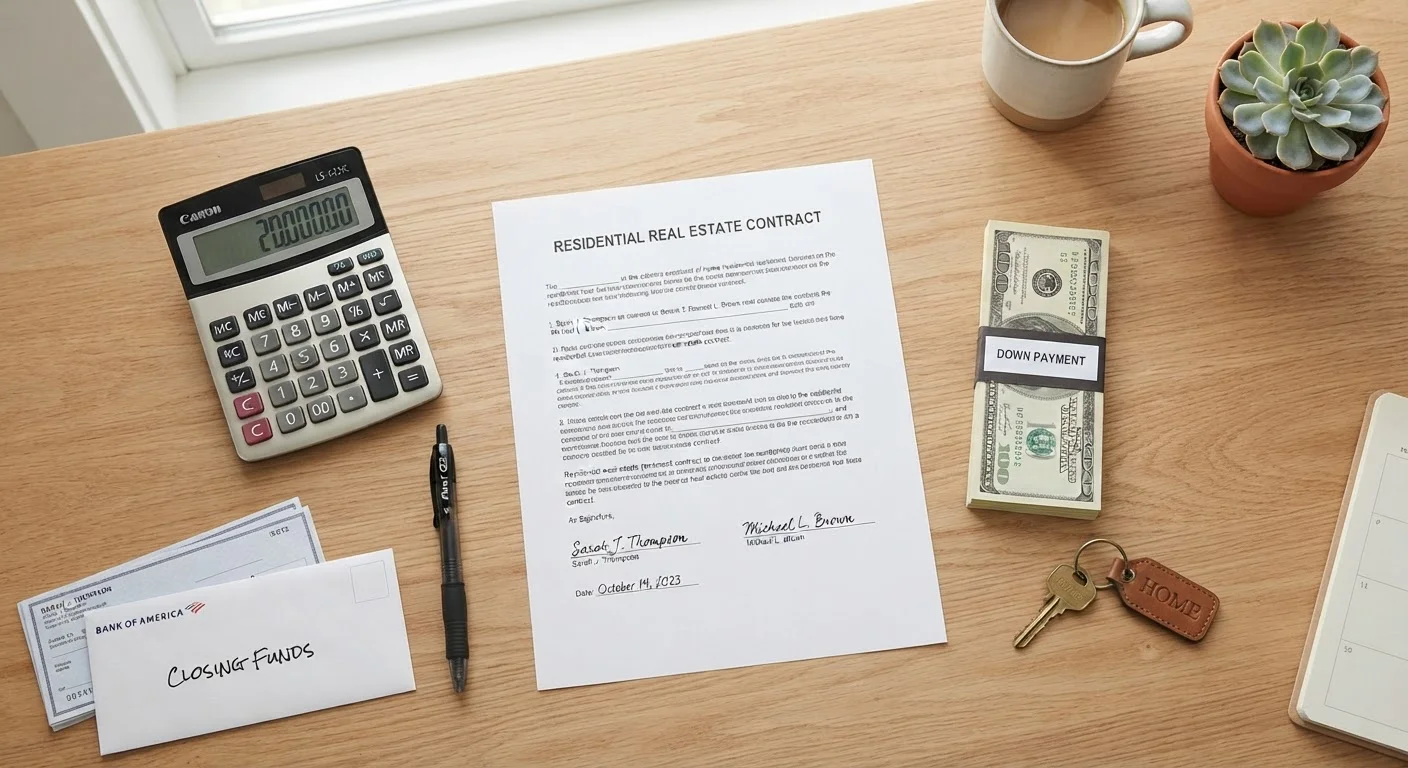
Understanding where your money goes upfront is equally important. The breakdown of earnest money, down payments, and closing costs explains the purpose and timing of each expense clearly.
The Offer, Inspection, and Closing Process
Once you find a home you want to buy, your agent (or you, if working independently) submits a purchase offer - a formal contract specifying your offered price, proposed closing date, and any contingencies. Common contingencies include financing (you can exit if your loan falls through) and inspection (you can negotiate repairs or withdraw based on findings).
If the seller accepts, you'll typically have a window of 7-14 days to complete a home inspection. A licensed inspector examines the property's structure, roof, electrical, plumbing, HVAC, and other systems. The inspection report may reveal issues you'll want the seller to address or that factor into your final decision. Skipping an inspection to strengthen your offer is a tradeoff - it may help in a competitive market, but it removes an important layer of protection.
After inspection and any renegotiation, your lender will order an appraisal to confirm the home's value supports the loan amount. Assuming the appraisal clears and your loan is fully approved, you'll receive a Closing Disclosure at least three business days before closing - review it carefully against your Loan Estimate to catch any discrepancies.
At closing, you'll sign the loan documents, pay closing costs (typically 2-5% of the loan amount), and hand over your down payment. Ownership transfers once the deed is recorded. For buyers wondering whether to work with a professional throughout this process, our overview of what a real estate agent actually does for a buyer covers the scope of that relationship in plain terms.
This article is for general informational purposes only and does not constitute financial, legal, or real estate advice. Consult a licensed real estate professional, lender, or financial adviser regarding your specific circumstances.