
What Closing Day Actually Looks Like
After weeks - sometimes months - of negotiations, inspections, and loan processing, closing day is when the home officially changes hands. For many buyers, it's an event they've heard about but never experienced. Understanding what happens in that room (or, increasingly, at a remote online closing) can make the difference between a smooth handoff and an anxious, confused afternoon.
Closing typically takes place at a title company, escrow office, or attorney's office, depending on your state. Your buyer's agent, a closing or settlement agent, and possibly a representative from your lender will be present. The seller may sign separately. See how your agent fits into this process in our guide on what a real estate agent actually does for a buyer.
The core of closing is a document-signing session - often 40 to 60 pages of paperwork - followed by a transfer of funds and the official recording of your deed. That recording is the moment you legally own the property.
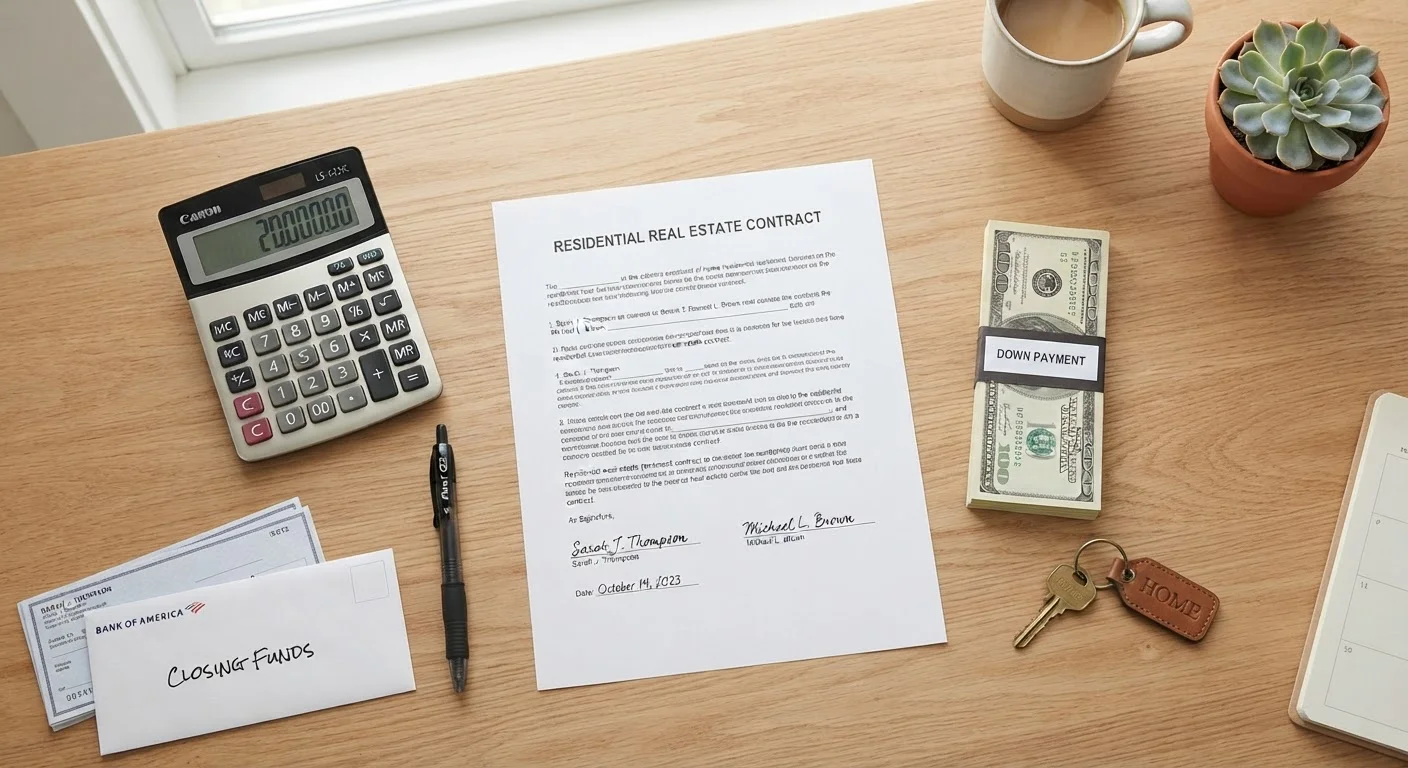
What you will need
Step-by-Step: What Happens at the Closing Table
Each closing follows a predictable sequence, even if the specific forms vary by state or lender. Here's what to expect from start to finish.
Complete the Final Walkthrough
Usually scheduled within 24 hours of closing, the final walkthrough confirms the home is in the agreed-upon condition. Verify that all negotiated repairs were completed, that no new damage has occurred, and that any fixtures or appliances included in the sale are still present.
Arrive with Everything You Need
Bring your government-issued photo ID, your certified or cashier's check (or confirm your wire transfer was sent), and any paperwork your lender requested. Arriving without the correct form of payment is one of the most common - and easily avoidable - closing-day problems.
Review and Sign the Loan Documents
The closing agent will walk you through the loan package, which includes the Promissory Note (your legal promise to repay the loan), the Deed of Trust or Mortgage (which gives the lender a security interest in the property), and several federal disclosure forms. Read each document before signing. If something differs from what you expected, pause and ask.
Sign the Title and Transfer Documents
In addition to loan documents, you'll sign a Settlement Statement (sometimes called a HUD-1 or ALTA statement) that itemizes every credit and charge in the transaction, and the deed that transfers ownership. The closing agent notarizes your signatures on key documents.
Funds Are Disbursed and the Deed Is Recorded
Once all parties have signed, the title company or escrow officer disburses funds - paying off the seller's existing mortgage, covering agent commissions, and sending remaining proceeds to the seller. The deed is then submitted to the county recorder's office. You legally own the home once the recording is complete.
Receive Your Keys
After recording is confirmed, you receive the keys, garage openers, and any access codes. Keep a copy of your signed closing documents in a safe place - you'll need them for tax purposes and potentially for future refinancing or resale.
Remote and Mail-Away Closings Are Now Common
Many lenders and title companies now offer remote online notarization (RON) or mail-away closings, allowing buyers to sign documents without sitting at a physical table. If you're closing remotely, confirm the technology requirements in advance and ensure your internet connection is reliable. The process follows the same sequence - only the format changes.
Common Surprises and How to Handle Them
Even well-prepared buyers run into last-minute complications. Title searches sometimes surface unexpected liens or ownership disputes. Lenders may issue a final condition - a missing document or verification - hours before closing. Sellers occasionally fail to vacate on time.
The single best way to avoid surprises is to review your Closing Disclosure carefully when it arrives, at least three business days before your scheduled closing. This document details every fee, loan term, and cash amount due. Compare it line by line to the Loan Estimate you received earlier. If any figure changed significantly, ask your lender to explain it in writing before closing day.
Don't Make Major Financial Changes Before Closing
Lenders often perform a soft credit check or re-verify employment in the days before closing. Opening new credit accounts, making large purchases, or changing jobs between loan approval and closing can trigger a final underwriting review - and in some cases, cause the loan to be denied at the last moment. Avoid any significant financial moves until after the deed is recorded.
For a full picture of every dollar you'll owe at the table - including earnest money, down payment, and closing costs - our breakdown of earnest money, down payments, and closing costs explains exactly where each payment goes.
After everything is signed and funds are wired, the title company submits your deed to the local government for recording. In most states, recording happens the same day or within a day or two. Once recorded, you receive the keys - and the home is yours. For context on how closing fits into the broader journey, see our complete home-buying process guide.