What a Cooling Market Actually Signals
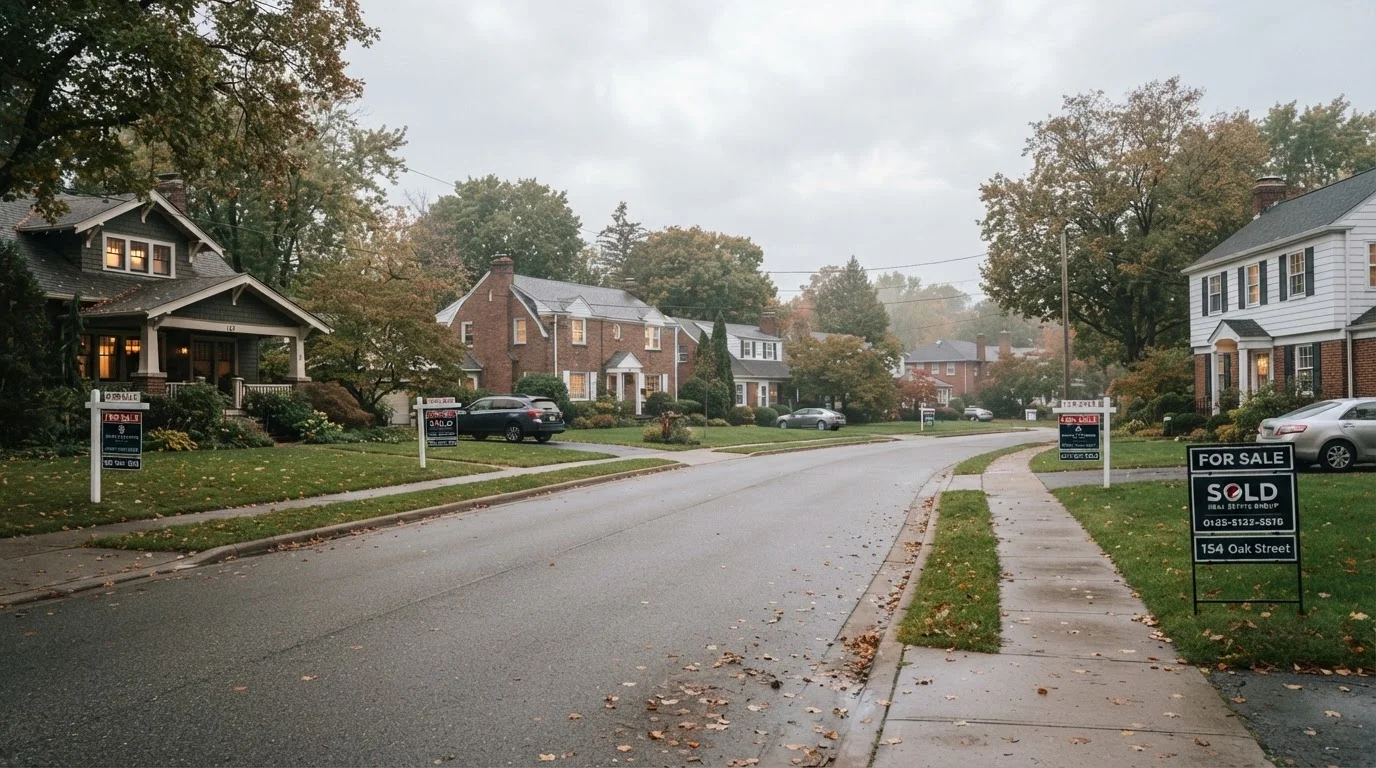
When economists and real estate professionals describe a "cooling" housing market, they typically mean that the pace of price appreciation is slowing, homes are taking longer to sell, and inventory is rising relative to buyer demand. It does not necessarily mean prices are falling outright. Understanding that distinction is the foundation for making smart decisions as a buyer.
For a deeper look at the forces driving these shifts, see how the housing market actually works. And if you want to catch market changes before they make headlines, these early market signals are worth knowing.
The myths below represent some of the most common misreadings of what a cooling market means - and correcting them can save buyers from costly missteps.
Myth
In a cooling market, you can lowball any home and the seller will have to accept it.
Fact
Sellers who don't need to sell quickly will often simply reject low offers rather than negotiate down significantly.
Many homeowners who bought or refinanced when rates were low have substantial equity cushions. They can afford to wait for a reasonable offer. A cooling market increases your leverage compared to a frenzied seller's market, but it does not eliminate seller psychology or financial reality. Making an unrealistically low offer can signal bad faith and prompt a seller to disengage entirely, even if the home has been sitting for weeks.
Myth
If price growth is slowing, mortgage rates must be dropping too.
Fact
Home price trends and mortgage rates are driven by different forces and frequently move in opposite directions.
Mortgage rates are primarily influenced by Federal Reserve policy, bond market yields - particularly the 10-year Treasury - and broader inflation trends. Home prices respond to local supply and demand. It is entirely possible for price appreciation to cool while mortgage rates remain elevated or even increase. Buyers who assume a softening market comes with cheaper financing are often caught off guard when their purchasing power is still constrained by rates.
Myth
A home that has been on the market for 60-plus days must have something seriously wrong with it.
Fact
Extended days on market in a cooling environment often reflects slower overall demand, not a problem unique to that property.
When buyer activity declines across a market, average days on market rises for all listings - including perfectly sound homes. A property that might have sold in a week during a hot market may now sit for two months without any change in its condition or value. Buyers who automatically skip "stale" listings may eliminate strong candidates based on a metric that reflects market conditions, not property quality. A thorough inspection remains essential regardless.
Myth
Cooling markets are the same everywhere - national headlines apply to your local market.
Fact
Real estate is hyperlocal; one metropolitan area can be cooling while a nearby city or even a different neighborhood is still highly competitive.
National housing data is a useful broad indicator, but local dynamics - job growth, school quality, new construction pipeline, and population migration - determine what actually happens in a specific zip code. A market cooling in one Sun Belt city may have no bearing on conditions in a Midwest university town or a coastal tech hub. Buyers should work with a local agent and consult neighborhood-level data rather than applying national headlines directly to their search.
Myth
Waiting a few more months will guarantee a better price.
Fact
Timing the market is difficult even for professionals, and prolonged waiting can mean higher rates, less inventory, or lost personal opportunity.
Price trajectories in any market are genuinely uncertain. A cooling trend can reverse when interest rates drop and sidelined buyers re-enter, compressing inventory and pushing prices back up quickly. Meanwhile, the costs of renting, the personal value of stability, and the opportunity to build equity are real financial factors that accumulate over time. Deciding when to buy involves your financial readiness and personal circumstances - not just speculation about future prices.
What Buyers Should Actually Do With This Information
A cooling market genuinely does improve conditions for buyers in meaningful ways - more negotiating room on price, fewer bidding wars, more time to conduct inspections, and a wider selection of properties. The key is not letting inflated expectations lead to inaction or poor offers.
Don't Confuse Market Softening With Certainty
A cooling market creates real opportunities for buyers - more negotiating room, fewer competing offers, and more time for due diligence. However, it does not eliminate risk or guarantee below-market purchases. Price trajectories, mortgage rate movements, and inventory shifts remain genuinely unpredictable. Base your purchase decision on your financial readiness, holding timeline, and personal circumstances, not on short-term market speculation.
Understanding whether you're entering a buyer's market or still navigating a seller's market - even a softening one - shapes your entire strategy. Learn the difference between a seller's market and a buyer's market and what each means for your negotiating position.
One particularly costly mistake is waiting indefinitely for prices to fall further. Assuming a crash is coming has historically caused buyers to miss windows of opportunity - sometimes for years. The home-buying process rewards preparation and realistic expectations, not speculation.
54%
Sellers who accepted less than list price
According to National Association of Realtors data from periods of slower sales activity, roughly half of sellers accepted below asking price - but rarely by dramatic margins.
30-60 days
Typical median days on market in a cooling environment
Industry research consistently shows that median days on market roughly doubles during market slowdowns compared to peak seller's market conditions.
This article is for general informational purposes only and does not constitute financial, legal, or real estate advice. Market conditions vary significantly by region. Consult a licensed real estate professional for guidance specific to your situation.