
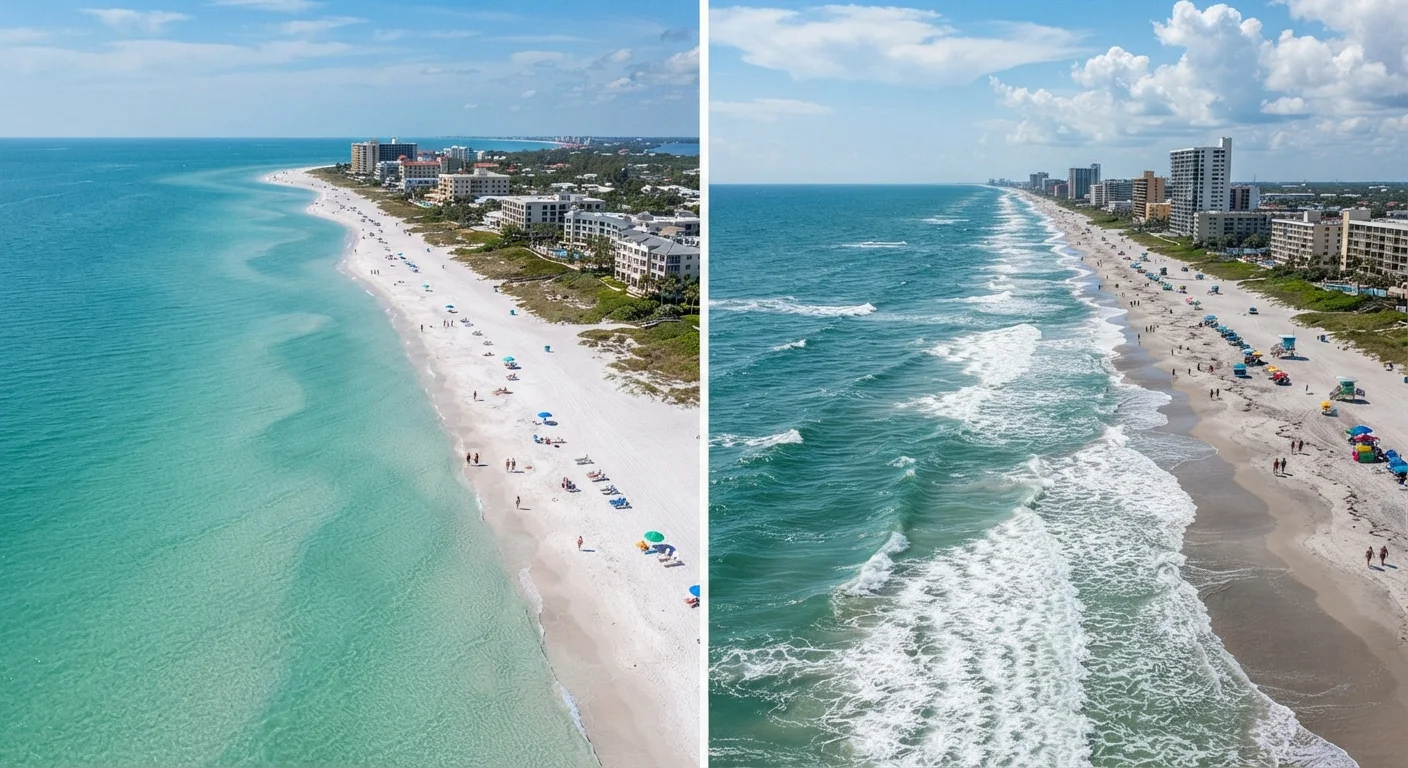
The Water: Temperature, Color, and Feel
The single most dramatic difference between Florida's two coastlines is the water itself. The Gulf of Mexico is an enclosed basin that heats up efficiently during summer, often reaching 85-88°F in shallow areas - closer to bathwater than ocean. The Atlantic, open to the broader ocean circulation system, stays noticeably cooler, typically running 5-10 degrees lower in summer and dropping more sharply in winter.
Color tells a story too. Gulf water earns its turquoise-to-emerald reputation from its sandy, shallow bottom and natural clarity. Atlantic water tends toward deeper blue-green tones, reflecting greater depth closer to shore and stronger current patterns. Neither is universally "clearer" - conditions shift with weather and season - but Gulf swimming spots are often described as visually striking even on average days.
Wave energy is another separator. The Gulf's enclosed geography limits fetch (the distance wind travels over water to build waves), meaning surf stays gentle on most days. The Atlantic's exposure to open ocean swells produces consistent wave action - a gift for surfers, but something families with small children should factor into their plans.
| Criterion | Gulf Coast | Atlantic Coast |
|---|---|---|
| Water temperature (summer) | 85-88°F typical | 78-83°F typical |
| Wave energy | Generally calm, low surf | Consistent waves, surf-friendly |
| Sand texture | Fine, white quartz powder | Coarser, varies by latitude |
| Sunset or sunrise views | Sunset over open water | Sunrise over open water |
| Urban atmosphere | Mostly resort towns | Major cities, dense development |
| Snorkeling/diving | Calm snorkeling, some reef | Reef diving, stronger currents |
| Peak travel season | Winter and spring | Year-round, winter peak |
Sand, Scenery, and the Lay of the Shoreline
Florida's Gulf Coast beaches, particularly those from Clearwater south through Naples and up through the Panhandle, are composed largely of fine quartz sand that stays cooler underfoot even in peak summer heat. This sand originated from the Appalachian Mountains, carried down by rivers over millennia and deposited along the Gulf shore. The result is a powdery texture that's become one of the Gulf's defining selling points.
Atlantic Coast sand varies more noticeably by latitude. South Florida beaches like Miami Beach have coarser, often shell-mixed sand with a yellowish or gray tone. Farther north, near Jacksonville, the beaches are wide, dark-packed, and firm enough in some places that driving on them has historically been permitted - a distinctly different experience than the barefoot-strolling Gulf ideal.
1,350 mi
Total Florida tidal shoreline
Florida has more tidal shoreline than any other contiguous U.S. state, according to NOAA coastal measurement data.
~220 mi
Miles of Gulf Coast beaches
Florida's Gulf-facing beaches stretch from Pensacola south to the Keys, encompassing diverse ecosystems and communities.
Top 5
Siesta Key's beach ranking frequency
Siesta Key on the Gulf Coast has repeatedly appeared in national top-five beach lists, cited for its quartz sand composition and water clarity.
Scenically, each coast offers something the other can't. Gulf Coast sunsets over open water are genuinely spectacular - the sun drops directly into the sea, a phenomenon that draws crowds to beach access points each evening in towns like Sarasota and Destin. Atlantic Coast beaches face east, which means sunrises over the ocean instead. For early risers, a quiet Atlantic dawn with no one on the sand is equally memorable.
Town Character and Traveler Atmosphere
Where you stay shapes your experience as much as the water does. Florida's Atlantic Coast is home to the state's largest and most internationally recognized cities. Miami brings world-class dining, art, music, and nightlife within steps of the beach. Fort Lauderdale offers a more relaxed but still cosmopolitan feel. Daytona Beach skews toward motorsports culture and spring break history. The Atlantic side tends toward density, development, and a pace that suits travelers who want stimulation alongside their sun.
Gulf Coast towns, with some exceptions, run quieter. St. Pete Beach, Siesta Key, and Marco Island cater primarily to beach-focused visitors rather than city-seekers. The Florida Panhandle - from Pensacola through Panama City Beach and Destin - draws heavily from the Southeast US and carries a distinct Southern coastal character. Seaside, the planned community made famous partly by the film The Truman Show, sits here and represents the Gulf's appetite for architectural charm and low-key community atmosphere.
Tampa and Naples are the Gulf's best arguments for urban sophistication, but even they move at a different register than Miami. Travelers who want their beach to come with a side of cultural institution, international cuisine, and after-midnight options will find more of that on the Atlantic side.
Verify Entry, Safety, and Conditions Before You Travel
Beach conditions, water quality advisories (including red tide on the Gulf), and local regulations can change quickly and vary by municipality. Before visiting any Florida coastal area, check current conditions through the Florida Department of Health, local county beach advisory systems, and the National Weather Service. Travel conditions described here are general in nature and should not be treated as guarantees of what you'll find on arrival.
Storms, Seasons, and When to Visit
Both coasts fall within Florida's hurricane zone, and travelers should monitor official weather forecasts and government advisories before and during any visit between June and November. That said, storm tracks are not identical between coasts. Gulf Coast communities - particularly along the Panhandle and Big Bend region - have historically been vulnerable to storms that strengthen in the warm Gulf basin before landfall. The Atlantic side can be struck by storms tracking up from the Caribbean.
Outside hurricane season, timing diverges. Gulf Coast winters are mild and extremely popular with northern snowbirds, making January through March a busy, sometimes pricey period at resort towns. The Atlantic Coast, especially South Florida, also peaks in winter but carries more year-round traffic given its larger permanent population and international visitor base.
Summer heat is intense on both sides, but Gulf Panhandle beaches are cooler in summer than South Florida and can be a reasonable choice for June or July visitors willing to plan around afternoon storms, which arrive with reliable regularity on most Florida summer days regardless of coast.
Spring - particularly March through early May - represents a sweet spot on both coasts: warm water, manageable crowds, and lower rates than peak winter weeks. Fall, after hurricane season winds down in late October, is another underrated window that experienced Florida travelers often prefer.