Why Tires Lose Air Over Time
Air loss in tires is not always a sign that something is wrong. Even perfectly intact tires lose pressure gradually through a process called permeation - air molecules are small enough to slowly diffuse through the rubber compound itself. On average, tires lose between 1 and 3 PSI per month under normal conditions.
Beyond natural permeation, several common factors speed up the process:
- Temperature changes: Cold air contracts, causing pressure to drop measurably as outdoor temperatures fall. This is the most frequent reason drivers see the low-pressure warning light appear overnight.
- Valve stem issues: A worn, dirty, or loose valve stem can allow slow, continuous air loss that's easy to miss.
- Bead seal leaks: The bead is the edge of the tire that seats against the wheel rim. Corrosion on older alloy wheels or impact damage can compromise this seal.
- Road impacts: Hitting a pothole or curb hard enough can cause the tire to momentarily unseat, allowing air to escape - even if no puncture occurs.
- Aging rubber: Tires older than six years may develop micro-cracks that contribute to faster air loss.
TPMS Is a Backup, Not a Routine Check
The Tire Pressure Monitoring System standard on vehicles sold in the U.S. since 2008 warns you when pressure is significantly low - but the threshold is set well below the recommended level. Relying on the TPMS alone means you may be driving on underinflated tires for weeks before the light comes on. A monthly manual check is still the most reliable approach.
What Actually Happens When You Ride on Low Tires
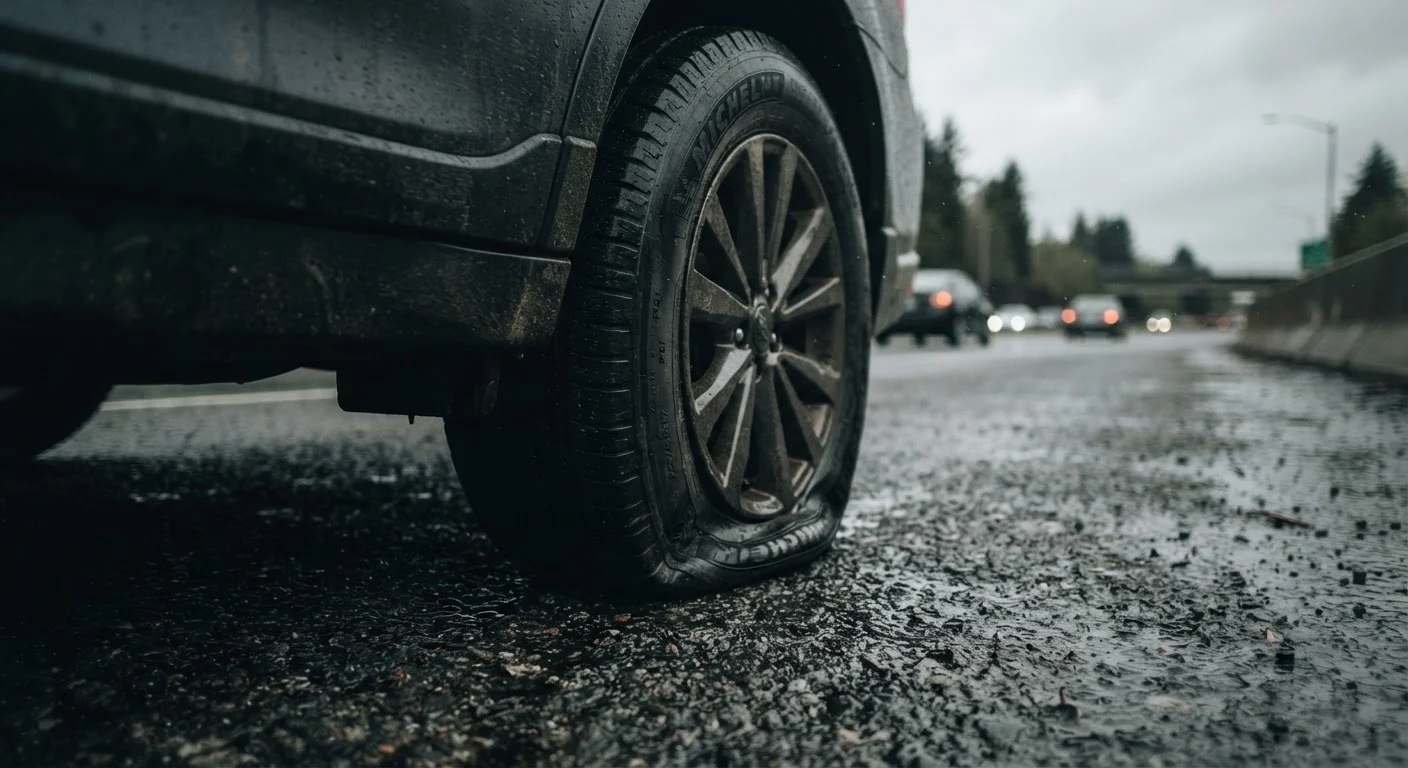
An underinflated tire doesn't just feel soft - it changes the fundamental physics of how your vehicle operates. When tire pressure is low, more of the tire's surface area makes contact with the road. That sounds like it might improve grip, but it actually creates serious problems.
Heat Buildup and Blowout Risk
Excess flexing of the tire sidewall generates heat. The more underinflated the tire, the more it flexes with every rotation. Heat is the primary enemy of tire integrity - it weakens the rubber and the internal belts. At highway speeds, this heat can accumulate faster than it dissipates, dramatically increasing blowout risk.
Reduced Steering and Braking Response
Tire pressure directly affects how quickly a tire responds to steering input and how effectively it transfers braking force to the road. A soft tire deforms unpredictably under load, which can extend stopping distances and make the vehicle feel vague or slow to respond in emergency maneuvers.
Uneven Tread Wear
Underinflated tires tend to wear on both outer edges of the tread while the center remains relatively unworn. This pattern - called edge wear or shoulder wear - shortens tire life significantly and may not be immediately obvious without a close inspection.
Fuel Economy Loss
A tire low on pressure creates more rolling resistance, meaning your engine has to work harder to maintain speed. Studies from the U.S. Department of Energy have found that underinflated tires can reduce fuel economy measurably, adding up to real costs over thousands of miles.
Check Pressure When Tires Are Cold
Always measure tire pressure before driving or at least three hours after the vehicle has been parked. Driving heats the air inside the tire, causing pressure to rise temporarily and giving a falsely elevated reading. Cold-tire measurements give you the most accurate comparison against your vehicle's specification.
How to Stay on Top of Tire Pressure
The best approach is a consistent monthly habit. Use a quality tire pressure gauge - digital or dial-style - when tires are cold for an accurate reading. Compare the result to the specification on your door jamb sticker, not the maximum listed on the tire sidewall.
1-3 PSI
Monthly pressure loss in a healthy tire
Industry guidance from tire manufacturers indicates even properly sealed tires lose this much air monthly through natural rubber permeation.
~1 PSI
Pressure drop per 10°F temperature decrease
The U.S. Department of Transportation cites this relationship as a standard rule of thumb for understanding seasonal pressure changes.
25%
Pressure drop needed to trigger TPMS warning
Federal law requires TPMS systems to alert drivers when pressure falls to 25% below the vehicle manufacturer's recommended level - by which point handling is already impaired.
Many modern vehicles equipped with a Tire Pressure Monitoring System (TPMS) will alert you when pressure drops roughly 25% below the recommended level. While TPMS is a useful safety net, it should not replace regular manual checks - a tire can be meaningfully underinflated and still not trigger the warning.
Seasonal transitions - particularly the shift into fall and winter - are especially important times to check. If you store a vehicle for extended periods, inflate tires to spec before driving again, as pressure will have dropped during storage.
If a tire consistently loses pressure faster than the normal permeation rate, have it inspected by a qualified tire technician. A slow leak from a nail, a damaged valve stem, or a compromised bead seal can often be repaired at low cost before it becomes a safety issue.