The Three Parts That Stop Your Car
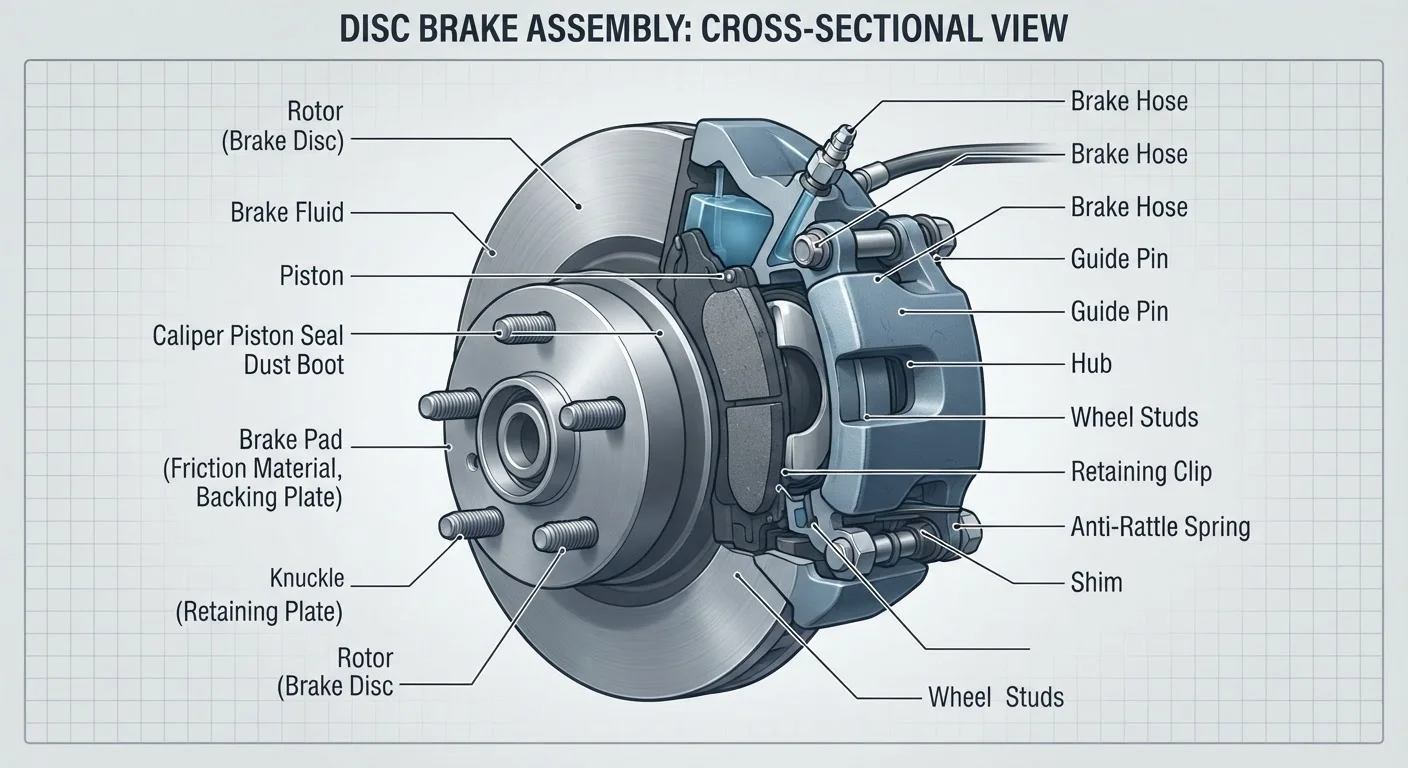
Your braking system is one of the most safety-critical systems on your vehicle, yet most drivers have only a vague sense of what's actually happening when they press the pedal. The disc brake system - found on most modern cars - has three primary components: the brake pad, the rotor, and the caliper. Each has a specific job, a distinct wear pattern, and different warning signs when it starts to fail.
Understanding what these parts do doesn't require mechanical expertise. It just requires knowing the basics - which is enough to recognize early warning signs and have smarter conversations with your mechanic. For a broader view of vehicle systems, see our complete car maintenance overview.
30,000-70,000 mi
Typical brake pad lifespan range
Variation depends on driving style, vehicle weight, pad material, and traffic patterns - city driving typically produces faster wear than highway driving.
~25%
Increase in stopping distance with worn brakes
Studies by safety organizations have found that significantly worn brake components can meaningfully extend stopping distances, increasing collision risk.
2-3 years
Recommended brake fluid change interval
Many vehicle manufacturers and mechanics suggest replacing brake fluid every two to three years, as moisture absorption degrades hydraulic performance over time.
Brake Pads: The Friction Layer
Brake pads are the friction material that actually contacts the rotor to slow your wheels. They're mounted inside the caliper and pressed against both sides of the spinning rotor when you apply the brakes. Over time, the friction material wears down - this is expected and normal. What matters is catching the wear before it becomes a problem.
Most brake pads include a wear indicator: a small metal tab that produces a high-pitched squeal when the pad material gets thin enough for the tab to contact the rotor. That squealing sound is a deliberate signal that service is due. If ignored, the pad wears completely through and metal contacts metal - producing the grinding noise many drivers know too well.
Hard braking habits can significantly shorten pad life, sometimes cutting it nearly in half compared to smooth, gradual stops.
Get Brakes Inspected at Every Tire Rotation
Most tire rotations include a visual brake inspection at no extra charge. Since your tires are already coming off, it's an ideal time for a mechanic to assess pad thickness, rotor condition, and caliper function. Building this habit into your routine means brake wear rarely catches you off guard. Check your owner's manual maintenance schedule for your vehicle's recommended service intervals.
Rotors: The Surface That Takes the Heat
Brake rotors - also called discs - are the large metal discs you can often see through your wheel spokes. They spin with the wheel and provide the surface the brake pads clamp against. When braking force is applied, enormous amounts of kinetic energy are converted to heat through friction. Rotors are designed to dissipate that heat quickly, which is why they're vented with internal cooling channels on most vehicles.
Rotors wear over time, but they can also warp from repeated heat cycles or develop surface grooves from worn pads. A warped rotor typically produces a pulsating or vibrating sensation through the brake pedal or steering wheel when stopping. Deeply grooved rotors reduce the effective contact area of the pad and compromise stopping power. A mechanic can measure rotor thickness to determine whether resurfacing or replacement is appropriate.
Calipers: The Hydraulic Clamp
The caliper is the hydraulic mechanism that squeezes the brake pads against the rotor. When you press the brake pedal, brake fluid transmits that pressure through the brake lines to each caliper, where pistons push the pads into contact with the rotor. Release the pedal and the pads retract - though not entirely, which keeps response time sharp.
Calipers are built to last, but they can fail in two main ways: they can leak brake fluid, reducing hydraulic pressure and braking effectiveness, or they can seize, staying partially engaged even when you're not braking. A seized caliper causes constant friction on one wheel, leading to uneven pad wear, a dragging sensation, or heat and smell from that corner of the vehicle.
Because brake fluid is central to caliper function, maintaining clean fluid is essential. Our guide to fluid checks every driver should know explains what to look for and when to be concerned.
Warning Signs to Never Ignore
The braking system generally gives clear signals before failure becomes dangerous. Here are the most important ones to recognize:
- Squealing or squeaking: Usually the wear indicator; schedule service soon.
- Grinding or metal-on-metal noise: Pad material is gone - immediate inspection required.
- Vibration or pulsing through the pedal: Often indicates warped rotors.
- Vehicle pulling to one side when braking: May indicate a seized caliper or uneven pad wear.
- Soft or spongy pedal: A sign of air in the lines or brake fluid issues - serious and urgent.
- Brake warning light illuminated: See what your dashboard warning lights are telling you for more context.
None of these symptoms should be deferred. Brake system issues are among the few maintenance problems that can escalate from inconvenient to genuinely unsafe in a short period. If you notice any of these signs, have the system inspected by a qualified mechanic before the situation worsens.