Why Warning Lights Exist - and Why They Demand Attention
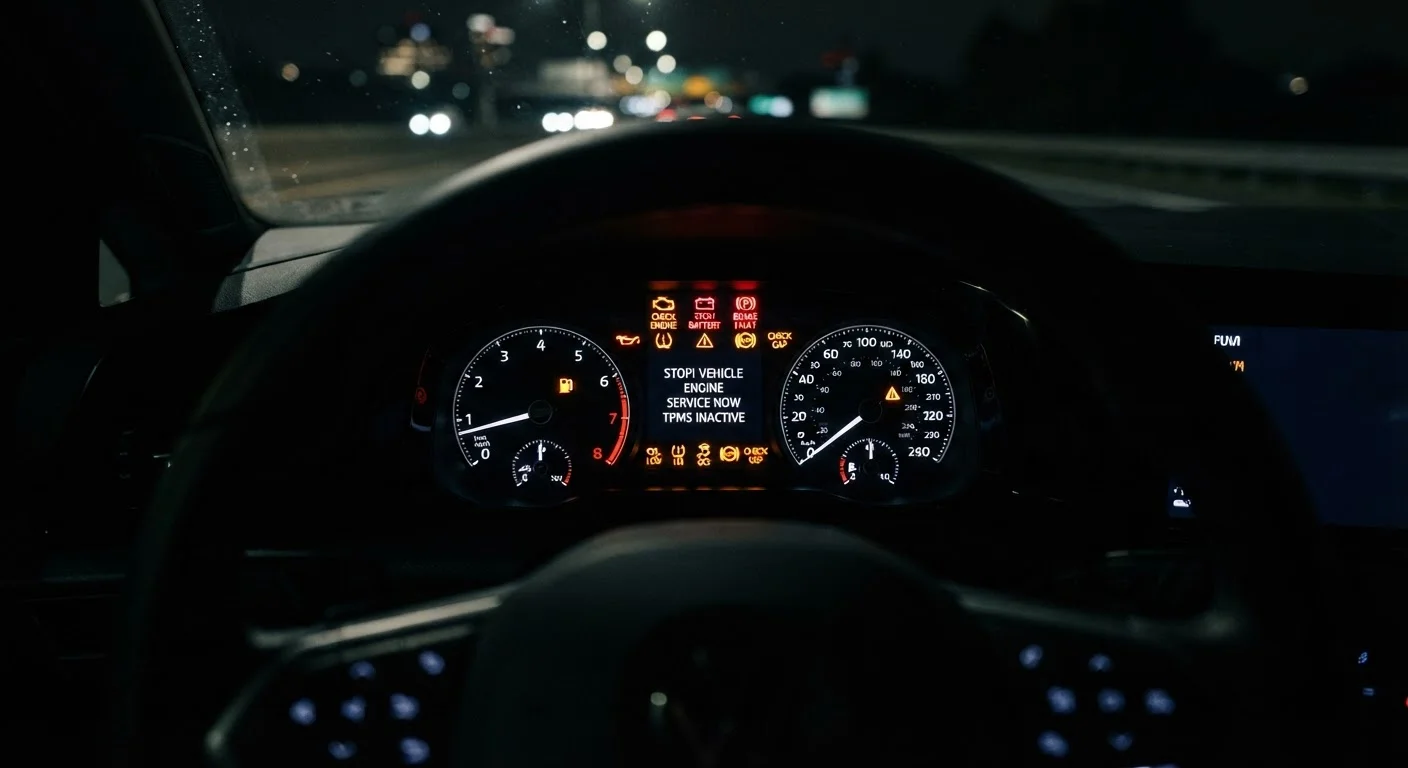
Modern vehicles are equipped with dozens of sensors that continuously monitor critical systems. When something falls outside normal operating parameters, the vehicle's onboard diagnostic system triggers a dashboard warning light. These indicators aren't suggestions - they're alerts from your car's own monitoring systems, and ignoring them often leads to compounded mechanical failures and steeper repair bills.
Warning lights are generally grouped by urgency. Red lights signal immediate action is required - continuing to drive could cause serious damage or create a safety hazard. Amber or yellow lights indicate a condition that needs attention soon but is typically not an immediate emergency. Blue and green lights are informational, confirming that a system is active rather than flagging a problem.
Before diving into individual lights, one principle applies universally: your owner's manual is the definitive reference for your specific vehicle. Symbols can vary by manufacturer, and the maintenance schedule section of your owner's manual explains what each indicator means for your make and model.
OBD-II
On-Board Diagnostics, second generation - a standardized system built into vehicles since 1996 that monitors engine and emissions-related components and stores fault codes when a problem is detected. Mechanics and scan tools use OBD-II to read these codes and diagnose issues.
TPMS
Tire Pressure Monitoring System - a sensor-based system that alerts the driver when one or more tires fall below a safe inflation level. Required on all new passenger vehicles sold in the U.S. since 2008.
Fault Code (DTC)
Diagnostic Trouble Code - an alphanumeric code stored by the vehicle's computer when a sensor reading falls outside expected parameters. Fault codes help mechanics identify which system or component triggered a warning light.
Catalytic Converter
An emissions control device in the exhaust system that converts harmful combustion byproducts into less toxic compounds. Engine misfires can overheat and permanently damage the catalytic converter, making prompt attention to a flashing check engine light especially important.
Coolant
A liquid circulated through the engine to absorb and dissipate heat. Also called antifreeze, it prevents both overheating in summer and freezing in winter. Low coolant level is a common cause of engine temperature warning lights.
Alternator
A generator driven by the engine that recharges the battery and powers electrical systems while the vehicle is running. A failing alternator is one of the most common causes of the battery or charging system warning light.
The Most Common Warning Lights Decoded
Understanding the lights you're most likely to encounter is the practical starting point for every driver.
| Warning light colors: red | Immediate action required - stop driving when safe |
| Warning light colors: amber/yellow | Attention needed soon - schedule service promptly |
| OBD-II standardization year | 1996 (all U.S. passenger vehicles) (U.S. Environmental Protection Agency) |
| TPMS required on new U.S. vehicles since | 2008 (NHTSA TPMS Final Rule) |
| Recommended tire pressure source | Driver's door jamb sticker - not the tire sidewall |
| Flashing vs. steady check engine light | Flashing = active misfire, reduce speed immediately; Steady = schedule diagnosis |
Check Engine Light (CEL)
Possibly the most misunderstood indicator on any dashboard, the check engine light can mean anything from a loose gas cap to a misfiring engine or a failing catalytic converter. A steady check engine light usually indicates a non-emergency fault that should be diagnosed promptly. A flashing check engine light, however, signals an active misfire that can damage the catalytic converter - reduce speed, avoid hard acceleration, and have the vehicle inspected as soon as possible. A mechanic can retrieve the stored fault codes using an OBD-II scanner to pinpoint the cause. For broader context on keeping your vehicle in good shape, see what your car's maintenance schedule is actually telling you.
Oil Pressure Warning
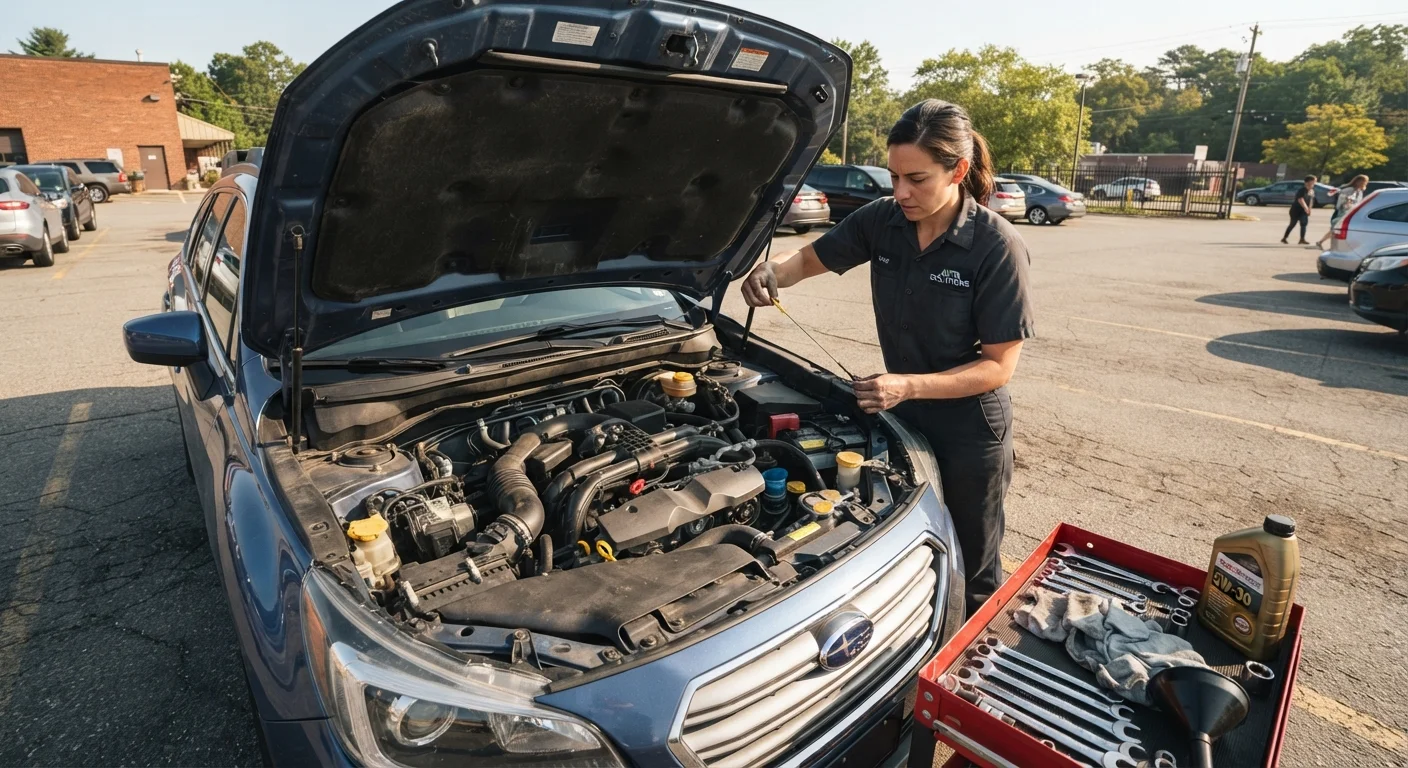
This red light - often shaped like an oil can - means your engine's oil pressure has dropped to a dangerous level. Pull over safely and turn off the engine as soon as it is safe to do so. Running an engine with low oil pressure can cause catastrophic internal damage within minutes. Check the oil level once the engine is off and cool. Low oil level, a failing oil pump, or a leak may be responsible. Do not continue driving until the cause is identified and resolved by a qualified mechanic.
Battery / Charging System Alert
When this light stays on while driving, the charging system - most commonly the alternator - may not be replenishing the battery. The vehicle will run on battery power alone until it's depleted, which could happen within minutes or over an hour depending on electrical load. Reduce non-essential electrical use (climate control, rear defroster) and head to a service facility promptly. Signs your car battery is weakening often show up before this light appears.
Tire Pressure Monitoring System (TPMS)
The TPMS light - a cross-section of a tire with an exclamation point - activates when one or more tires are significantly under-inflated (or sometimes over-inflated). Under-inflated tires increase stopping distances, reduce fuel efficiency, and raise the risk of a blowout. Check all four tires with a gauge and inflate to the PSI specified on the door jamb sticker, not the number on the tire sidewall. A pre-trip safety check that includes tire pressure can help you catch this before the light ever appears.
Brake System Warning
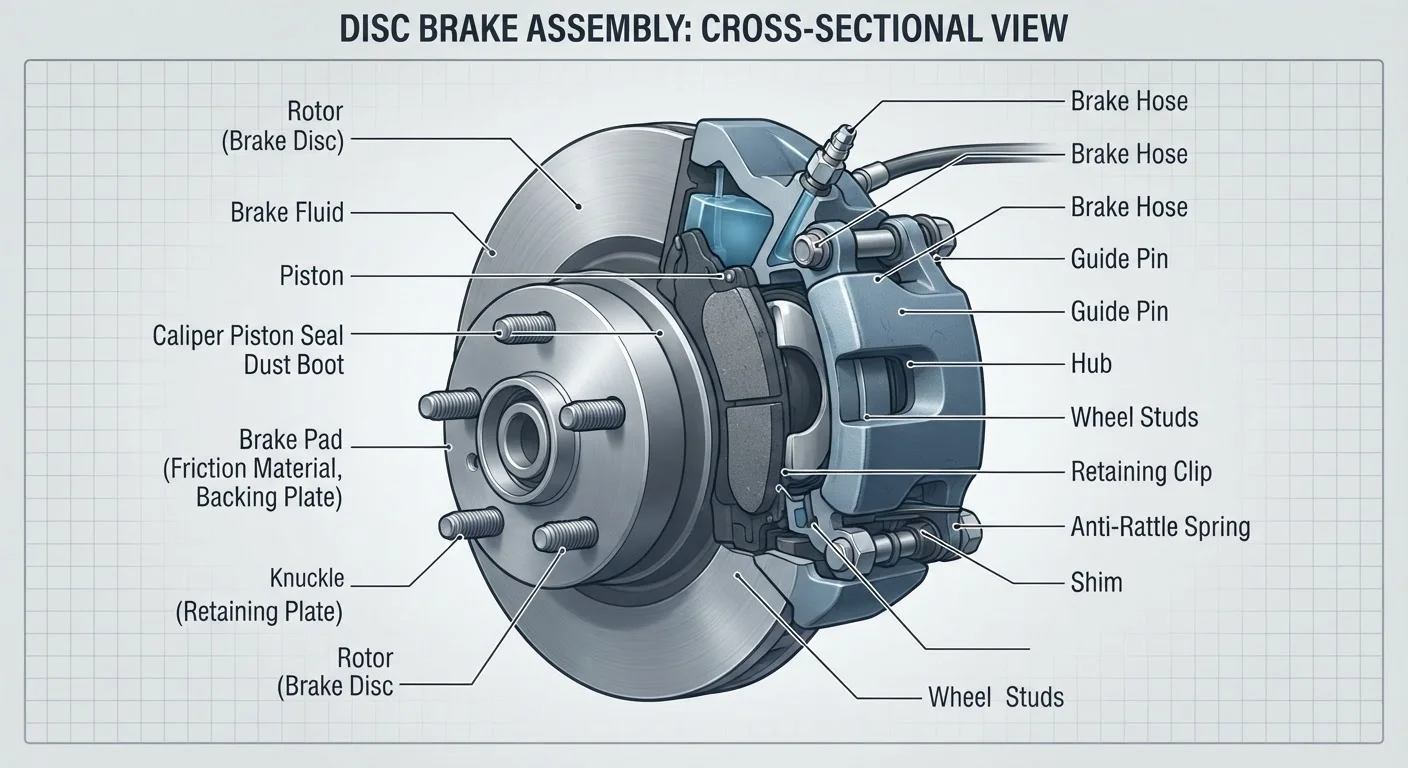
A red brake warning light - distinct from the parking brake indicator - can signal low brake fluid, a hydraulic fault, or a serious braking system failure. This is a safety-critical alert. Have the vehicle inspected immediately. For a deeper explanation of braking system components, how your braking system works covers what each part does and the signs of wear.
Temperature Warning
A red thermometer icon means the engine coolant temperature has exceeded safe limits. Pull over safely, turn off the engine, and do not open the radiator cap while the engine is hot. Overheating can warp cylinder heads and cause permanent engine damage. Allow the engine to cool completely before checking coolant levels, and seek professional service before continuing to drive.
What to Do When a Warning Light Appears
The appropriate response depends on which light is on, its color, and whether the vehicle is behaving abnormally. As a general framework:
- Red light + abnormal symptoms (unusual noise, loss of power, smoke, burning smell): Pull over safely as soon as possible and do not restart the vehicle until the cause is known.
- Red light + no obvious symptoms: Reduce driving to the minimum necessary and have the vehicle inspected the same day.
- Amber light: Schedule a service appointment within a reasonable timeframe - typically within a week or two, depending on the specific light and your driving conditions.
- Unfamiliar symbol: Consult your owner's manual before drawing conclusions. Not all lights indicate failures; some confirm active driver-assist features.
One practical step many drivers overlook: an inexpensive OBD-II scanner (available at auto parts stores) can read stored fault codes from the check engine system without a trip to the shop. This can help you understand the nature of a fault before seeking professional service, though a mechanic's full diagnosis is still needed to confirm and resolve the problem.
Staying informed about your vehicle's systems is one part of broader safe driving awareness. The principles covered in defensive driving - anticipating hazards and responding deliberately - apply equally to how you respond to dashboard alerts.
This article is for general informational purposes only. For any warning light indicating a safety-critical system, consult a qualified, licensed mechanic before operating the vehicle further.