Why Batteries Rarely Die Without Warning
A dead battery is one of the most common - and preventable - reasons drivers end up stranded. The reassuring truth is that most batteries don't fail suddenly. They deteriorate gradually, and that process almost always produces recognizable symptoms if you know what to look for.
Car batteries are electrochemical devices. Over time, the chemical reaction that generates electrical current becomes less efficient, reducing the battery's ability to hold and deliver a charge. Understanding the early warning signs gives you time to act before a sluggish engine becomes a no-start situation in a parking lot or on the highway.
If you're preparing for a longer drive, checking your battery condition before you leave is one of the smartest steps in any pre-trip routine.
| Typical Battery Lifespan | 3-5 years (General industry guidance; varies by climate and use) |
| Most Common Failure Trigger | Age combined with extreme temperatures |
| Key Electrical Sign | Dimming lights or slow engine crank |
| Recommended Diagnostic | Professional battery load test (Available free at many auto parts retailers) |
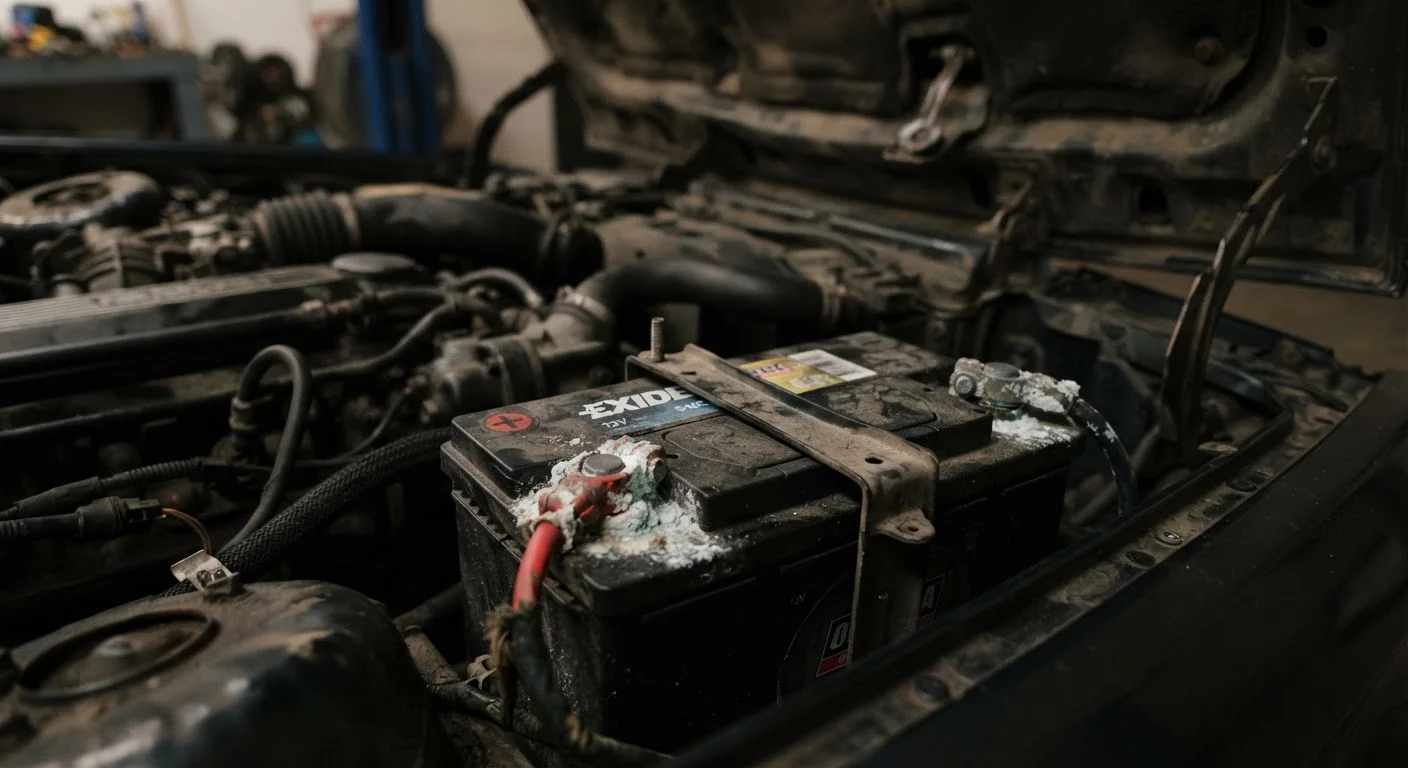
| Terminal Corrosion Appearance | White, blue, or greenish crust around terminals |
| Cold Weather Impact | Reduces battery's current delivery capacity |
Common Warning Signs of a Weakening Battery
These indicators don't guarantee a failing battery on their own, but they warrant attention - especially when more than one appears together.
Slow or Sluggish Engine Crank
When you turn the key or press the start button, the starter motor draws a large surge of current from the battery. If the engine cranks noticeably slower than usual - a labored, drawn-out sound rather than a crisp ignition - the battery may no longer be delivering adequate amperage.
Dimming Lights and Weak Electrical Output
Headlights that appear dimmer than usual, interior lights that flicker, or electronics that behave erratically can all point to insufficient battery voltage. These symptoms are more telling when they occur at idle, since the alternator isn't spinning fast enough to fully compensate for a weak battery at low RPM.
The Battery Warning Light
A battery-shaped icon on your dashboard is a direct signal from the vehicle's charging system that something is off. It can indicate a failing battery, a faulty alternator, or a loose connection. Don't ignore it. Learn more about what dashboard alerts mean in our guide to interpreting your car's warning lights.
Frequent Jump-Starts Needed
Needing a jump-start once after an interior light was left on is not unusual. Needing one repeatedly - or finding the vehicle slow to start after sitting overnight - strongly suggests the battery is no longer holding a charge adequately.
Visible Corrosion on Terminals
A white, blue, or greenish crust forming around the battery terminals signals a chemical reaction that can impede electrical flow. Corrosion alone doesn't mean the battery is bad, but it can accelerate decline and is worth addressing promptly.
Battery Age Over Three to Five Years
Most automotive batteries have a service life of roughly three to five years under normal conditions, though this varies by climate, driving patterns, and battery type. If yours is in that range and you're experiencing any of the above, a professional load test is a practical next step.
Cold Cranking Amps (CCA)
A rating that measures how much current a battery can deliver for 30 seconds at 0°F while maintaining a minimum voltage. Higher CCA ratings generally indicate better cold-weather starting performance.
Parasitic Drain
An unintended electrical draw that continues after the vehicle is turned off. Common sources include faulty switches, aftermarket accessories, or malfunctioning modules that remain powered when they shouldn't be.
Load Test
A diagnostic procedure that measures a battery's ability to deliver current under a simulated electrical load. It is more accurate than a simple voltage reading and reveals whether a battery can perform under real-world starting conditions.
Alternator
A generator driven by the engine that recharges the battery and powers the vehicle's electrical systems while the engine is running. A failing alternator can mimic or cause battery problems.
Deep Discharge
A state in which a battery is drained well below its normal operating voltage. Repeated deep discharges can permanently reduce the battery's capacity and shorten its overall lifespan.
What Causes a Battery to Weaken Faster
Several everyday factors accelerate battery wear - many of which are within a driver's control.
- Short, frequent trips: The alternator recharges the battery while the engine runs. Very short trips may not provide enough run time to replenish the charge used during starting, gradually depleting the battery over time. Short-trip driving is among the habits that quietly shorten a vehicle's overall lifespan.
- Extreme temperatures: Both heat and cold strain batteries. High heat accelerates internal chemical breakdown; cold temperatures reduce the battery's ability to deliver current, which is why many batteries fail on cold winter mornings.
- Parasitic drain: Certain electrical faults or accessories left running - such as a dome light or a malfunctioning component - can slowly drain the battery overnight.
- Infrequent driving: Vehicles that sit unused for extended periods lose charge naturally. Without periodic recharging, deep discharge can permanently reduce battery capacity.
Having your battery tested at a shop - most auto parts retailers and repair shops offer free battery load testing - is the most reliable way to confirm whether the battery is truly failing or whether another component, such as the alternator, is the root cause. A technician can distinguish between the two quickly with basic diagnostic equipment.