Why Most Drivers Never Use This Section - and Why That's Costly
The owner's manual is one of the most information-dense documents that comes with a vehicle, and it's also one of the least read. Most drivers glance at it once, then store it in the glove box indefinitely. The maintenance schedule section, in particular, contains exactly the guidance manufacturers engineer into every vehicle - yet it's routinely ignored in favor of generic advice or service shop upselling.
Skipping or misreading the maintenance schedule doesn't just risk breakdowns. It can affect your warranty coverage, reduce resale value, and turn minor wear into expensive system failures. A timing belt replacement, for example, is a scheduled service item on many vehicles. Miss it, and you risk catastrophic engine damage - a repair that can cost several times what the scheduled service would have.
If you're new to vehicle ownership, the practical guide to first-car maintenance is a strong starting point before diving into your manual's schedule. For a complete system-by-system view, car maintenance from bumper to bumper provides the broader context.
What you will need
How to Read and Apply Your Maintenance Schedule
Reading the maintenance schedule effectively is a skill most drivers can develop in under an hour. The steps below walk you through locating the schedule, interpreting its structure, and turning it into an actionable service plan you'll actually use.
Owner's Manual
Contains the official maintenance schedule, fluid specifications, and service interval guidance for your specific vehicle.
Maintenance Log or Notebook
Used to record completed services, dates, and mileage so you can track what's due next.
Smartphone or Calendar App
Set recurring reminders for time-based service intervals so nothing falls through the cracks.
Locate the maintenance schedule in your manual
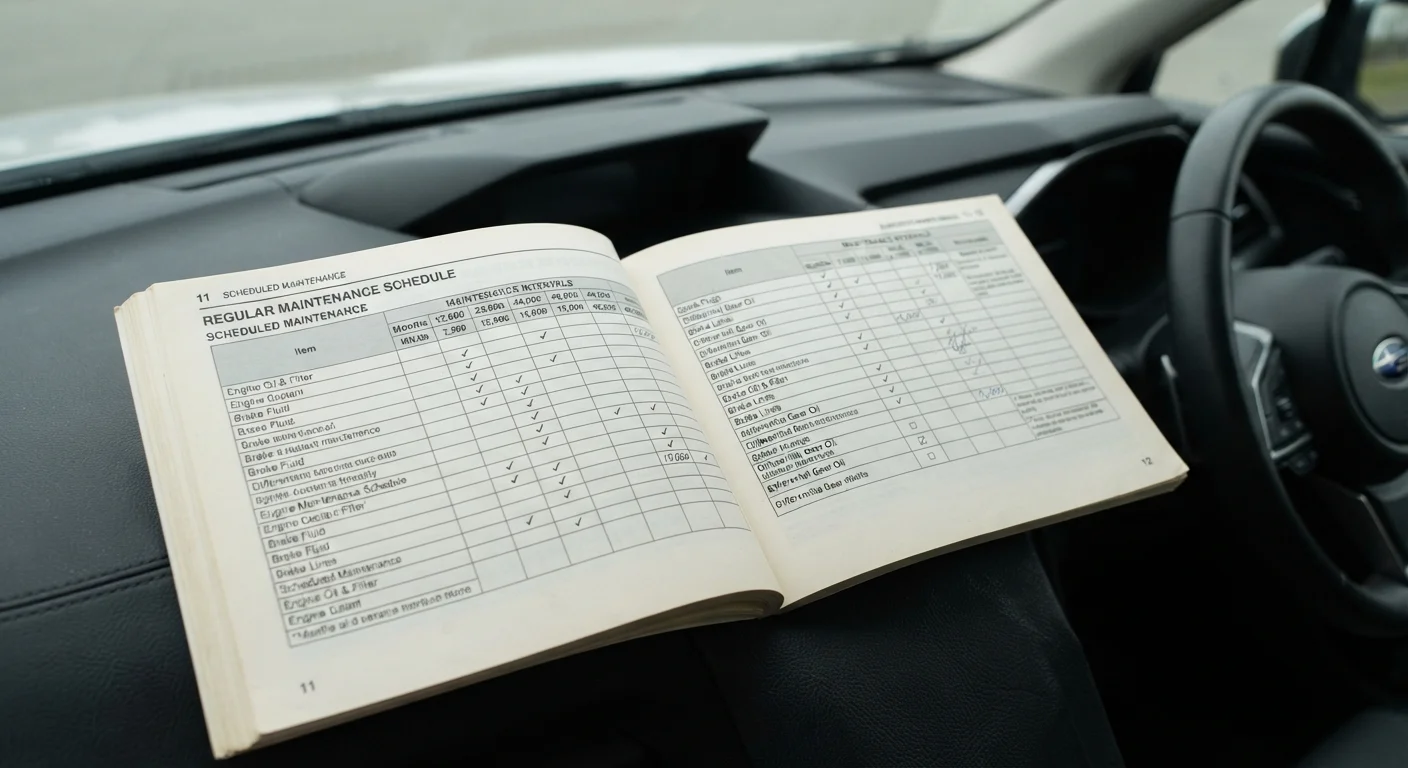
Most owner's manuals index the maintenance schedule under headings like "Scheduled Maintenance," "Maintenance Schedule," or "Service Intervals." Check the table of contents first - it's typically found toward the back of the manual, often in its own color-coded section.
If you don't have a physical copy, most manufacturers offer free PDF downloads of owner's manuals through their official websites. Search for your vehicle's year, make, and model along with "owner's manual PDF."
Understand the two types of intervals: mileage and time
Every service item in the schedule is listed with two triggers: a mileage interval (e.g., every 5,000 miles) and a time interval (e.g., every 6 months). The rule is simple: whichever threshold you reach first is when service is due.
This matters especially for low-mileage drivers. If you drive fewer than 7,500 miles per year, time-based intervals - not mileage - will often trigger your oil changes, brake inspections, and other services first. Fluids degrade with age, not just use.
Identify which driving condition schedule applies to you
Most manuals include two maintenance tracks: Normal Conditions and Severe or Special Conditions. Many drivers assume they fall under "normal," but the severe schedule often applies more broadly than expected.
Severe conditions typically include: frequent short trips under five miles, stop-and-go city driving, towing or hauling heavy loads, driving in extreme heat or cold, or operating in dusty or hilly environments. If any of these describe your regular driving, the manufacturer recommends shorter service intervals to compensate for the added stress on your vehicle's components.
Map each service item to your current mileage
Once you've identified your driving condition category, go line by line through the schedule. For each service item - oil and filter, tire rotation, air filter, spark plugs, transmission fluid, coolant, brake fluid, and so on - note the interval and calculate when it's next due based on your current odometer reading.
Create a simple list: service item, last completed mileage (if known), and next due mileage. This gives you a practical snapshot of what's coming up. Services like tire rotation and alignment are frequently listed here and are easy to overlook without a written plan.
Cross-reference fluid and part specifications
The maintenance schedule section often links to adjacent pages listing exact fluid specifications - oil viscosity grade, coolant type, brake fluid type, and transmission fluid specifications. These matter. Using the wrong specification can reduce performance or cause damage over time.
Pay attention to whether your vehicle requires conventional, synthetic blend, or full synthetic motor oil, and the exact viscosity (e.g., 5W-30 or 0W-20). For a deeper look at how oil intervals work in practice, see our article on oil change frequency and what happens when you delay.
Set up a tracking system and schedule upcoming services
Record each upcoming service with its due mileage and estimated calendar date in a maintenance log or digital calendar. A simple spreadsheet, notebook, or notes app works well. Set reminder alerts a few hundred miles or a week before each service is due.
Keeping thorough records also matters if you plan to sell the vehicle - documented service history is a meaningful asset. For a broader annual review of your vehicle's maintenance status, the annual vehicle ownership audit is a useful structured checklist.
Your Manual Knows Your Car Better Than Any Generic Guide
Generic service interval advice - like "change your oil every 3,000 miles" - doesn't apply to every vehicle. Modern engines, synthetic oils, and variable oil life monitoring systems have changed the math considerably. Always use the intervals your manufacturer specifies for your exact model year, not rules of thumb from other sources.
Once you've worked through the schedule, consider how seasonal factors affect your service timing. Extreme temperature swings can accelerate wear on fluids, batteries, and tires - something the seasonal car care guide covers in detail. And if your vehicle has higher mileage, the priorities for high-mileage vehicles outlines which schedule items deserve extra attention as components age.