What's Actually Inside Each Floor
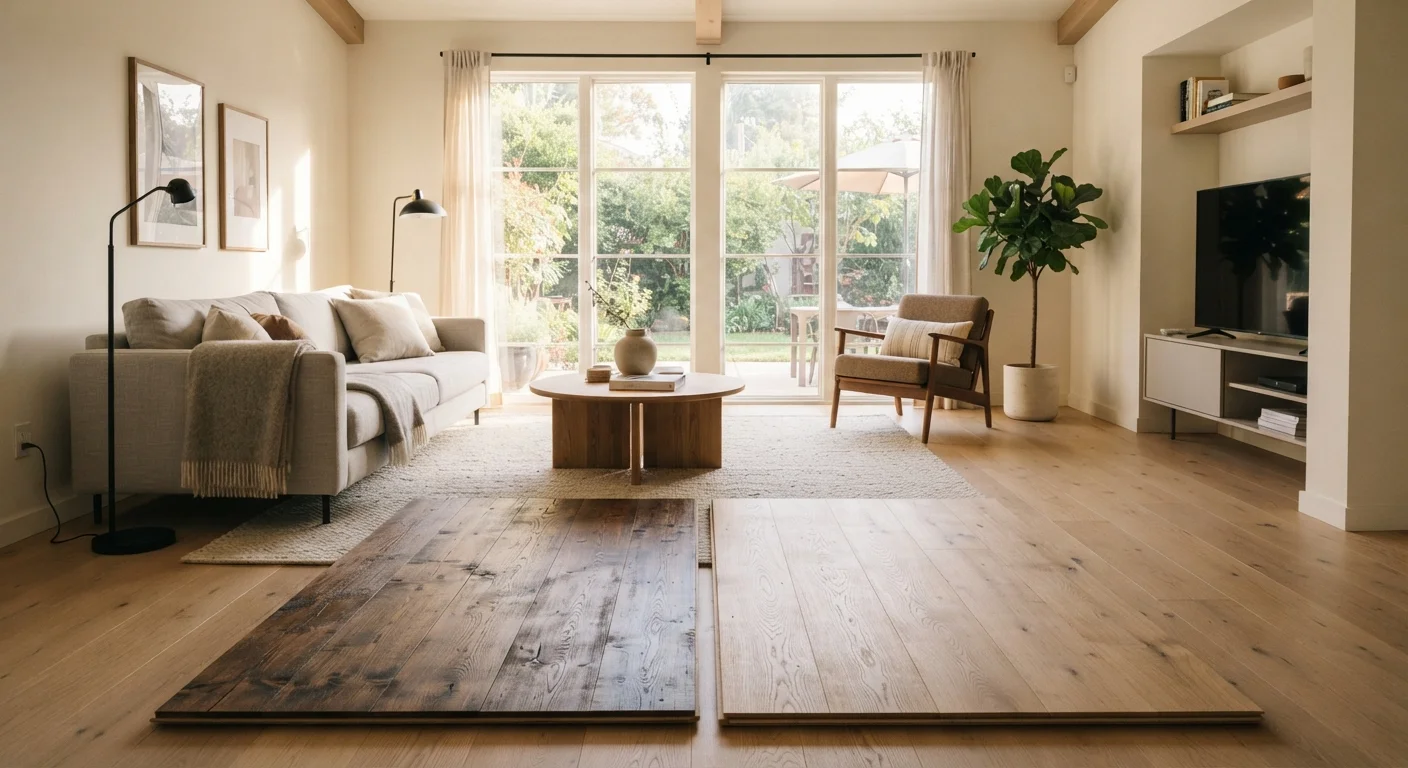
The most fundamental difference between these two flooring types is structural, not cosmetic. Solid hardwood is exactly what it sounds like - a single piece of milled wood, typically ¾ inch thick, cut from one species such as oak, maple, or hickory. Every plank is wood from top to bottom.
Engineered hardwood, by contrast, is a manufactured product with a real hardwood veneer on top - called the wear layer - bonded over multiple layers of plywood or high-density fiberboard (HDF). The wear layer thickness typically ranges from 2mm to 6mm. The thicker the wear layer, the more times the floor can be sanded and refinished.
This layered construction is the reason engineered hardwood behaves so differently from solid in real-world conditions. Wood naturally expands and contracts as humidity and temperature change. In a solid plank, that movement is uniform and significant. In engineered flooring, the cross-directional plywood layers work against each other, dramatically reducing overall expansion and contraction.
| Criterion | Engineered Hardwood | Solid Hardwood |
|---|---|---|
| Construction | Real wood veneer over plywood core | Single solid wood plank throughout |
| Moisture resistance | Good - stable in humidity swings | Poor - prone to warping, cupping |
| Below-grade installation | Yes, typically approved | Not recommended |
| Radiant heat compatibility | Generally compatible | Limited or not recommended |
| Refinishing potential | 1-4 times (wear layer dependent) | 5-8 times over lifetime |
| Typical plank thickness | ⅜ inch to ¾ inch | ¾ inch standard |
| DIY installation ease | Easier - click-lock options available | Requires nailing or gluing |
| Expected lifespan | 25-50+ years with care | 80-100+ years with refinishing |
Moisture, Stability, and Where Each Can Be Installed
Moisture tolerance is the single biggest practical dividing line between these two products. Solid hardwood should not be installed below grade - meaning in basements or areas where the floor sits at or below ground level. The risk of moisture wicking through the concrete slab is too high, and the resulting swelling, cupping, or gapping can ruin the floor.
Engineered hardwood is approved by most manufacturers for below-grade, on-grade, and above-grade installation. It can also be used over radiant heating systems, where temperature fluctuations would cause solid hardwood to crack or gap over time.
Check Your Subfloor Before Deciding
The condition and material of your subfloor matters as much as which hardwood type you choose. Concrete slabs often introduce moisture that affects both products differently. Have your subfloor assessed for flatness, moisture levels, and structural integrity before committing to either flooring type - many installation problems stem from skipping this step.
In kitchens and bathrooms, neither type is ideal as a primary flooring if major water exposure is expected (think dishwasher leaks or standing water). However, engineered hardwood tolerates the ambient humidity of a kitchen far better than solid hardwood.
Refinishing, Longevity, and Real Costs
Solid hardwood's biggest long-term advantage is its refinishability. Because each plank is ¾ inch thick solid wood, it can typically be sanded and refinished five to eight times over its lifetime - enough to last a century in a well-maintained home. This means scratches, stains, and worn finishes are fully reversible.
Engineered hardwood's refinishability depends entirely on its wear layer. A 2mm wear layer may allow only one light sanding; a 6mm layer can handle two to four refinishes. Budget-tier engineered products with very thin veneers may not be refinishable at all, so checking the wear layer thickness before purchase is essential.
On upfront costs, engineered hardwood materials can range from lower to comparable with solid hardwood depending on the species, brand, and wear layer quality. Professional installation for either type adds to total project cost, and that expense varies significantly by region and subfloor condition. Neither option is inherently inexpensive when installed professionally - factor in materials, labor, and any subfloor preparation needed.
¾ inch
Standard solid hardwood plank thickness
This consistent thickness is what allows solid hardwood to be sanded repeatedly over decades without compromising structural integrity.
2mm-6mm
Engineered hardwood wear layer range
The wear layer thickness directly determines how many times an engineered floor can be refinished - always verify this spec before purchasing.
3 ways
Common engineered hardwood installation methods
Engineered hardwood can typically be floated, glued, or stapled down, offering more flexibility than solid hardwood which generally requires nailing or gluing.