The Legal Foundation: Habitability Is Non-Negotiable
In the United States, landlords are bound by an implied warranty of habitability - a legal doctrine recognized in nearly every state. This means rental units must be safe, sanitary, and structurally sound, regardless of what the lease says or how cheap the rent is. A landlord cannot contract their way out of this obligation.
Core landlord duties typically include maintaining:
- Functional heating, plumbing, and electrical systems
- A weathertight roof, walls, and windows
- Pest and rodent control (unless the infestation is tenant-caused)
- Working smoke and carbon monoxide detectors, where required by law
- Common areas in safe, clean condition
If any of these systems fail, the landlord is generally obligated to make repairs within a reasonable timeframe after receiving written notice. What counts as "reasonable" varies by state and the severity of the issue - a broken heater in winter carries more urgency than a cosmetic crack in a ceiling.
For a broader look at what the law guarantees renters, see our tenant rights guide.
| Criterion | Landlord | Tenant |
|---|---|---|
| Heating & cooling systems | Must maintain and repair | Must report failures promptly |
| Plumbing & water supply | Must keep functional | Responsible for clogs they cause |
| Structural integrity | Roof, walls, floors - landlord's duty | Not responsible unless tenant-caused |
| Appliances (if provided) | Generally responsible for repairs | Responsible if damaged through misuse |
| Light bulbs & batteries | Rarely responsible | Typically tenant's responsibility |
| Pest control | Responsible unless tenant-caused | Responsible if infestation is tenant-caused |
| Cleanliness of unit | Not responsible during tenancy | Tenant's ongoing obligation |
| Accidental damage (e.g., broken window) | Not responsible | Tenant pays for repair |
What Tenants Are Typically On the Hook For
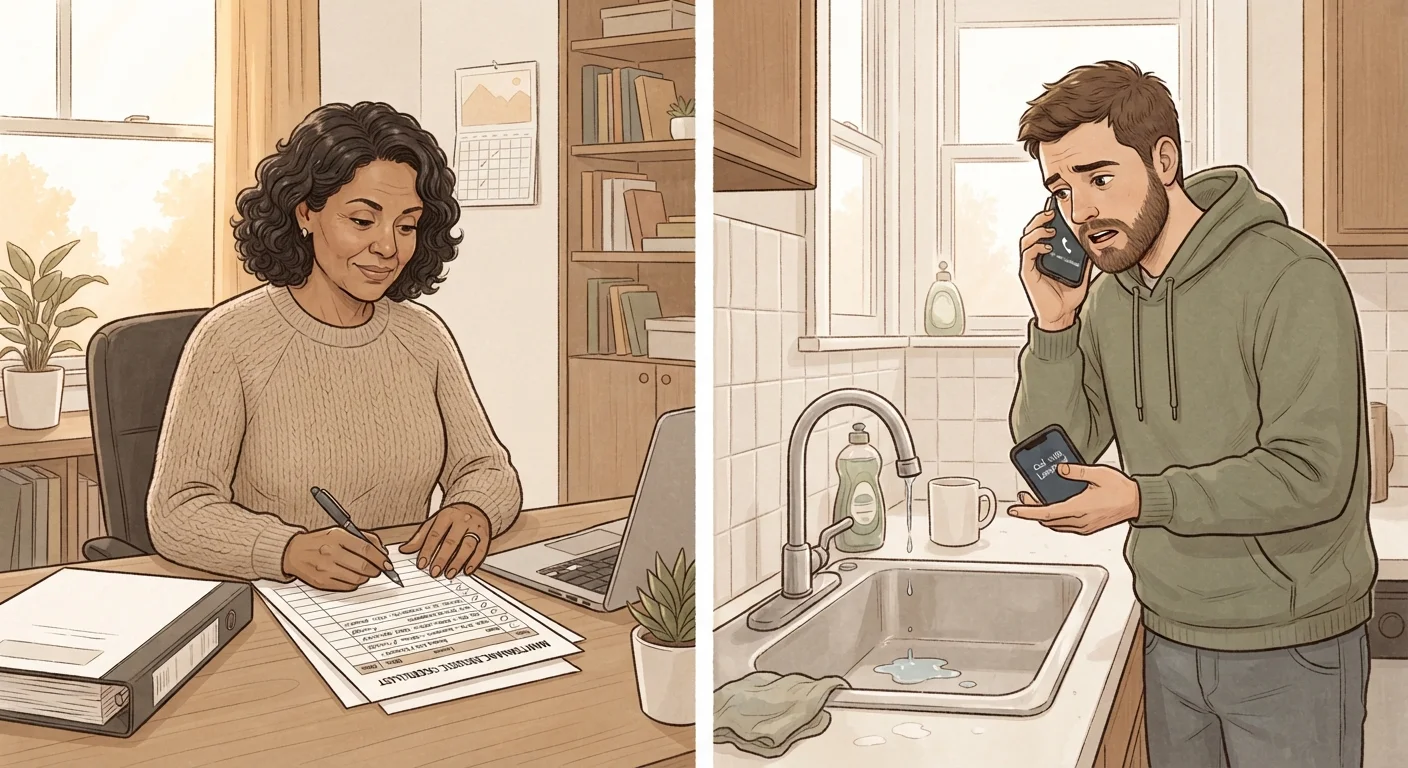
Tenants carry their own set of maintenance obligations. These generally fall into two categories: routine upkeep and damage caused by the tenant.
Routine upkeep that most leases assign to tenants includes:
- Replacing light bulbs, batteries in smoke detectors, and HVAC filters (check your lease)
- Keeping the unit reasonably clean to prevent pest attraction or mold growth
- Disposing of trash properly
- Notifying the landlord promptly when maintenance issues arise
Damage beyond normal wear and tear is also the tenant's responsibility. Normal wear and tear - think minor scuffs on walls, small carpet indentations from furniture, or faded paint - is expected and cannot be charged back to the tenant. But holes punched in drywall, broken fixtures from misuse, or pet damage crosses into tenant-caused damage territory.
This distinction matters enormously at move-out. Misunderstanding this line is one of the most common reasons tenants lose part or all of their security deposit.
~89%
States with implied warranty of habitability
According to legal research compiled by tenant advocacy organizations, nearly all US states recognize the implied warranty of habitability in some statutory or common-law form.
30-90 days
Typical security deposit dispute window
Most states require landlords to return security deposits - with an itemized deduction list - within 14 to 60 days of move-out, with penalties for non-compliance.
When the Lease Complicates Things
Lease agreements can legally reassign certain responsibilities - within limits. A landlord may, for example, make the tenant responsible for lawn care, snow removal, or minor appliance maintenance. These are permissible shifts because they don't undermine habitability.
However, a lease cannot legally require a tenant to be responsible for major structural repairs, heating system failures, or other habitability-critical issues. Courts in most states will void lease clauses that attempt to waive the implied warranty of habitability.
Lease Language Doesn't Always Override State Law
Even if your lease states that you are responsible for a particular repair, state habitability law may make that clause unenforceable. Tenant protection statutes vary widely - from California's robust renter protections to more landlord-friendly frameworks in other states. When in doubt about whether a lease clause is legal in your state, a local tenant rights organization or legal aid office can offer guidance without charge in many areas.
Understanding your lease type also affects how these terms apply over time. A month-to-month arrangement may give a landlord more flexibility to change terms with notice. Our comparison of lease types explains what changes for renters depending on their agreement.
If a landlord ignores a legitimate repair request, tenants in many states have legal remedies - including repair-and-deduct, rent withholding, or lease termination - but the rules differ sharply by jurisdiction. Many renters misread these rights and take action that backfires. Always verify what your state allows before acting.
Keeping a paper trail of every request - via email or certified letter - is one of the most practical steps a renter can take. It protects you if the situation escalates toward eviction proceedings or a security deposit dispute. Good communication habits also form the foundation of a stable landlord-tenant relationship over the long term.