
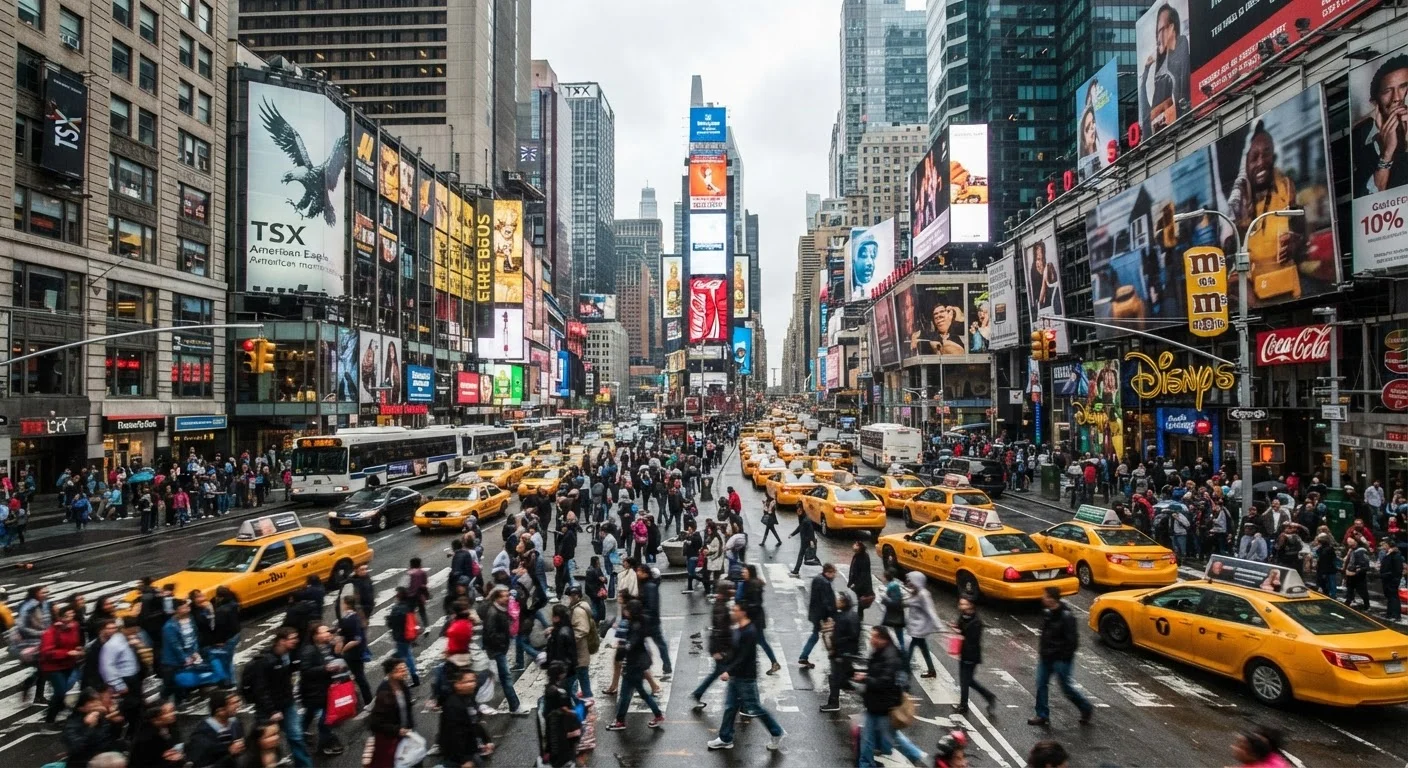
The Gap Between Expectation and Reality
New York City is arguably the most anticipated destination in the United States. Visitors arrive with vivid mental images assembled from decades of films, television, and social media - and then they step out of Penn Station or LaGuardia and the city immediately begins rewriting everything they thought they knew. The noise, the pace, the physical scale, the number of decisions required just to get from point A to point B: it hits most people much harder than expected.
That gap between expectation and reality is where most NYC travel problems start. The city isn't cruel to visitors - it's simply indifferent, optimized for the 8.3 million people who live there rather than for those discovering it for the first time. Understanding that distinction is actually the first step toward navigating it well. The mistakes visitors make most consistently aren't random; they follow recognizable patterns that, once named, are straightforward to avoid.
Treating NYC as one monolithic destination rather than a collection of distinct neighborhoods.
Why it happens: Maps and media tend to compress the city visually, making Midtown, Brooklyn, and the Bronx look like a tight cluster when they're worlds apart in character, scale, and travel time.
Underestimating how long it takes to get anywhere.
Why it happens: Visitors assume that because NYC has dense transit coverage, movement between points will be quick. In practice, walking time to the station, platform waits, and transfers add up fast.
Avoiding the subway and defaulting to rideshare or taxis for all movement.
Why it happens: The subway system looks intimidating to newcomers, and app-based rideshare feels familiar. Many visitors don't realize how badly traffic congestion can inflate travel times and costs.
Scheduling too many iconic landmarks in a single day.
Why it happens: The list of 'must-see' NYC attractions is long, and first-time visitors often feel pressure to check off as many as possible. The city's density creates the illusion that everything is close together.
Packing for every scenario and arriving with an overstuffed bag.
Why it happens: Visitors imagine they'll need everything: formal dinner clothes, workout gear, rain layers, and shoes for every occasion. NYC hotels are small and storage is limited.
Spending the majority of the trip in Midtown without venturing into residential neighborhoods.
Why it happens: Most hotels cluster around Midtown because of proximity to transit hubs and major attractions. It's easy to stay within that gravitational pull and never experience the city the way most New Yorkers actually live.
How to Reframe the Experience and Actually Enjoy It
The travelers who leave New York energized rather than exhausted tend to share one quality: they gave themselves permission to experience less, more deeply. NYC rewards slowness in ways that its reputation for speed doesn't suggest. Sitting in a park in Brooklyn for an afternoon, wandering a single street in the East Village, or spending two hours in one museum wing rather than sprinting through the whole building - these choices consistently outperform the packed itinerary approach.
Verify Transit and Entry Details Before You Go
Subway service changes, attraction hours, and entry requirements for popular venues shift frequently. Always check the MTA website and official attraction pages before your visit. Do not rely on third-party summaries or older travel guides for this kind of time-sensitive information.
Preparation matters too, but in a specific way. You don't need to plan every hour. What you do need is a loose geographic logic - knowing roughly which neighborhoods anchor each day - and a reliable transit foundation. Those two elements remove the structural stress that causes most visitor overwhelm. Everything else can be spontaneous. For contrast, consider how over-planning causes its own problems in other major travel contexts - the principle holds in cities too.
New York is genuinely one of the world's great cities to visit. Its complexity is also its richness. The visitors who struggle most are often those who try to fight the city's nature rather than move with it - treating every subway delay as a failure rather than part of the texture of being somewhere real and alive. Adjust your frame, shrink your daily ambitions slightly, and the city tends to give back more than you planned for.