Why One Big Cleanout Is Never Enough
Most people approach home organization the same way: wait until clutter becomes unbearable, spend a weekend overhauling every room, then gradually watch it all drift back. Within months - sometimes weeks - the surfaces are buried again. This cycle is frustrating precisely because it feels like failure, when the real issue is strategy.
A single decluttering event removes what has already accumulated. It does nothing to change the daily patterns that caused the buildup in the first place. Lasting organization is a maintenance problem, not a cleanup problem. The homes that stay tidy aren't occupied by unusually disciplined people - they're homes where a handful of small habits run in the background, quietly preventing disorder from gaining a foothold.
Understanding which habits are most effective - and why they work - makes them far easier to adopt and stick with.
The Core Habits That Prevent Clutter From Returning
The following practices address the most common ways clutter re-enters and accumulates in a home. None requires a major time investment - their power comes from consistency, not effort.
Adopt the one-in-one-out rule as a household policy.
Clutter grows when items enter a home faster than they leave. This rule creates a natural ceiling on possessions without requiring periodic purges. It also forces a moment of intentional decision-making before a purchase or acquisition becomes permanent.
Give every item a permanent, specific home.
Items without assigned places drift to countertops, chairs, and floors by default. When everything has a clearly defined spot, returning it requires no decision - just action. This is the single most effective structural change you can make in any room.
Build a 10-minute daily reset into your routine.
Clutter compounds: a few misplaced items become a buried surface by week's end. A brief daily reset keeps disorder from reaching a tipping point where it feels overwhelming. Consistency matters far more than length - 10 focused minutes beats a three-hour weekend blitz.
Stack organizing habits onto routines you already do.
New habits succeed more reliably when attached to existing behaviors - a technique behavioral researchers call 'habit stacking.' Rather than finding new time, you leverage transitions already built into your day. This reduces friction and makes the habit feel natural faster.
Use a running donation box rather than an occasional purge.
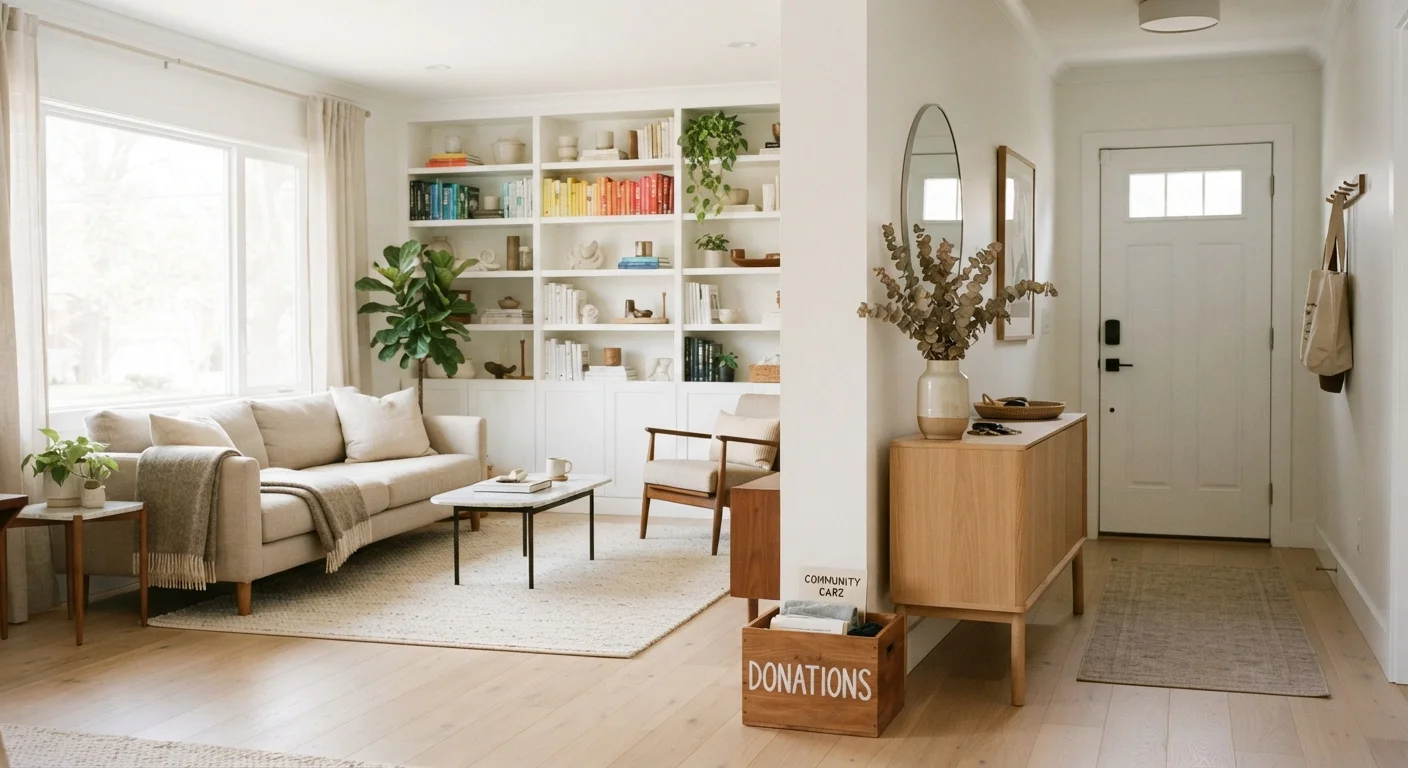
Saving decluttering for a once-a-year event means clutter accumulates unchecked the rest of the time. A box kept in a closet or mudroom allows items to leave continuously as you notice them. When the box fills, it goes - no scheduling required.
Do a 'one-touch' rule for incoming paper and mail.
Paper piles form because items get set down to 'deal with later.' Handling each piece of mail or paperwork exactly once - act, file, or recycle immediately - eliminates the backlog before it starts. This is especially useful for households where paper clutter is a recurring problem.
Making New Habits Stick
Knowing a habit is useful and actually doing it daily are two different things. The gap between them usually comes down to friction - how much mental energy the habit requires. The goal is to make the organizing action the path of least resistance.
Get the Whole Household Involved
Organizing habits only hold when everyone in the home participates. Take five minutes to walk children through where items belong and why returning things matters - kids as young as three can learn to put toys in a designated bin. When each person takes ownership of shared spaces, no single person carries the entire maintenance load. For family-specific strategies, see our guide on decluttering with kids in the house.
Visible cues help. A donate box you can see is one you'll actually use. A hook you installed next to the door is one you'll actually hang your bag on. Physical environment shapes behavior more reliably than willpower does.
Start with just one or two habits rather than overhauling your entire routine at once. Once a habit becomes automatic - typically after several weeks of consistent repetition - add another. Stacking too many changes at once is one of the most common reasons new systems collapse.
Recognizing When Your System Needs Adjusting
Even well-designed habits can stop working when circumstances change - a new baby, a move, a shift in schedule. If clutter keeps returning in the same spot despite your efforts, that's a signal worth paying attention to. It usually means the system isn't matching how you actually live.
Systems Need to Fit Your Household
No single organizing method works for every home or family structure. What matters is building habits that are sustainable for the people who actually live in the space. If a system requires constant effort to maintain, it's worth revisiting whether the underlying structure - storage, layout, or item count - needs adjustment first. Our room-by-room checklist can help you audit each space before committing to a routine.
Ask practical questions: Is the designated spot for this item actually convenient? Is there too much of one category of thing for the current storage? Are the household rules clear to everyone? Fixing a structural mismatch is almost always more effective than trying harder at a habit that isn't working.
For kitchens specifically - a space where clutter has a way of creeping back reliably - our article on why organized kitchens stop staying that way walks through the most common culprits and their fixes.
80%
Of household clutter is items never used
According to research cited by the National Association of Productivity and Organizing Professionals, roughly 80% of the items people keep are rarely or never used.
40%
Of housework eliminated by less clutter
A frequently cited figure from professional organizing literature suggests that reducing clutter can cut the time spent on housework by around 40%.