The Real Reason Your Kitchen Keeps Reverting to Chaos
You spend a Saturday reorganizing the kitchen. Every drawer makes sense. Every cabinet has a logical home. By Thursday, it looks like none of it happened. This isn't a willpower problem - it's a systems problem.
Kitchen organization fails for predictable, fixable reasons. Most approaches focus on a one-time event: the big cleanout, the label maker, the matching containers. What they miss is that kitchens are among the most actively used rooms in any home. Items move through them multiple times a day, which means any system that isn't intuitive will quietly collapse under daily use.
Understanding why clutter keeps returning - rather than just cleaning it up again - is what separates a kitchen that stays organized from one that's perpetually reset. If you've ever wondered why disorder feels so hard to shake, the kitchen is often ground zero.
Organizing without first reducing the number of items in the kitchen.
Why it happens: It feels more productive to arrange things than to get rid of them. Letting go of items - even rarely used ones - can feel wasteful or premature.
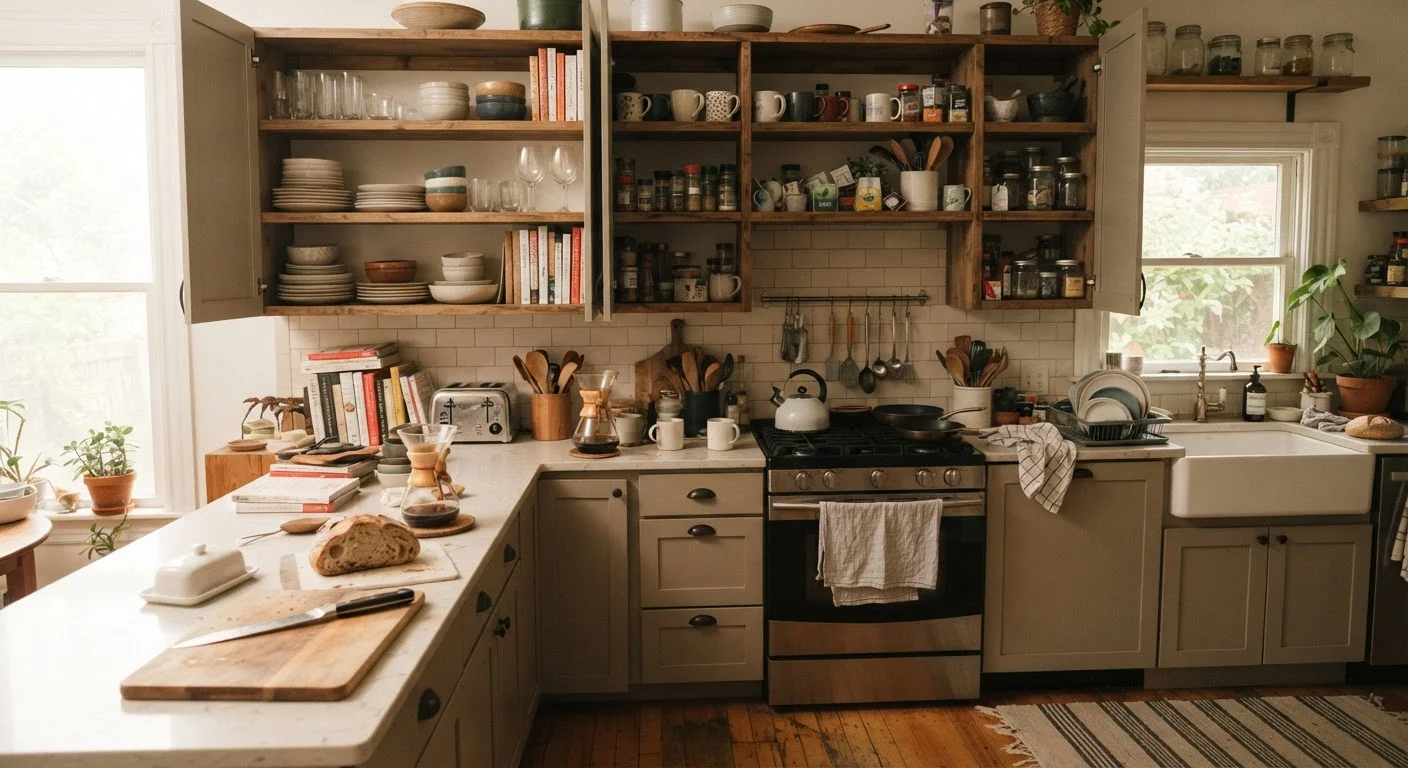
Creating a system based on aesthetics rather than how the household actually cooks and moves through the space.
Why it happens: Organization inspiration often comes from styled photos where form is prioritized over function. These systems look appealing but don't account for real daily workflows.
Relying on willpower and memory to maintain the system rather than designing it to be self-maintaining.
Why it happens: People assume that once a system is set up, everyone in the household will remember and follow it. In practice, returning items to their proper place has to be nearly effortless or it won't happen under time pressure.
Treating organization as a one-time project rather than a set of ongoing daily habits.
Why it happens: The satisfaction of a big cleanout feels like a finished job. It's easy to assume the work is done once the kitchen looks good, without building the small daily habits that prevent backsliding.
Buying storage products before understanding the actual problem.
Why it happens: New bins, racks, and organizers feel like a solution. They're also easy to purchase, which makes them a default response to kitchen disorder.
How to Build a Kitchen System That Actually Holds
The mistakes above share a common thread: they treat organization as a destination rather than an ongoing practice. Fixing that requires a shift in approach.
Start with subtraction, not addition. Before buying a single bin or drawer insert, remove items you rarely use. A kitchen with fewer things is dramatically easier to maintain than one with elaborate storage for too many objects.
Design around real behavior. Observe where things naturally land in your kitchen - on the counter by the door, near the stove, beside the sink. Those spots are telling you something. Build your system around those patterns rather than fighting them.
Make putting things away easier than leaving them out. If returning something to its home requires opening two cabinets and moving other items, it won't happen consistently. The path back should be nearly effortless.
Use a daily reset instead of a weekly overhaul. A five-minute end-of-day tidy - dishes cleared, counters wiped, stray items returned - prevents the accumulation that makes reorganizing feel necessary. Small daily habits outperform big periodic efforts. For a fuller picture of the routines that keep homes from sliding backward, see habits that keep clutter away.
Avoid Reorganizing Without a Maintenance Plan
A kitchen overhaul with no daily habit attached will almost always revert within weeks. Before spending time and money on a new system, decide specifically how and when the kitchen will be reset each day. Without that plan, even a well-designed system will gradually fall apart under the pressure of everyday use.
If you share the kitchen with children, keep in mind that maintaining any system is a different challenge altogether. Decluttering with kids in the house requires strategies that account for smaller hands, different habits, and constantly changing needs. And if you're questioning some of the organizing advice you've seen online, shared-space organizing myths are worth examining before you invest time in approaches that may not work for real households.