How Each Billing Structure Works
The core difference between prepaid and postpaid is timing - specifically, when money changes hands relative to service use.
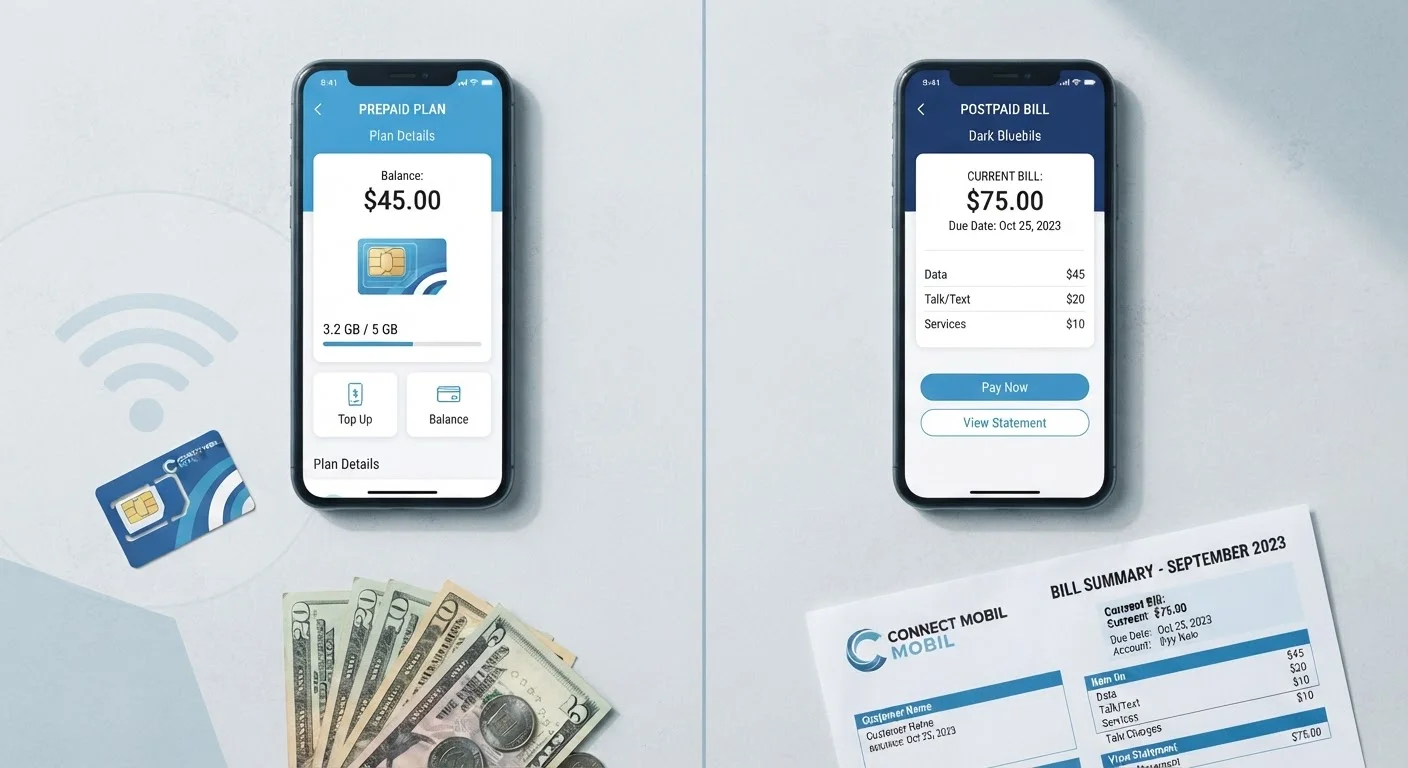
With a prepaid plan, you pay for service before using it. You load a balance or purchase a set data, talk, and text allotment, and your service runs until that allotment is consumed or the period expires. No monthly invoice arrives because nothing is owed after the fact.
With a postpaid plan, the carrier extends service throughout the month and bills you afterward. Your account is backed by a credit check, which establishes that you're likely to pay the bill when it arrives. Monthly invoices can include base service charges, device installment fees, taxes, and any overage or add-on charges accumulated during the period.
Understanding this timing distinction matters because it shapes everything downstream: your exposure to surprise charges, your credit relationship with the carrier, and how quickly you can switch if a better option appears. For a deeper look at how billing terms and fine print affect your actual cost, see what your mobile plan's fine print actually means.
| Criterion | Prepaid | Postpaid |
|---|---|---|
| Payment timing | Pay before service is used | Billed after monthly cycle |
| Credit check required | No | Yes, typically |
| Contract commitment | None | Often tied to device financing |
| Device financing | Rarely available | Commonly available |
| Network priority | Lower during congestion | Higher during congestion |
| Family/shared plans | Limited options | Widely available |
| International roaming | Varies; often limited | More robust add-on options |
| Spending predictability | High - capped at what you load | Moderate - base rate plus variables |
Coverage, Priority, and Network Access
Most consumers don't realize that prepaid and postpaid customers on the same physical network can experience different service quality. Major U.S. carriers typically assign network priority by account type - postpaid subscribers generally receive first access to bandwidth during periods of high congestion, while prepaid users may notice slower speeds when towers are heavily loaded.
This deprioritization rarely affects daily use in low-traffic areas, but it can be noticeable in dense urban environments, at large events, or during emergencies when network demand spikes. If consistently fast speeds in congested areas are a priority for you, postpaid plans generally offer a more reliable experience.
It's also worth noting that many prepaid plans are sold through Mobile Virtual Network Operators (MVNOs) - companies that lease network capacity from the major carriers rather than owning their own towers. MVNOs can offer competitive pricing while running on familiar networks, but priority and roaming agreements vary. Learn how MVNOs work and who they serve before assuming an MVNO plan is equivalent to a direct carrier plan.
~40%
U.S. mobile subscribers on prepaid
Industry analysts estimate roughly four in ten U.S. mobile connections are prepaid, reflecting sustained consumer interest in contract-free options.
$50-$100+
Typical monthly postpaid single-line cost
Carrier postpaid single-line plans with device financing commonly fall in this range before taxes and fees, according to publicly listed carrier pricing.
3-4 years
Average U.S. smartphone replacement cycle
Consumer data suggests Americans are holding onto smartphones longer, making the value of carrier device financing less automatic than it once was.
Flexibility, Contracts, and Switching Costs
One of prepaid's clearest advantages is the absence of long-term contracts. When your prepaid period ends, you're free to reload with the same carrier, switch to another, or simply stop - no early termination fees apply because there's no term commitment to break.
Postpaid plans with device financing are a different matter. If you're paying off a phone in monthly installments through your carrier, leaving before the device is paid off typically requires settling the remaining balance immediately. That device payoff can run into hundreds of dollars, which functions as an effective lock-in even when no formal contract exists. Always ask the right questions before signing a mobile contract to understand what it would actually cost to leave early.
For international travelers, the flexibility calculus shifts again. Prepaid SIMs purchased abroad offer cost control, while postpaid plans with international add-ons can be more seamless. How international phone plans actually work breaks down the trade-offs between roaming options in more detail.
Fitting Your Plan Into a Broader Financial Picture
Your monthly phone bill is a recurring expense - one that compounds over time in ways people often underestimate. A postpaid plan that includes a device installment, insurance, and taxes can easily reach $80-$100 per line or more each month, while a no-frills prepaid plan for a light user might run a fraction of that cost.
Neither figure is inherently right or wrong, but it matters how the choice fits your overall financial picture. If you're actively working to align spending with financial goals, the predictable, capped nature of prepaid can be easier to integrate into a budget. Postpaid's variable monthly total - which can shift when you add lines, change plans, or incur overages - requires closer tracking. Building a financial plan you'll actually stick to offers a practical framework for aligning recurring costs like phone bills with your broader priorities.
Ultimately, the right structure depends on how you use your phone, your comfort with billing predictability, and whether device financing or family sharing features are genuinely valuable to you - not just appealing in the abstract.
Credit Checks and Prepaid Access
Prepaid plans do not require a credit check, making them accessible to people who are building credit, have had past credit difficulties, or simply prefer not to have their credit file queried. This is a structural feature of the prepaid model, not a workaround. If a credit inquiry is a concern for any reason, prepaid is the straightforward path forward.