How Each Technology Actually Works
Understanding the core difference between 5G home internet and traditional broadband helps explain nearly every performance trade-off between them.
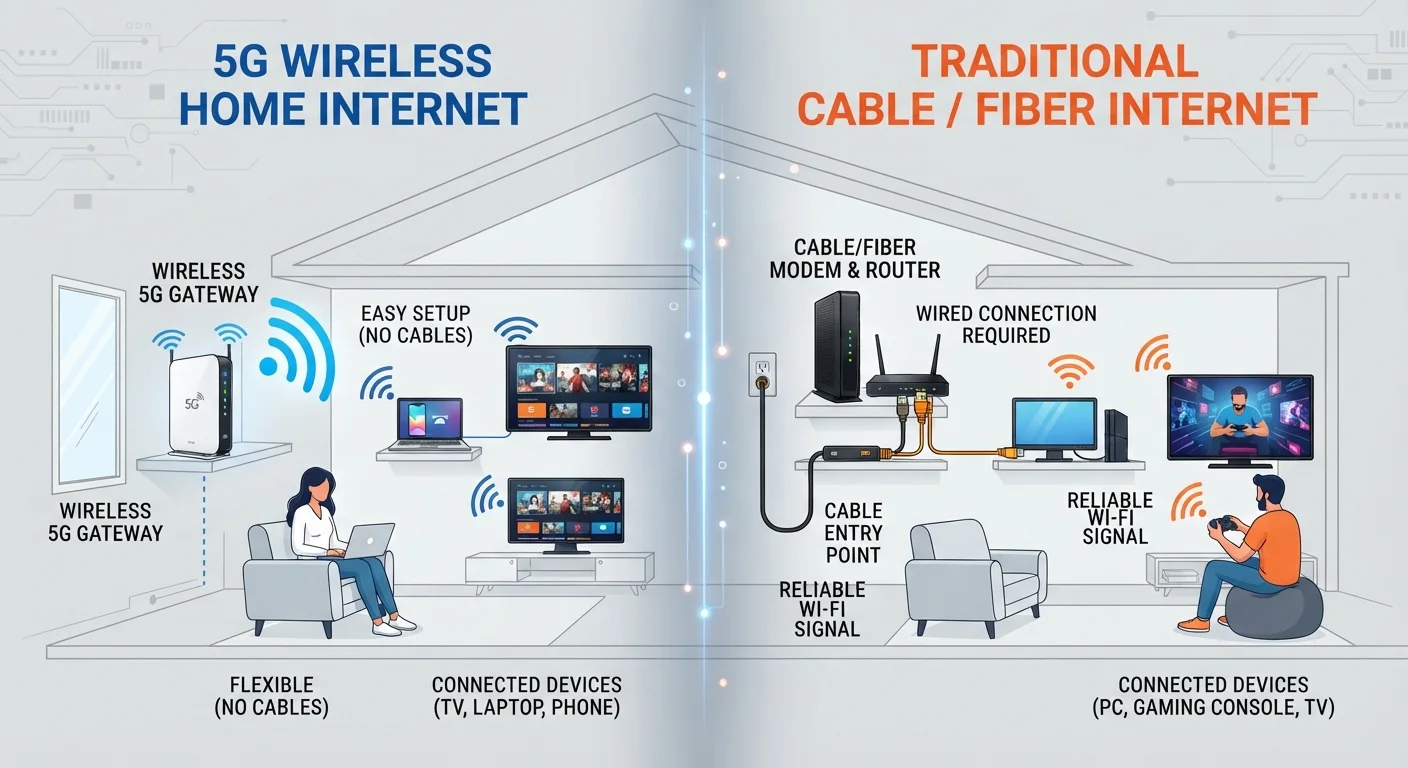
5G home internet - also called fixed wireless access (FWA) - uses the same cellular network towers that power 5G smartphones. A receiver unit (usually placed near a window or outside the home) picks up the wireless signal and a built-in router distributes it to your devices. No technician needs to run cables through your walls.
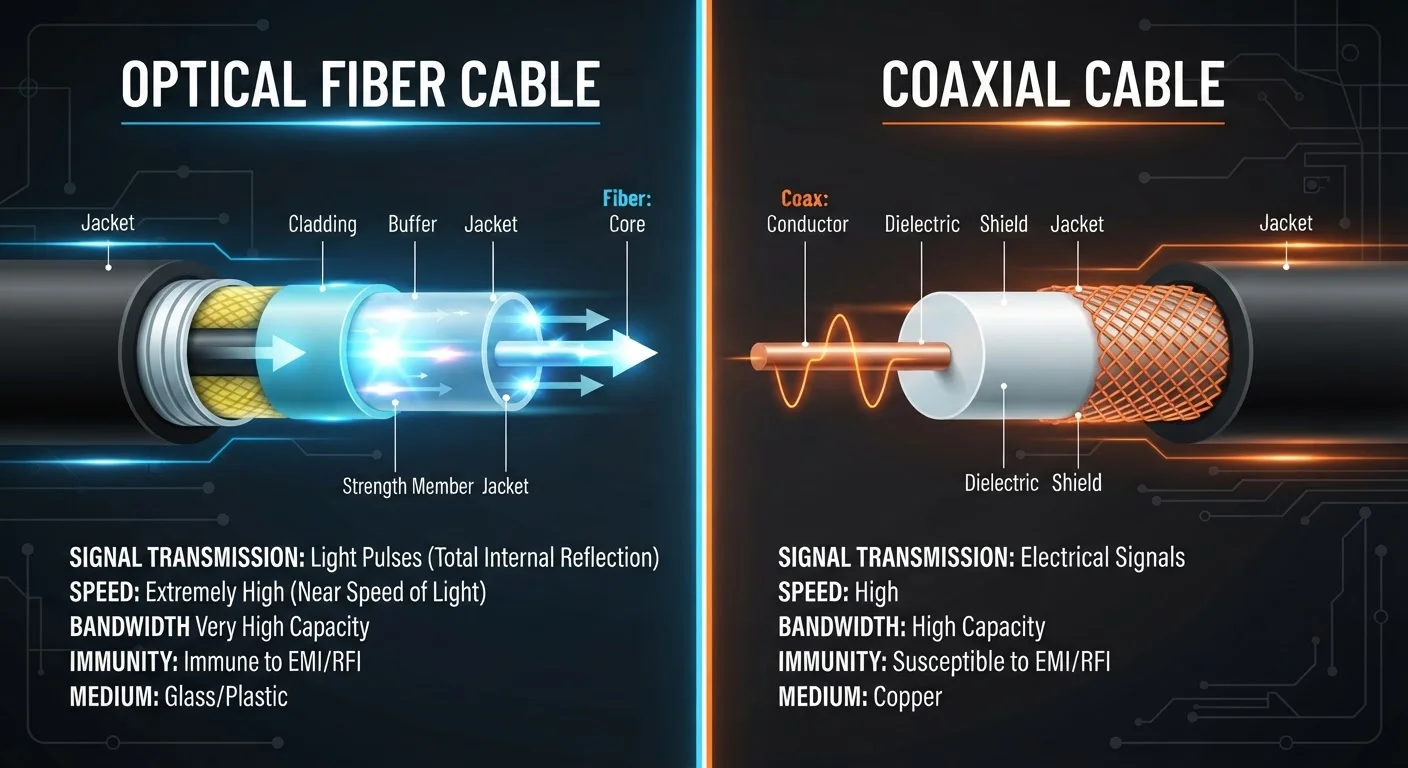
Traditional broadband refers to wired connections - primarily cable and fiber. Cable internet uses coaxial lines originally built for television. Fiber internet uses glass or plastic strands that transmit data as pulses of light, offering the highest theoretical speeds and most symmetrical upload and download performance. For a deeper look at these wired options, see our Home Internet Types Explained and our comparison of Fiber vs. Cable Internet.
Speed and Reliability: The Honest Picture
Advertised speeds for 5G home internet can look impressive - some providers cite download speeds between 100 Mbps and 1 Gbps under ideal conditions. But real-world performance varies significantly based on your distance from a tower, how many other users share that tower, and physical obstructions like buildings and trees.
Traditional broadband - particularly fiber - tends to deliver speeds closer to what's advertised, with less variation during peak evening hours. Cable can slow noticeably when many neighbors are online simultaneously, since it shares bandwidth on a neighborhood node. Fiber does not have this limitation.
| 5G Home Internet | Cable Broadband | Fiber Broadband | |
|---|---|---|---|
| Typical Download Speed Range | 100-300 Mbps (variable) | 100-500 Mbps | 200 Mbps-1 Gbps+ |
| Upload Speed | Often significantly lower than download | Lower than download | Symmetrical or near-symmetrical |
| Peak-Hour Consistency | Variable; tower congestion possible | Can slow on shared nodes | Generally very consistent |
| Installation | Self-install, same day | Professional, scheduled visit | Professional, scheduled visit |
| Contract Flexibility | Often no contract | Frequently multi-year deals | Varies by provider |
| Geographic Availability | Urban/suburban with 5G coverage | Wide suburban/urban reach | Expanding but still limited |
| Latency (typical) | 20-50 ms | 10-40 ms | 5-20 ms |
It's also worth noting that 5G home internet typically offers asymmetric speeds, meaning upload speeds can lag well behind downloads. For households with video conferencing or cloud backup needs, this gap matters. Our article on Internet Speed Myths explains why advertised numbers rarely tell the whole story.
Availability, Setup, and Flexibility
One of 5G home internet's clearest advantages is installation simplicity. Most setups involve plugging in a gateway device - no technician visit, no drilling, no waiting weeks for an appointment. This appeals strongly to renters, frequent movers, and anyone who has dealt with complicated cable installations.
The significant caveat is geographic availability. Mid-band 5G - the spectrum that balances speed and range well enough for home use - is concentrated in dense suburban and urban areas. If you're outside solid coverage, performance can be unpredictable or the service may simply not be offered at your address.
Check Signal Strength Before You Commit
Before switching to 5G home internet, check whether your specific address falls within strong mid-band 5G coverage - not just the provider's general service map. Some providers allow you to enter your address for a signal estimate, and a neighbor's experience with the same service in the same block can be a useful real-world data point. Weak signal at your location will undermine even the best-advertised plan.
Traditional broadband requires professional installation but, once in place, delivers a stable physical connection that isn't sensitive to local wireless congestion. Fiber availability, however, is still expanding; many neighborhoods are served only by cable or older DSL infrastructure.
Contracts, Data Caps, and Hidden Costs
5G home internet plans are frequently marketed without long-term contracts, which offers real flexibility - particularly compared to traditional cable packages that historically bundle services with multi-year commitments. However, pricing structures and any data policies can still vary widely between providers.
Traditional broadband plans more commonly include promotional pricing that resets after an introductory period, equipment rental fees, and sometimes data thresholds that trigger throttling. Before signing up for any plan - wired or wireless - understanding the fine print is essential. Our guide to what your internet plan's fine print actually means breaks down caps, throttling clauses, and equipment fees in plain language.
Also factor in router quality and placement. Even the best internet connection can underperform inside a home if the wireless distribution is poor - a separate issue from your provider entirely. Our piece on why your Wi-Fi slows down covers what's often mistaken for a broadband problem.
Which Households Are the Best Fit for Each Option?
There is no single answer that fits every household. The right choice comes down to what's genuinely available at your specific address, how your household uses the internet, and how much variability in speed you can tolerate.
- 5G home internet suits: households in strong mid-band coverage zones, renters who need flexibility, light-to-moderate users streaming video and browsing, and those without wired broadband access at a given address.
- Fiber broadband suits: heavy-usage households with multiple simultaneous streamers or remote workers, gamers sensitive to latency, and anyone who needs rock-solid upload speeds.
- Cable broadband suits: households where fiber isn't available but a wired connection is preferred, or where 5G coverage is weak or nonexistent.
If you live in a rural or remote area where neither fiber nor strong 5G reaches, satellite internet may enter the comparison - though it carries its own trade-offs around latency and weather sensitivity, as outlined in our article on satellite internet for rural households.