
Why Satellite Is Often the Only Option
Roughly one in five rural Americans lacks access to broadband internet at speeds defined by federal standards. Laying cable or fiber to scattered households across hundreds of miles is economically impractical for most providers, leaving satellite as the only technology that can reach any location with a clear view of the sky.
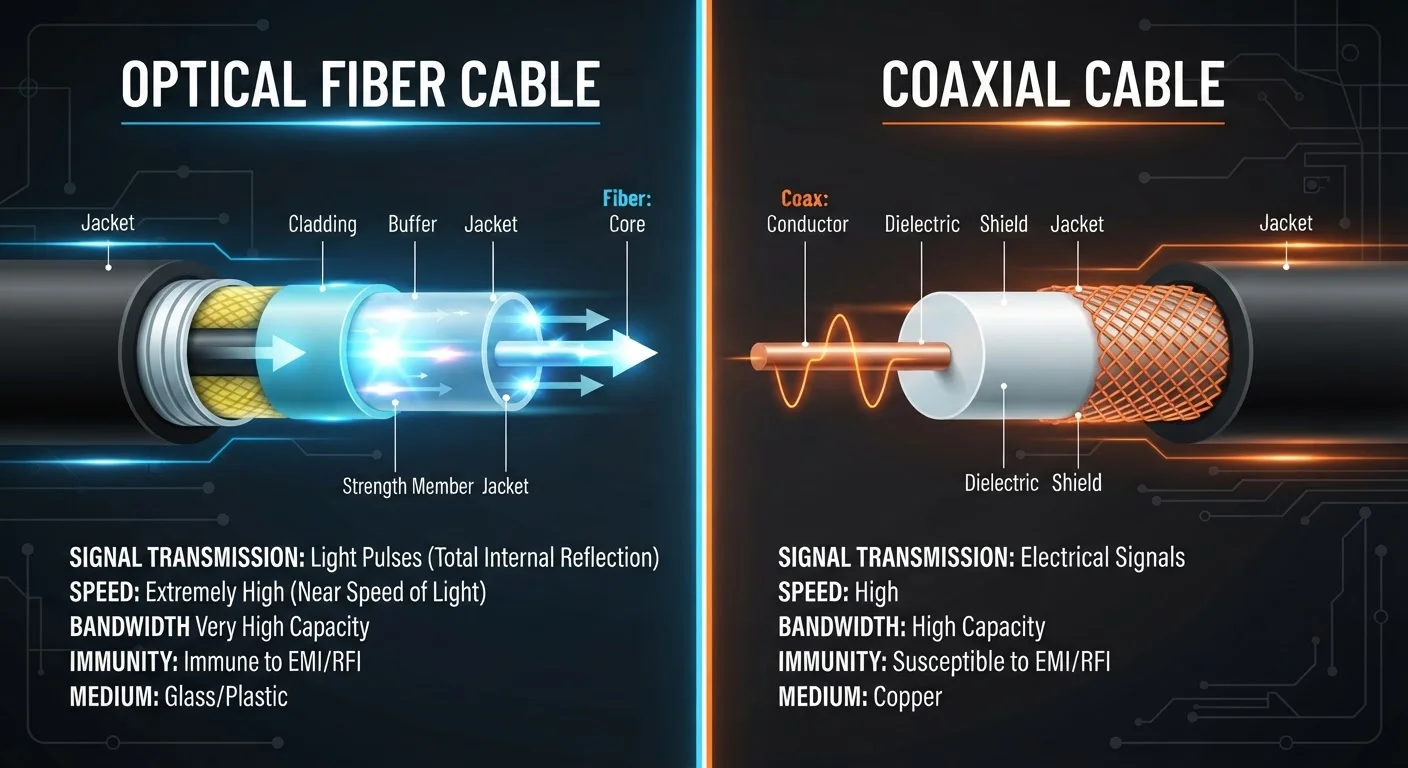
Unlike cable or fiber - which require physical infrastructure running to your address - satellite systems beam signals from orbiting spacecraft directly to a dish at your home. This architecture makes geographic coverage nearly unlimited, which is why satellite providers can advertise availability in areas that other services simply cannot serve. If you live on a remote ranch, in a mountain valley, or in a rural stretch where no broadband map shows a competing option, satellite may realistically be your sole path to home internet. See how cable and fiber work at a technical level to understand why ground-based infrastructure rarely reaches these areas.
Speed and Latency: What Modern Satellite Can Deliver
Two generations of satellite technology are currently in active use, and they perform very differently.
Geostationary (GEO) satellites orbit approximately 22,000 miles above Earth. At that distance, the round-trip signal delay - called latency - typically ranges from 600 to 800 milliseconds. That lag makes real-time applications like video calls and online gaming noticeably sluggish, even when download speeds are adequate.
Low-Earth orbit (LEO) satellite systems operate from roughly 300 to 600 miles up, cutting latency to between 20 and 60 milliseconds in most conditions - far closer to what cable internet delivers. Download speeds on LEO networks commonly range from 50 Mbps to over 200 Mbps under good conditions, which is sufficient for video streaming, remote work, and general browsing. Understanding what speeds your household actually needs helps set realistic expectations before you commit to any plan.
~1 in 5
Rural Americans lacking broadband access
Federal Communications Commission mapping data consistently shows a significant gap in broadband availability between urban and rural U.S. households.
20-60 ms
Typical LEO satellite latency range
Low-Earth orbit satellite systems have reduced round-trip signal delays to ranges comparable to some ground-based broadband services in many conditions.
It is worth noting that LEO network performance can vary based on how many subscribers share capacity in your area - advertised speeds are peak estimates, not guaranteed minimums.
Pros of Satellite Internet for Rural Households
Available virtually anywhere with a clear sky view
Satellite internet does not depend on ground-based infrastructure, making it accessible to remote households that no cable, fiber, or DSL provider reaches.
Modern LEO systems offer genuinely usable speeds
Low-Earth orbit satellite networks commonly deliver download speeds of 50-200+ Mbps, sufficient for video streaming, remote work, and video calls under normal conditions.
Latency has improved dramatically over older technology
LEO satellites orbit close enough to Earth that round-trip signal delays are typically 20-60 milliseconds, compared to 600-800 ms on older geostationary systems.
No need to wait for local infrastructure investment
Rural households don't have to depend on government broadband expansion timelines - satellite service can often be activated within days of ordering.
Supports most everyday household internet tasks
Email, web browsing, video streaming, smart-home devices, and remote-work applications all function adequately on a well-performing satellite connection.
The geographic reach of satellite internet is its defining advantage. For households where the alternative is no broadband at all - or a dial-up or cellular hotspot connection - even a mid-tier satellite plan represents a significant quality-of-life improvement.
Cons and Real-World Limitations
Higher equipment and monthly costs than ground-based broadband
Satellite plans typically cost more per month than cable or fiber equivalents, and the required dish hardware often involves a significant upfront purchase or lease fee.
Weather can temporarily degrade or interrupt service
Heavy rain, snow, and dense clouds can cause signal attenuation - known as rain fade - leading to slowdowns or brief outages that ground-based connections don't experience.
Line-of-sight obstructions limit installation options
Trees, hills, and nearby structures can block the antenna's view of the sky, restricting where a dish can be placed and potentially reducing performance.
Data thresholds and deprioritization during peak hours
Many satellite plans include data caps or network management policies that reduce speeds once a monthly threshold is reached, which can affect heavy users.
Not ideal for competitive online gaming or high-stakes real-time use
Even with LEO satellites, latency and occasional jitter can make latency-sensitive applications less consistent than a wired broadband connection.
Understanding these limitations before signing up matters. Review the home internet shopping checklist to make sure you've confirmed equipment costs, contract terms, and data policies for any plan you're considering.
Weather and Environmental Factors
Satellite signals must pass through the atmosphere twice - once on the way down and once on the way up - making them more susceptible to weather interference than ground-based connections. Heavy rain, dense snow, and thick cloud cover can temporarily reduce signal quality or cause brief outages. Industry observers refer to this phenomenon as rain fade.
Check Sky Clearance Before You Commit
Most current satellite providers offer a smartphone app or online tool that uses your address and camera to evaluate sky obstructions at your installation site. Running this check before signing up can prevent disappointment. A dish mounted on an open rooftop will almost always outperform one placed in a tree-shaded yard. If your primary mounting location is significantly obstructed, discuss alternatives with the installer before the service is activated.
Physical obstructions are equally important. Trees, hills, buildings, and even heavy foliage can block the line-of-sight path your dish needs to reach its target satellites. LEO systems partially compensate by using a large constellation of satellites that the dish can shift between, but a significantly obstructed sky view will still degrade performance. Before installation, most providers offer an app or tool to assess whether your chosen mounting location has adequate sky clearance.
For readers considering remote destinations where satellite internet might be the only connectivity option - including areas as isolated as rural Alaska - environmental factors are especially relevant. Connectivity challenges in remote Alaska illustrate just how critical a reliable satellite link can be in truly off-grid locations.
Cost Considerations and Alternatives to Weigh
Satellite internet generally carries higher upfront and monthly costs than comparable ground-based services. Equipment purchase or lease fees, installation, and monthly service charges can add up meaningfully. Some federal assistance programs exist to help lower-income rural households offset broadband costs, though eligibility and availability vary - consult provider and government program websites for current details.
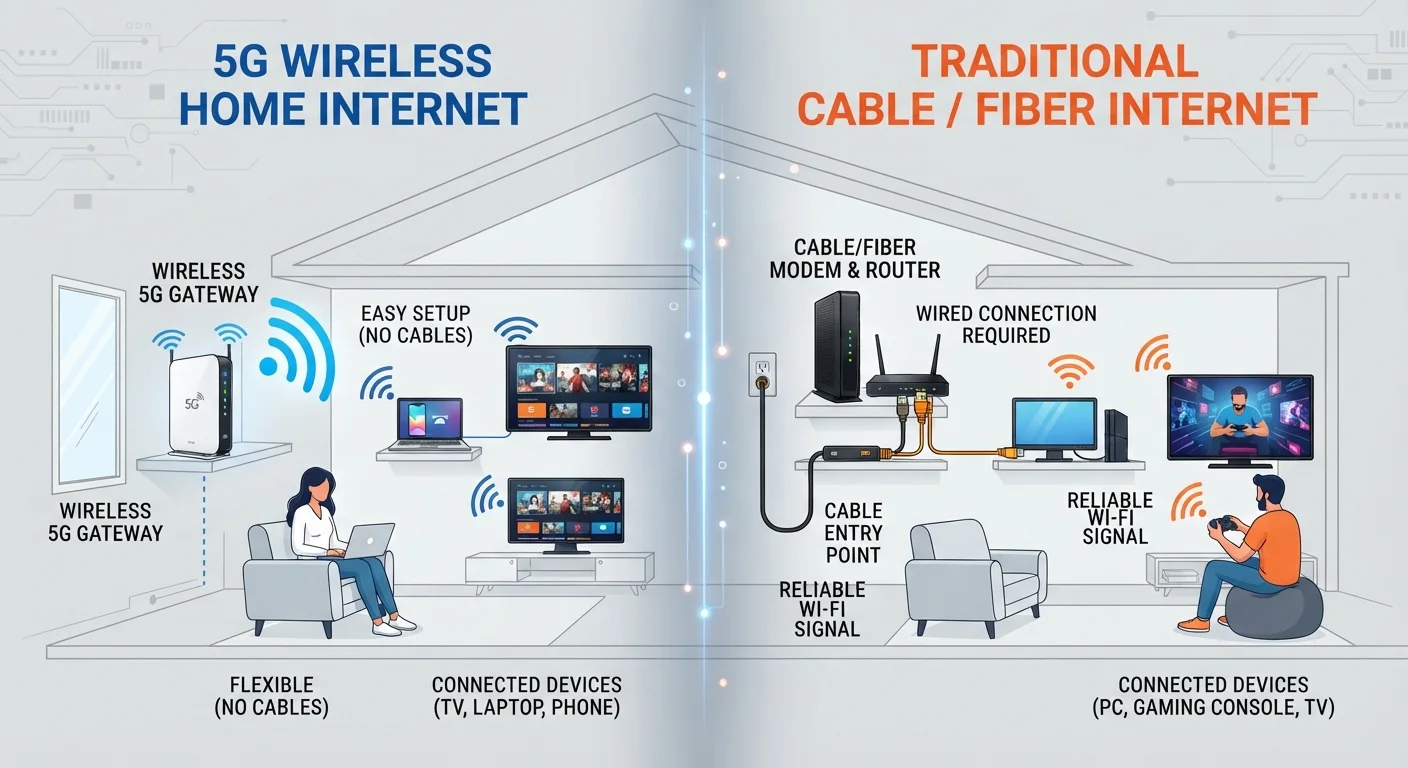
If fixed wireless or 5G home internet is available in your area, it is worth comparing before committing to satellite. 5G home internet versus traditional broadband outlines how those trade-offs differ in practice. For locations where 5G signals don't reach and no fiber runs, however, satellite remains the most viable broadband solution available.