What You're Actually Choosing Between
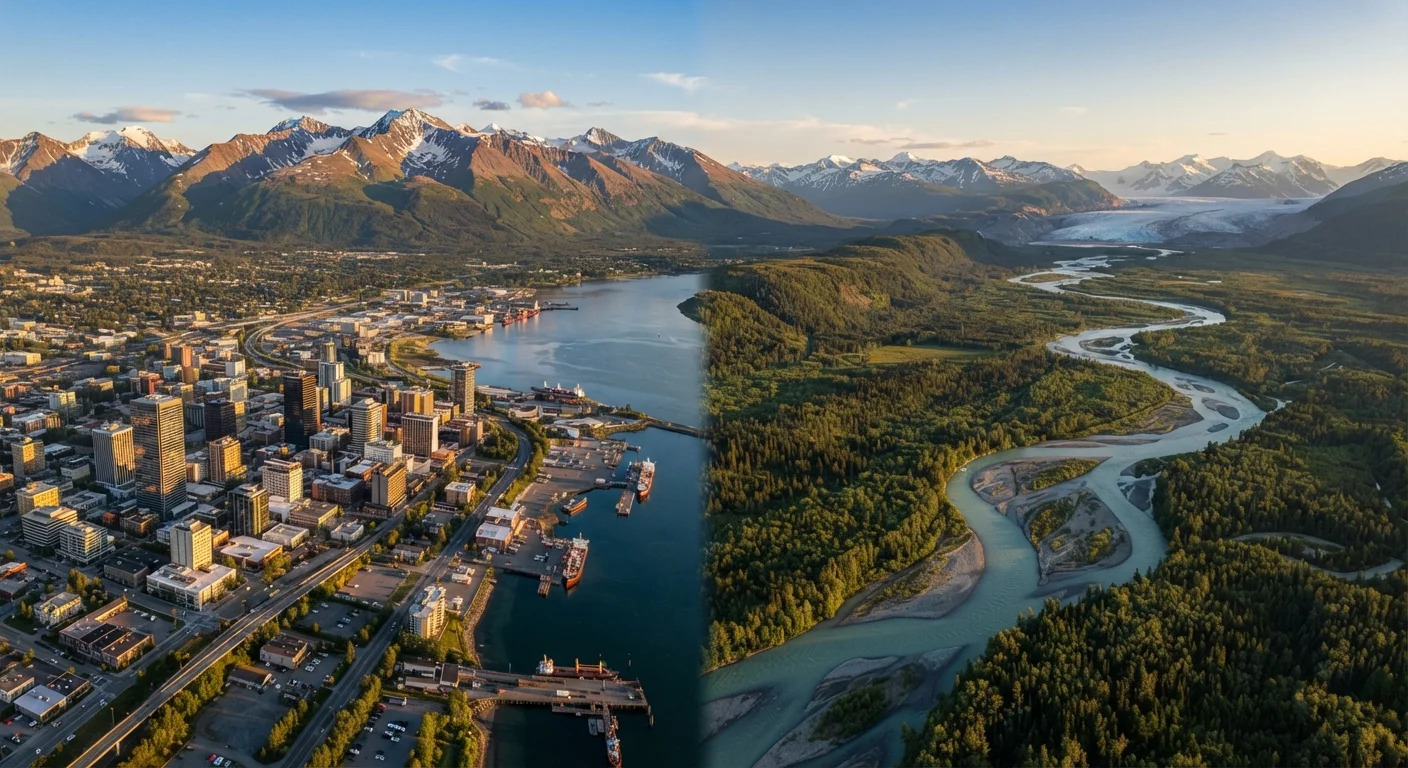
Alaska is the largest state in the country and one of the most geographically extreme places an American traveler can visit without leaving home. But "going to Alaska" can mean two fundamentally different things depending on where you land - and where you go next.
Anchorage is home to roughly 40 percent of Alaska's entire population. It has international-caliber restaurants, a thriving arts scene, reliable cell service, and access to some of the most dramatic mountain scenery in North America without leaving city limits. Denali's peak is visible on clear days. Moose wander residential neighborhoods. It is urban, but unmistakably Alaskan.
Remote wilderness Alaska is something else entirely. Areas like the Brooks Range, the Wrangell-St. Elias backcountry, or the Alaska Peninsula are places where trails may not exist, where the nearest road could be 100 miles away, and where weather changes can strand even experienced travelers for days. These are not places you wander into - they require deliberate, careful planning. Before committing to either path, thorough destination research is essential for understanding what you're actually signing up for.
The Anchorage Experience: Gateway City With Real Depth
It's tempting to treat Anchorage as a stopover rather than a destination, but that undersells it considerably. Tony Knowles Coastal Trail runs 11 miles along Cook Inlet with views of the Alaska Range and frequent wildlife sightings. The Anchorage Museum offers genuinely excellent collections on Alaska Native cultures, natural history, and Arctic science. Flightseeing tours depart daily from Merrill Field, putting glaciers within a 30-minute flight.
Logistically, Anchorage is straightforward. Ted Stevens Anchorage International Airport has direct service from several major US hubs. Rental cars are widely available. Hotels, vacation rentals, and hostels span a broad range of budgets. Emergency services, medical facilities, and pharmacies are all present.
| Anchorage | Remote Wilderness | |
|---|---|---|
| Accessibility | Direct flights from major US cities | Bush plane or boat required from hubs |
| Infrastructure | Hotels, hospitals, cell service | Minimal to none; self-sufficient required |
| Wildlife viewing | Moose, eagles, occasional bear nearby | Bears, caribou, wolves in natural habitat |
| Cost structure | Standard urban travel expenses | High - charters, gear, guides add up |
| Physical demands | Low to moderate; optional day hikes | High; navigation and fitness critical |
| Solitude level | Limited - active city environment | Extreme; days without human contact possible |
| Trip planning complexity | Standard travel planning | Extensive, multi-month preparation advised |
The practical ceiling, however, is real: if you've come to Alaska for profound wilderness solitude, you won't fully find it in Anchorage. Day trips to Chugach State Park or the Portage Glacier area offer genuine backcountry access, but the city's orbit inevitably pulls back. For travelers working with a long weekend or coordinating a larger family trip, though, Anchorage delivers a surprisingly rich and distinctly Alaskan experience.
Remote Wilderness Travel: What It Actually Requires
Alaska's backcountry is among the most rewarding - and demanding - travel environments on Earth. Areas accessible only by small bush plane or boat place you genuinely beyond the infrastructure most travelers take for granted. There is no roadside assistance, no walk-in clinic, and often no cell signal. Even satellite communication devices, which experienced backcountry travelers typically carry, are tools for emergencies rather than conveniences. It's worth noting that satellite connectivity in remote environments has real limitations - satellite internet and communication in remote areas can be inconsistent depending on terrain, weather, and device type.
The rewards, when the preparation is right, are extraordinary. Floating a river in the Arctic National Wildlife Refuge. Watching brown bears fish for salmon in Katmai. Hiking ridgelines in Gates of the Arctic with no other humans in sight for days. These are experiences that genuinely cannot be replicated anywhere else in the country.
Start With a Guided Wilderness Trip
First-time Alaska backcountry travelers are generally better served booking with a licensed guide or outfitter rather than planning an independent expedition. Reputable guides bring local knowledge of terrain, bear behavior, and weather patterns that no amount of research fully replicates. After one or two guided trips, most travelers have a much clearer sense of what independent wilderness travel in Alaska genuinely requires.
Planning a wilderness trip of this scale is its own discipline. Building flexibility into your itinerary is not optional in remote Alaska - weather delays, river conditions, and wildlife encounters regularly alter schedules, and rigid plans create dangerous pressure to push through conditions that call for patience.
Costs, Safety, and Seasonal Realities
Anchorage travel costs are comparable to other mid-sized US cities, with predictable spikes during peak summer season (roughly June through August). Wilderness expeditions, by contrast, often carry significant costs: bush plane charters, guided services, and specialized gear can push per-person trip costs into the thousands, even before flights to Alaska. Neither option is cheap, but the cost structures are genuinely different in nature, not just in scale.
Safety deserves honest acknowledgment. In Anchorage, standard urban travel awareness applies. In the backcountry, the risk profile shifts substantially - bear encounters, river crossings, hypothermia, and navigation challenges are real considerations, not theoretical ones. Travelers new to Alaska wilderness should strongly consider working with experienced guides or outfitters, at least initially. Alaska's Division of Parks and the National Park Service publish safety guidance specific to individual units that is worth reading carefully before any backcountry trip.
Seasonality shapes both experiences dramatically. Summer brings near-continuous daylight - the midnight sun is disorienting in the best possible way. Winter offers the aurora and a completely transformed landscape, but dramatically shorter days and more demanding conditions. Spring and fall are transitional and often underrated, particularly for shoulder-season pricing and smaller crowds. For travelers weighing how much to pack into a single trip versus returning for different seasons, the same logic that applies to single-destination versus multi-destination travel holds here - depth often beats breadth on a first visit.
Travel conditions, entry requirements, safety advisories, and logistical details can change. Always verify current information with official sources, including the Alaska Tourism Industry Association, the National Park Service, and the U.S. government's travel information resources before finalizing plans.