
Why the Fine Print on Telecom Contracts Deserves Real Attention
Signing up for a new internet or mobile plan feels straightforward - you pick a speed or data tier, agree to a monthly rate, and move on. But telecom contracts routinely contain terms that reshape the real cost and experience of the service over time. Promotional rates expire. Equipment fees get buried. Throttling thresholds go unmentioned in the sales pitch.
The good news is that asking a focused set of questions before you sign puts you in a much stronger position. These aren't obscure legal technicalities - they're practical clarifications any representative should be able to answer clearly. If they can't, or won't, that's useful information too. For a broader pre-commitment checklist, see our home internet shopping checklist covering speed needs and availability.
What does this price become after the promotional period ends?
Advertised rates are frequently introductory offers that last 12 to 24 months. After that window, the standard rate - sometimes $20 to $40 higher per month - kicks in automatically unless you renegotiate or switch. Ask the representative to confirm the exact promotional duration and what the non-promotional rate will be. Get that figure in writing, not just verbally.
Ask for the post-promotional rate in writing before you sign anything.
Is there a contract term, and what are the early termination fees?
Some plans are month-to-month; others lock you in for one or two years with early termination fees (ETFs) that can exceed $200 or more depending on how much time remains. Confirm whether you're entering a fixed-term agreement, what the ETF structure looks like, and whether fees are prorated as the contract matures or charged as a flat penalty.
Early termination fees can exceed $200 - confirm the exact structure before committing.
How does this provider define 'unlimited,' and when does throttling apply?
The word unlimited in telecom marketing often has conditions attached. Many plans include a full-speed data threshold - commonly called a PDA or similar - after which speeds are reduced to a fraction of the original rate until the billing cycle resets. Ask specifically: at what data usage level, if any, will speeds be reduced, and to approximately what speed?
Unlimited plans routinely throttle speeds after a usage threshold - ask exactly where that limit sits.
What equipment is required, and how is it priced?
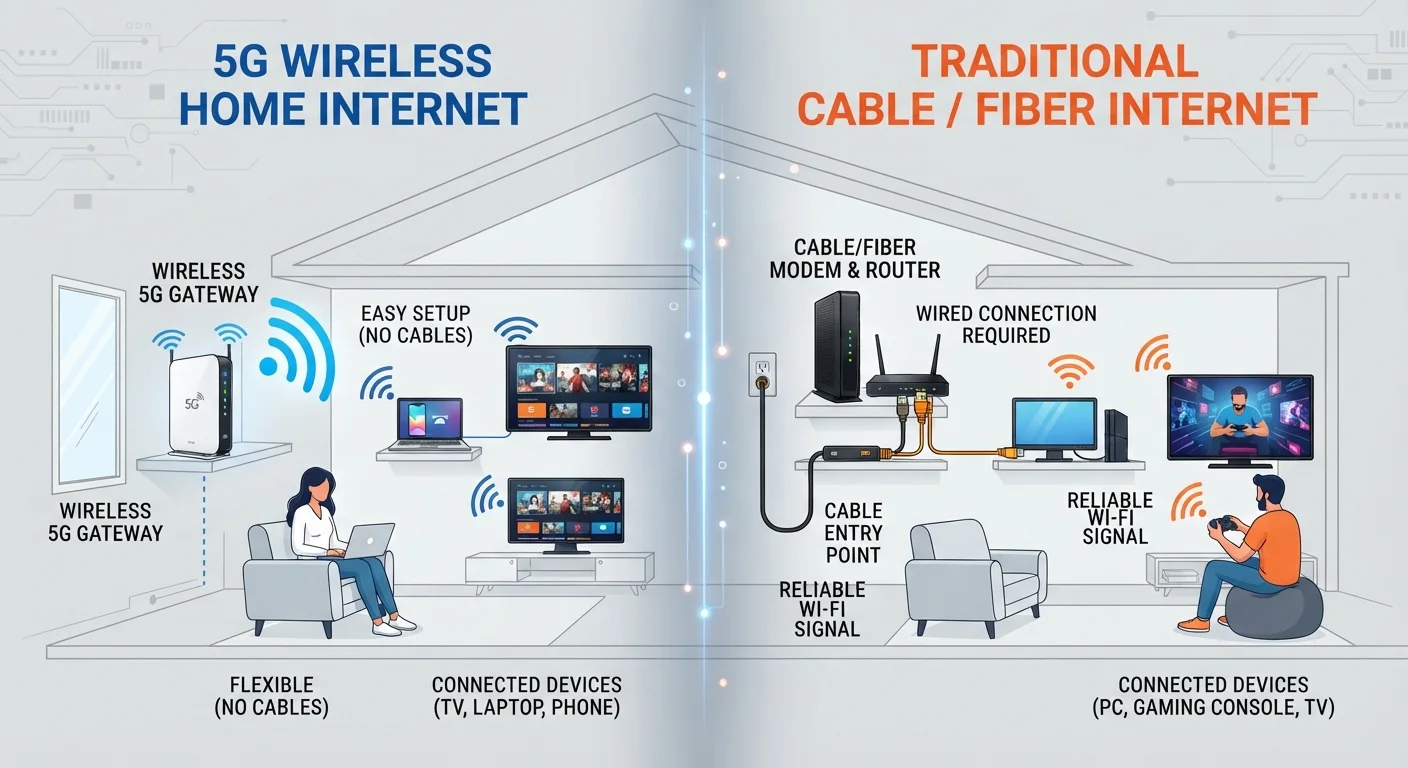
Routers, modems, and gateway devices may be rented monthly or purchased outright. Monthly rental fees that seem modest - often $10 to $20 - add up to $120 to $240 annually. Ask whether you can use a compatible third-party device to avoid the rental, and confirm whether any installation or activation fee applies that isn't reflected in the advertised monthly cost.
Equipment rental fees of $10-$20 per month can silently add over $200 to your annual cost.
What is the provider's policy if service goes down or doesn't meet promised speeds?
Outages happen with every provider; what varies is accountability. Ask whether the contract includes any service-level commitments or credit policies if service is consistently unavailable or significantly underperforming. Understand how outages are reported, what documentation you'd need to request a credit, and whether a sustained service failure gives you grounds to exit the contract without a penalty.
Understand outage credit policies now - it's far harder to navigate them without prior knowledge.
What fees or charges can appear on the bill beyond the advertised price?
Regulatory recovery fees, network access charges, and administrative fees are common additions that do not always appear in headline pricing. Ask the representative to walk through a sample bill and list every recurring line item you should expect. Also ask whether the provider reserves the right to adjust these fees mid-contract, and if so, whether such changes give you the right to exit without penalty.
Regulatory and administrative fees on telecom bills can meaningfully widen the gap from advertised price.
Make Informed Decisions - Before and After You Sign
Contracts in the telecom space share a lot of structural DNA with other service agreements. The habit of reading carefully before committing - whether it's a phone plan, a lease, or any subscription - pays dividends. Our piece on reading a lease before you sign covers similar ground for rental agreements if that kind of systematic review is useful to you.
Once you're a customer, your digital life runs through this provider's infrastructure, so it's also worth thinking about the data dimension. Understand what your provider collects and how it's used - our Online Safety hub offers practical guidance on protecting your privacy in everyday digital use, including what happens when services appear to be free.
Document Every Verbal Promise
If a sales representative makes a commitment - about price, speeds, or waived fees - ask for it to be confirmed in a written summary email before you complete the signup. Verbal assurances are difficult to enforce after the fact. A brief confirmation message creates a paper trail that is far more useful if a dispute arises later.
No single contract is perfect, and legitimate providers vary widely on flexibility. What matters most is that you go in with clear expectations - so that if terms don't match what was represented verbally, you have a documented basis to push back or escalate.