
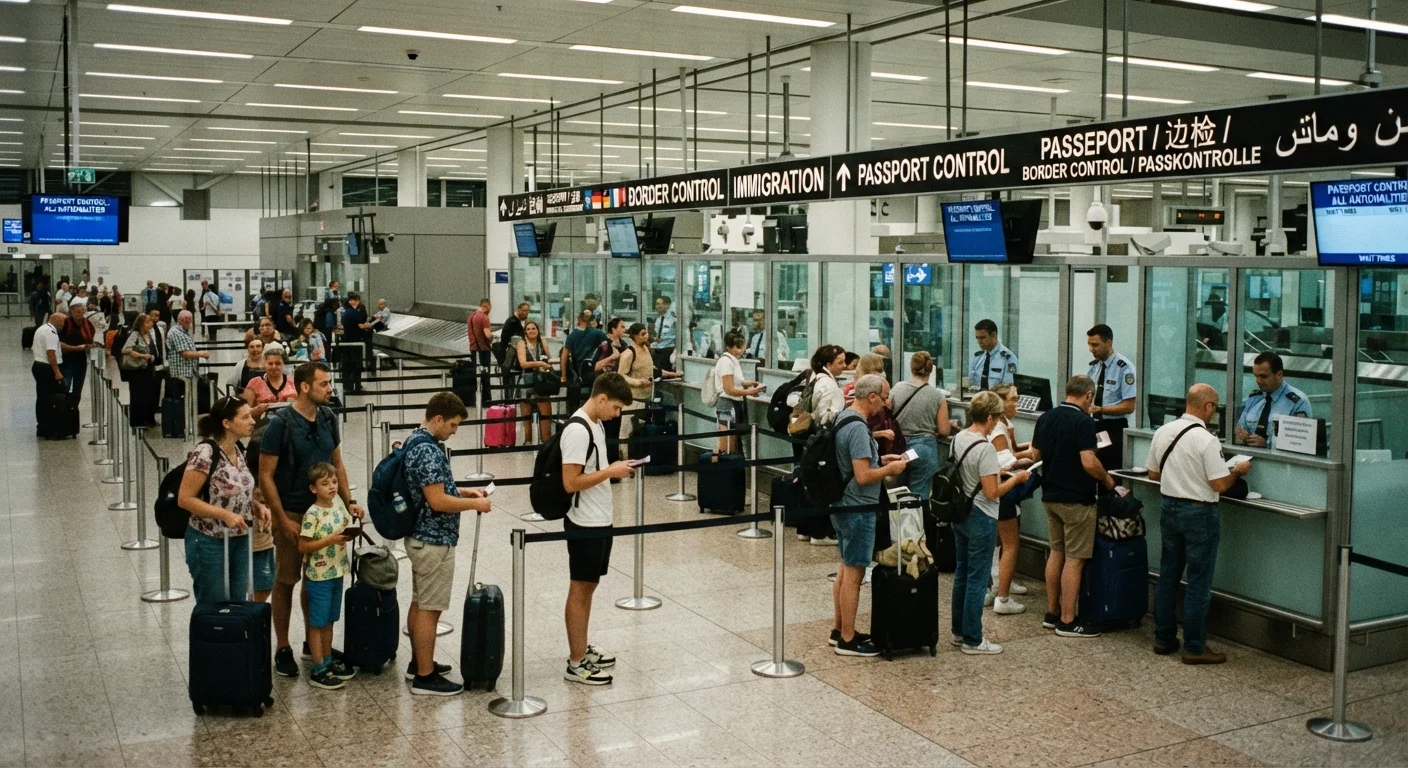
Why Border Crossings Trip Up Even Experienced Travelers
You've researched the destination, packed strategically, and arrived at the airport with time to spare. Then the border crossing slows everything down in ways you never anticipated. International entry isn't just about flashing your passport - it's a layered process involving declarations, biometric screening, document checks, and occasionally, secondary inspections that can add an hour or more to your arrival.
Most friction at the border isn't caused by wrongdoing. It comes from a simple lack of preparation - not knowing what to declare, misunderstanding transit rules, or carrying an item that's unremarkable at home but restricted at your destination. The good news is that nearly all of these friction points are avoidable once you understand what's actually happening at the border. If you're planning your first trip abroad, this guide for first-time international travelers covers additional groundwork worth reading before you fly.
Customs Declaration Forms: What You Must Disclose
Most countries require arriving travelers to complete a customs declaration - either on paper, a kiosk, or a government app - before speaking with an officer. The form typically asks about cash above a threshold (commonly around $10,000 USD equivalent), commercial goods, food, plants, and animal products. The catch: many travelers underestimate what counts.
Bringing an unopened snack from the plane, a piece of fruit from the airport lounge, or seeds purchased as a souvenir can all trigger scrutiny. Failing to declare items - even accidentally - can result in fines or confiscation. When in doubt, declare it. Officers generally respond more favorably to honest disclosure than to items discovered during inspection that weren't noted on the form.
When in doubt, declare it - honesty at customs is always the safer choice.
Biometric Screening: Fingerprints, Faces, and Delays
Many countries - including the United States, the UK, Japan, and Australia - now use biometric data collection as part of the entry process. This can include fingerprint scans, iris scans, and facial recognition photography. For first-time visitors to a country, this enrollment step adds time to the queue.
Travelers should be aware that biometric data collected at borders is retained by the host government, sometimes for extended periods, under that country's laws. If a scan fails to match - due to worn fingerprints, lighting conditions, or database inconsistencies - you may be directed to a secondary inspection area, which can involve a wait of thirty minutes to several hours. Keeping calm and following officer instructions is the most effective approach.
A biometric mismatch can redirect you to secondary inspection - plan for extra time at unfamiliar borders.
Transiting Through a Foreign Airport: The Hidden Immigration Step
A connecting flight through a foreign hub doesn't automatically mean you stay airside. Depending on the country and airport, travelers on certain itineraries may be required to pass through immigration, collect their checked bags, clear customs, and re-check luggage - all during a layover. This is particularly common on self-transfer itineraries and in airports where international and domestic terminals are separated.
Some countries also require a transit visa even for passengers who never plan to leave the airport. Canada, the UK, and others have specific transit visa categories that apply to certain passport holders. Assuming you can move freely between connections without checking the rules is one of the most disruptive mistakes a traveler can make. Always confirm transit requirements with the airline and the destination country's immigration authority before booking.
Transit visa requirements can apply even if you never leave the airport - always verify before booking.
Restricted and Prohibited Items: More Than Just Weapons
Knives and firearms are obvious. Less obvious are the categories that regularly catch travelers off guard: certain prescription medications, e-cigarettes and vaping products, specific food items (particularly meat and dairy), fresh produce, soil, and even some plant-based products. Countries like New Zealand and Australia enforce some of the world's strictest biosecurity rules; agricultural items detected in luggage can result in immediate fines regardless of intent.
Prescription medications add another layer of complexity. A drug that's legal and common in the US may be controlled or outright prohibited in another country. Carrying the original pharmacy-labeled packaging, a copy of the prescription, and a physician's letter is widely recommended practice. For a deeper look at this topic, see what documentation typically applies when carrying prescriptions across borders.
Prescription drugs legal at home may be restricted or prohibited at your destination - research before you pack.
Visa Confusion: E-Visas, Visas on Arrival, and Outdated Information
Visa policies change - sometimes with little warning. A country that offered visa-free entry to American passport holders one year may introduce an e-visa requirement the next. Travelers who rely on a blog post, travel forum, or even an airline's website for visa information rather than the destination country's official immigration portal may arrive with incorrect assumptions.
Visas on arrival, where available, typically have their own requirements: passport validity minimums (often six months beyond your intended stay), proof of onward travel, and sometimes proof of sufficient funds. Some countries also require that the visa-on-arrival fee be paid in local currency or only accept specific denominations of US dollars. Confirming requirements through the official embassy or consulate website - and checking again closer to your departure date - is the only reliable approach.
Visa policies can change quickly - the official embassy website is the only source to trust before you travel.
Currency and Financial Declaration Rules
Carrying large amounts of cash across a border is legal in most countries, but it almost always triggers a declaration requirement above a certain threshold. In the United States, travelers must declare amounts of $10,000 or more in currency or monetary instruments when entering or leaving. Similar rules apply in the European Union, Canada, Australia, and elsewhere, though the exact thresholds and reporting mechanisms vary.
Failing to declare qualifying amounts can result in seizure of the funds, regardless of their legitimate origin. Beyond cash, some countries also restrict the import or export of their own currency. Understanding how to manage and access money while abroad - including notifying your bank before travel and understanding foreign transaction fees - is worth addressing well before departure. A practical guide to protecting your finances on the road covers these considerations in detail.
Undeclared cash above legal thresholds can be seized at the border, even when the funds are entirely legitimate.
Arrive at the Border Prepared, Not Surprised
The common thread running through every friction point on this list is information - specifically, the gap between what travelers assume and what border authorities actually require. Regulations shift, enforcement priorities vary by country, and what worked on a previous trip isn't always a reliable guide for the next one.
Build Extra Time Into Border Crossings
Even under ideal conditions, international entry can take 45 minutes to over two hours during peak arrival periods. When planning airport transfers, hotel check-ins, or onward transportation after an international landing, build a generous buffer into your schedule. Secondary inspections, biometric enrollment, and customs declaration queues are all unpredictable - and rushing through them creates more stress, not less.
Before any international trip, verify entry requirements directly through official government sources - both your home country's foreign affairs department and the destination country's immigration authority. The International Travel Prep Checklist is a useful companion for confirming documents, health requirements, and other essentials well before departure. And if your itinerary involves a stopover, brush up on layover and transit terminology so you know exactly what type of connection you're dealing with - and whether it requires clearing immigration.