Two Cities That Both Claim the Soul of American Music
Every American city has a soundtrack, but New Orleans and Nashville have something rarer: they've each built an identity so inseparable from music that the two are practically synonymous with entire genres. The question isn't which city has better music - it's which kind of musical culture speaks to you.
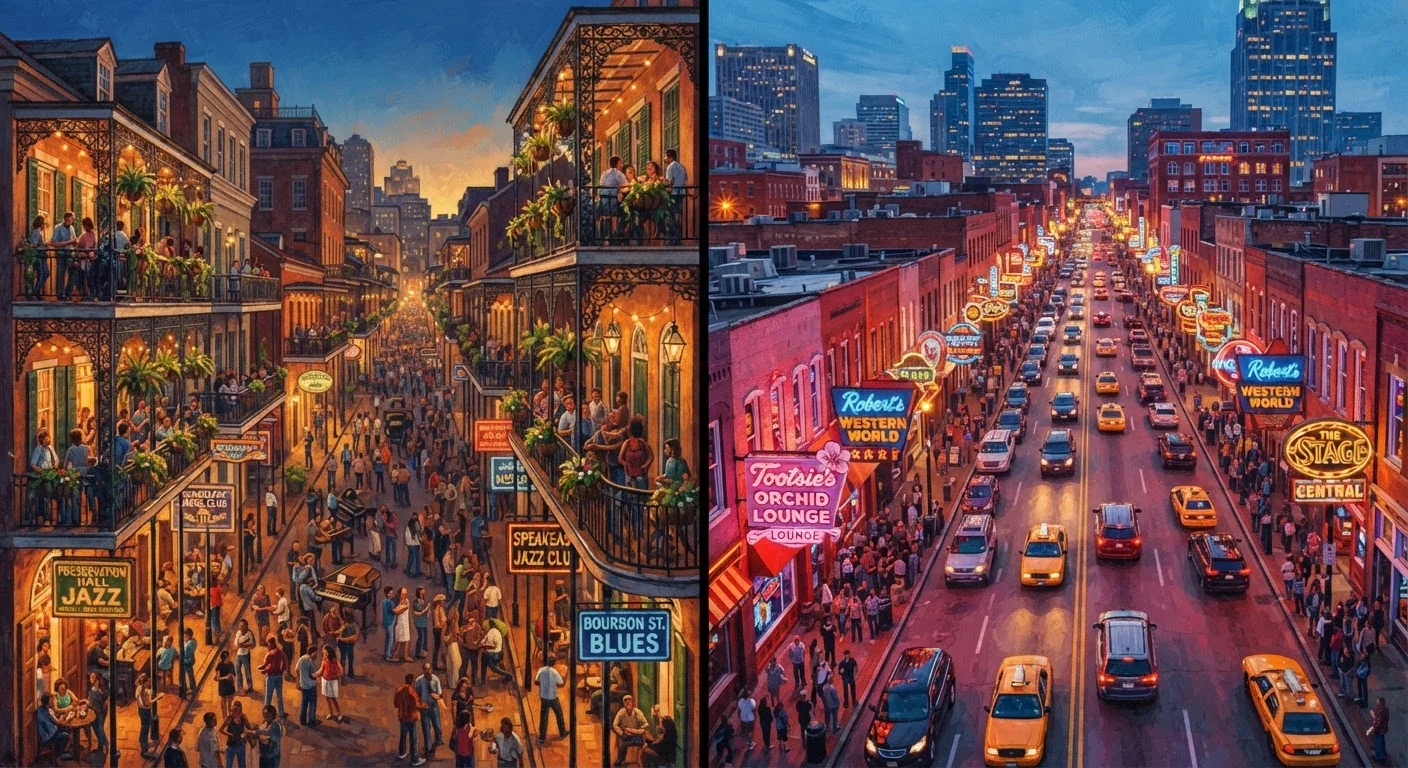
New Orleans gave the world jazz, and the city still lives inside it. In the Tremé neighborhood - one of the oldest African American neighborhoods in the country - brass bands spill onto the street during second-line parades on Sunday afternoons. In the Marigny's Frenchmen Street, a strip of intimate clubs showcases jazz, blues, funk, and bounce with no cover charge and no artifice. The music here feels organic, rooted in community ritual as much as entertainment.
Nashville's relationship with music is equally genuine, even if its commercial infrastructure is more visible. The Country Music Hall of Fame, the Grand Ole Opry, and the dense cluster of recording studios along Music Row represent a real industry ecosystem - and the honky-tonks on Lower Broadway are staffed by working musicians who play four-hour sets, often hoping to be discovered. The city's music scene now stretches well beyond country: East Nashville in particular has become a hub for Americana, indie folk, and alternative artists.
| Criterion | New Orleans | Nashville |
|---|---|---|
| Music roots | Jazz, blues, brass band, funk | Country, Americana, rock |
| Culinary identity | Centuries-old Creole/Cajun tradition | Growing scene; hot chicken a standout |
| Neighborhood texture | Deeply distinct, historic architecture | Rapidly developing; pockets of character |
| Nightlife style | Intimate clubs, street music, no cover | Packed honky-tonks, rooftop bars |
| Best travel season | Spring and fall (March-April, Oct-Nov) | Year-round; spring and fall preferred |
| Walkability | High in core neighborhoods | Moderate; car needed beyond downtown |
| Major festivals | Mardi Gras, Jazz Fest | CMA Fest, Bonnaroo nearby |
| Climate | Humid subtropical; hot summers | Temperate four-season |
Food, Neighborhood Life, and What Each City Actually Feels Like
Food is perhaps where New Orleans most decisively separates itself. The city's culinary tradition - gumbo, jambalaya, crawfish étouffée, beignets, muffulettas - didn't emerge from a trend cycle. It developed over centuries from the intersection of French, West African, Spanish, Native American, and Caribbean cooking. Eating well in New Orleans requires almost no effort; the tradition is embedded in corner diners and neighborhood spots as much as in celebrated restaurants.
Nashville's food scene has grown impressively in recent years, with a range of restaurants reflecting the city's rapid demographic expansion. Hot chicken - the cayenne-coated fried chicken dish associated with the city - is genuinely worth seeking out, and the broader restaurant landscape now spans many cuisines. But Nashville's culinary identity is still being written, whereas New Orleans' has been a century in the making.
Neighborhood character tells a similar story. New Orleans rewards slow walking. The Garden District's antebellum mansions, the shotgun houses of Bywater painted in layered Caribbean colors, the above-ground cemeteries of Mid-City - the city looks and feels unlike anywhere else in America. Nashville's development has been explosive, and much of the new construction along its entertainment corridors reflects that speed: polished, functional, and modern. Pockets like 12South and Germantown retain more texture, but the city's character is still coalescing.
Bourbon Street vs. Frenchmen Street
Bourbon Street is New Orleans' most famous nightlife corridor, but many locals and repeat visitors find it the least representative of the city's musical culture. Frenchmen Street in the Marigny neighborhood - just a short walk or rideshare from the French Quarter - offers a denser, more varied live music experience in smaller, more intimate venues. If your trip has room for only one evening of music, most who know the city well suggest starting on Frenchmen Street.
Both cities reward planning around their quieter edges. Just as visitors to other iconic American destinations often discover that exploring beyond the headline neighborhood changes their entire experience - a dynamic familiar to anyone who's navigated New York City - the same logic applies here. In New Orleans, a morning in the Bywater feels entirely different from an evening on Bourbon Street. In Nashville, an afternoon in East Nashville shows a side of the city that Lower Broadway doesn't.
Practical Considerations: Timing, Logistics, and What to Expect
Climate shapes when and how you visit both cities significantly. New Orleans sits on the Gulf Coast and is genuinely hot and humid from May through September - though that same warmth gives the city its lush, slightly overgrown atmosphere. Spring (March-April) and fall (October-November) are widely considered the most comfortable times to visit. Hurricane season runs June through November; travelers should monitor conditions and ensure they understand their travel and accommodation options before booking.
Nashville sits inland in Tennessee and experiences a more temperate four-season climate. Summers are warm but not oppressive; spring and fall are mild and popular for travel. The city is broadly accessible year-round without the weather-related planning considerations that New Orleans requires.
For festival travelers, New Orleans' Mardi Gras (dates shift annually based on the Catholic calendar, typically February or March) and Jazz Fest (late April to early May) are transformative but require significant advance planning - accommodation books months out and prices rise sharply. Nashville hosts CMA Fest each June, which draws large crowds to the downtown core.
19 million
Annual visitors to New Orleans (pre-pandemic estimate)
According to figures from the New Orleans Tourism Marketing Corporation, the city attracted approximately 19 million visitors annually before 2020.
16+ million
Annual visitors to Nashville
Nashville's Convention & Visitors Corp has reported visitor counts exceeding 16 million annually in recent years, reflecting the city's rapid rise as a major travel destination.
130+
Live music venues in Nashville
Nashville is often cited as having one of the highest concentrations of live music venues per capita among major U.S. cities.
Getting around differs, too. New Orleans has a historic streetcar system and is walkable in its core neighborhoods, though rideshare services are common for longer distances. Nashville is primarily a car-dependent city, though its urban core - particularly the area between Broadway and the Gulch - is navigable on foot. Visitors planning to explore beyond downtown Nashville will generally find a car or rideshare necessary.