Why Merging and Lane Changes Are High-Risk Maneuvers
Lane changes and freeway merges are among the most frequently mishandled driving situations on American roads. According to the National Highway Traffic Safety Administration (NHTSA), lane-change and merge-related crashes account for a significant share of non-intersection highway incidents annually. The combination of high speed, compressed decision time, and multiple moving variables makes these maneuvers uniquely demanding.
Many drivers underestimate this risk because merging feels routine - something done dozens of times without incident. That familiarity can breed complacency. The reality is that most merging errors don't result in immediate crashes; they resolve because another driver compensated. Building deliberate, structured habits removes dependence on others to correct your mistakes.
Highway environments differ substantially from city driving. As we explore in our comparison of highway versus city driving safety risks, high-speed roads demand earlier decisions, longer gaps, and more precise speed management. The techniques below address each of those demands directly.
What you will need
Setting Up for a Safe Merge: Tools and Preparation
Effective merging starts before you reach the on-ramp. Your mirrors must be properly positioned - not angled to show the rear quarter of your own vehicle, but adjusted outward to widen your field of view of adjacent lanes. A driver-side mirror that shows primarily your car's door panel is providing much less usable information than one set to capture the lane beside you.
Understanding your blind-spot zones - the areas not captured by any mirror - is equally important. These zones sit roughly between where your side mirror's view ends and where your peripheral vision begins. Physically turning your head to check them is not optional; it is a fundamental part of safe lane-change execution. For deeper context on how positioning and visibility interact, our article on what new drivers are rarely taught about lane positioning is worth reviewing alongside this guide.
Properly Adjusted Side and Rearview Mirrors
Maximizes visibility of adjacent lanes and reduces blind-spot size before any lane change.
Functioning Turn Signals
Communicates your intent to surrounding drivers, a legal requirement in all U.S. states.
Blind-Spot Monitoring System
Provides an additional alert when a vehicle occupies your blind spot during lane changes.
Step-by-Step: Merging and Changing Lanes Safely
The following steps apply to both freeway on-ramp merges and lane changes made during normal highway travel. The core sequence - speed, signal, scan, gap, move - remains consistent regardless of context.
Build speed on the acceleration lane
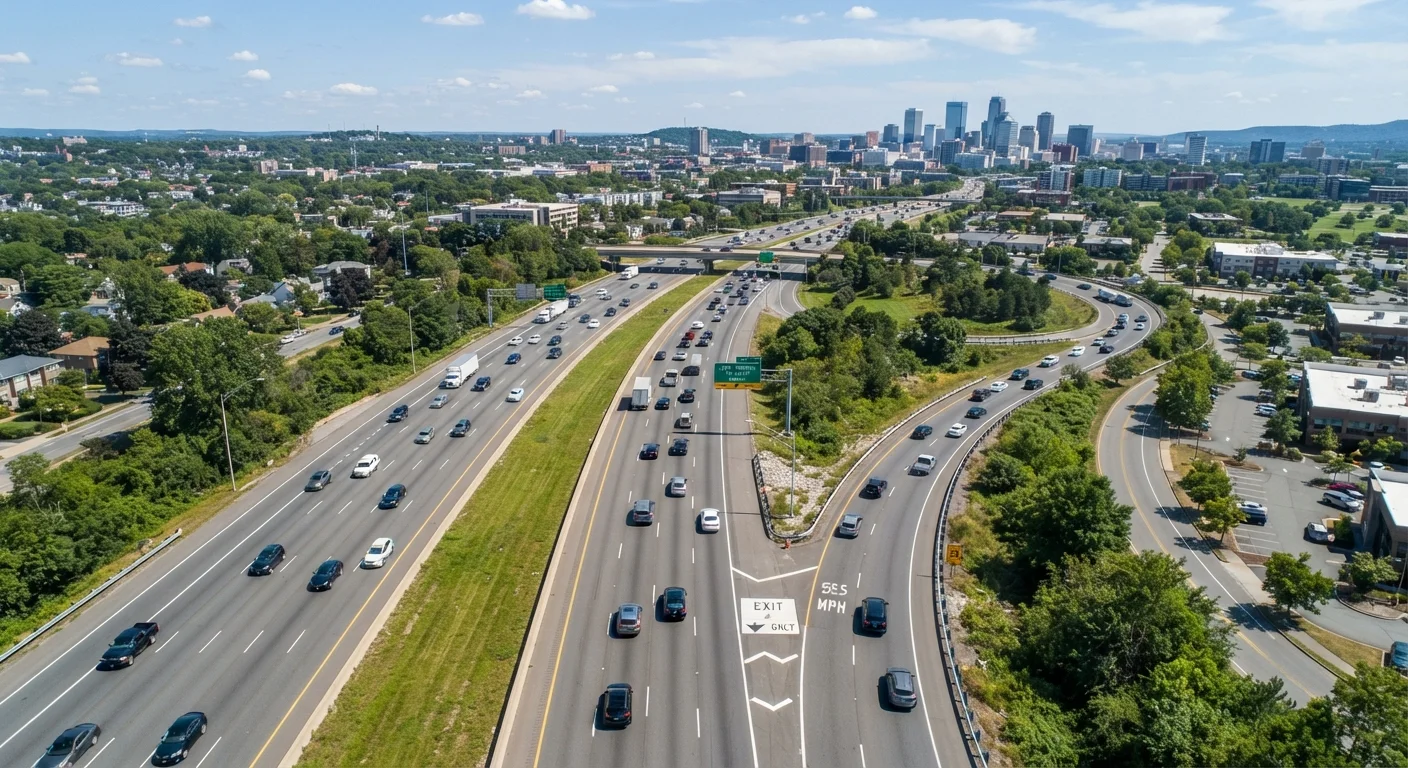
The on-ramp acceleration lane exists specifically to allow you to reach highway traffic speed before merging. Accelerate smoothly and progressively so that your speed closely matches the vehicles already traveling in the right lane. Arriving at the merge point 15-20 mph slower than surrounding traffic is one of the most common - and dangerous - merging errors.
Signal your intent early
Activate your turn signal at least three to four seconds before you plan to move into traffic. Signaling early alerts nearby drivers to your intention and gives them time to adjust their own position or speed. Do not wait until a gap appears to signal - your signal helps create cooperation.
Scan mirrors and check your blind spot
Check your rearview mirror, then your left side mirror, then physically turn your head to glance over your left shoulder to cover the blind-spot zone your mirrors cannot capture. This sequence - often taught as the mirror-signal-maneuver routine - should be completed every time before lane movement begins. Note the speed and distance of any approaching vehicles.
Identify and time a safe gap
A safe merging gap is generally at least four seconds of space ahead of you in the target lane - meaning the vehicle in front of your intended merge point is at least four seconds away at highway speed. If no adequate gap exists, adjust your speed within the acceleration lane to open one. Do not force your way into an insufficient gap.
Merge smoothly and hold your lane
Once your gap is confirmed, steer gradually into the lane - avoid sharp, sudden movements that can surprise other drivers. Bring your vehicle fully into the lane before canceling your signal. Maintain your speed and hold your new lane position for at least a few seconds before considering any additional movement.
Execute subsequent lane changes one at a time
If you need to move from the right lane to a center or left lane after merging, treat each lane change as a separate maneuver. Repeat the signal-scan-gap sequence for each individual lane. Cutting across multiple lanes simultaneously dramatically reduces reaction time for other drivers and eliminates your ability to respond to unexpected hazards.
Highway Speed Requires Longer Thinking Distance
At 65 mph, your vehicle travels roughly 95 feet per second. A one-second distraction - glancing at a phone, adjusting the radio - equates to approximately the length of three car lengths of movement with no driver input. Build your lane-change habits around that reality by starting every check earlier than feels necessary.
Never Stop at the End of an On-Ramp
Stopping at the merge point - unless traffic is at a complete standstill - puts you and the drivers behind you at severe risk of a rear-end collision at highway speed. Even when finding a gap is challenging, maintaining momentum while slowing moderately is far safer than a full stop. If traffic ahead is stopped, decelerate gradually and signal clearly.
Common Mistakes and How to Avoid Them
Several habitual errors make lane changes more dangerous than they need to be. Under-signaling - activating a turn signal only a second before moving - gives surrounding drivers no meaningful warning. Failure to match speed before merging is perhaps the most collision-prone error, as it forces a speed differential that other drivers must compensate for instantly. Multi-lane jumps, where a driver moves across two or more lanes in a single maneuver, are associated with a disproportionate share of sideswipe crashes because they exceed what mirror checks can safely cover.
Distraction during lane changes is also a significant factor. The act of merging requires full attention - this is not the moment to adjust navigation, change audio, or respond to a passenger. Even a brief input delay at highway speed can mean the difference between a completed merge and a collision.
Avoid Lingering in a Truck's Blind Spots
Large commercial trucks have four major blind-spot zones: immediately in front, directly behind, and alongside both sides of the cab. When merging near a truck, move through these zones with purpose - don't pace alongside a truck for extended periods. For a detailed breakdown, see our guidance on sharing the road with large trucks.
Finally, be aware of how your behavior on the ramp affects the driver behind you. Slowing unexpectedly, braking hard, or stopping short in an acceleration lane creates a chain reaction that can trap multiple vehicles. Smooth, predictable actions protect everyone in your vicinity. As part of a broader view of how safety habits evolve throughout a driver's lifetime, the guide on safe driving from first license to older adulthood offers valuable perspective on when and why these habits tend to erode.