Why the Environment Shapes the Risk
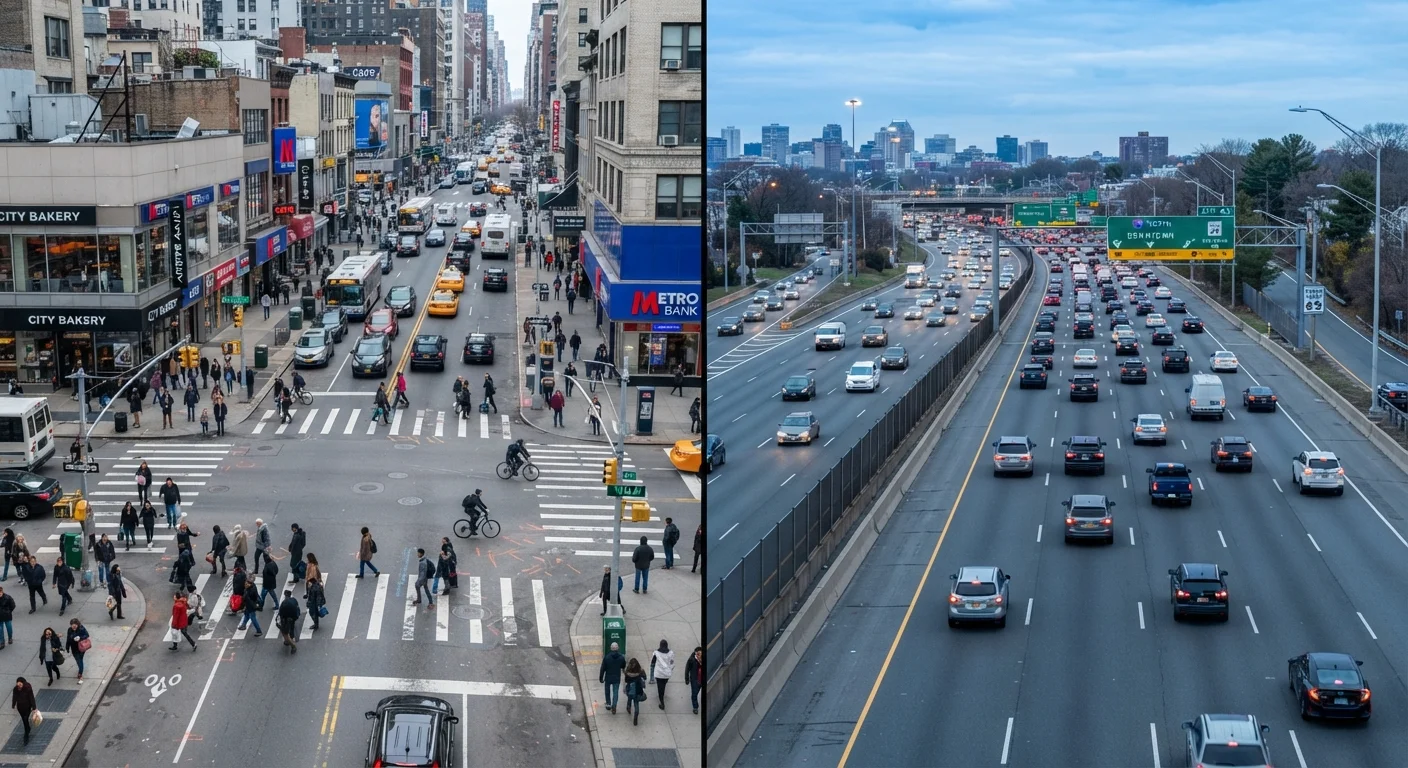
Most drivers understand that speed kills - but the relationship between driving environment and crash risk is more nuanced than that single variable. Highway and city driving don't just differ in posted speed limits; they differ in the types of hazards you face, how quickly those hazards develop, and how much time you have to respond.
According to the National Highway Traffic Safety Administration (NHTSA), a disproportionate share of traffic fatalities occur on rural roads and highways, largely because higher speeds amplify the consequences of any error. City crashes happen more frequently, but lower speeds mean a greater portion of them result in property damage or minor injuries rather than fatalities. Understanding this distinction helps you allocate your attention more deliberately in each setting.
For a broader framework on anticipating hazards before they become emergencies, see our guide to defensive driving. The principles apply across both environments - but how you apply them changes significantly depending on where you're driving.
| Criterion | Highway Driving | City Driving |
|---|---|---|
| Typical speed range | 55-80 mph | 15-45 mph |
| Primary crash type | Rear-end, sideswipe, run-off-road | Angle, pedestrian, rear-end at stops |
| Fatality risk per crash | Higher - speed amplifies severity | Lower - but still significant |
| Crash frequency | Lower per mile traveled | Higher per mile traveled |
| Key hazard type | Speed differentials, fatigue, merging | Intersections, pedestrians, distraction |
| Reaction time available | Very short at highway speeds | Short, but hazards develop closer |
| Fatigue risk | High - monotony accelerates drowsiness | Lower - frequent demands maintain alertness |
| Distraction risk | Moderate - but consequences severe | High - stop-and-go invites phone use |
Highway Hazards: Speed, Distance, and Sustained Attention
The defining characteristic of highway danger is the combination of high speed and compressed reaction time. At 70 mph, a vehicle covers roughly 103 feet per second. That means a lapse in attention lasting just two seconds - enough to glance at a navigation screen - puts you more than 200 feet deeper into traffic without any situational awareness.
The most consequential highway risks include:
- Tailgating and following distance errors: The three-second rule (increase to four or more seconds in adverse conditions) is the minimum safe standard. Rear-end collisions at highway speeds are frequently severe.
- Unsafe merging and lane changes: Improper technique when entering freeway traffic or changing lanes is a leading cause of highway collisions. Our guide to merging and lane changes covers the step-by-step approach in detail.
- Driver fatigue: Monotonous highway conditions accelerate the onset of drowsiness. Fatigue impairs reaction time in ways that parallel alcohol impairment at significant levels, according to research cited by the AAA Foundation for Traffic Safety.
- Large truck interactions: Highways concentrate heavy commercial vehicles. Understanding blind spots, wide turns, and braking distances is essential. Sharing the road with large trucks covers exactly what passenger car drivers need to know.
Weather compounds all of these risks. Wet or icy pavement dramatically extends stopping distances at highway speeds. Matching your speed to road conditions is a critical skill that experienced drivers treat as non-negotiable.
City Driving Hazards: Complexity, Conflict Points, and Unpredictability
Urban driving trades speed for complexity. The hazard density per mile is far higher in a city than on any freeway - intersections, pedestrians, cyclists, parked cars opening doors, delivery vehicles, and frequent lane merges all create conflict points that demand continuous scanning.
Key city-specific risks include:
- Intersection conflicts: A significant portion of urban crashes occur at or near intersections. Red-light runners, pedestrians crossing against signals, and drivers executing left turns across traffic all require active anticipation. Our breakdown of intersection types explains how to read each scenario differently.
- Distraction peaks in stop-and-go traffic: Ironically, slower speeds breed more distraction. Drivers are statistically more likely to glance at phones during urban congestion than at highway speeds, according to traffic safety researchers.
- Vulnerable road users: Pedestrians and cyclists are present in numbers that highways rarely see. The stopping distance needed to avoid a pedestrian who steps off a curb is measured in feet, not car lengths.
- Parking and blind-spot hazards: Dooring (a parked car's door opening into traffic), sudden reversals, and vehicles pulling from driveways create hazards with very short warning times.
~40%
Urban crashes occurring at intersections
The Federal Highway Administration has consistently identified intersections as a primary urban crash location, accounting for a large share of city traffic incidents.
2 sec
Attention lapse covering 200+ feet at highway speed
At 70 mph, a vehicle travels approximately 103 feet per second, meaning a two-second distraction moves a driver more than 200 feet without awareness.
3x
Higher fatality rate on rural roads vs. urban roads
NHTSA data has consistently shown that rural and highway roads produce significantly higher fatality rates per mile traveled compared to urban streets.
Drivers who become overconfident in familiar urban routes are particularly at risk. The risks of overconfidence behind the wheel are real - familiarity with a route can cause drivers to reduce the active scanning that keeps them safe.
Resetting Your Defensive Posture at the Transition
One of the most underappreciated safety moments in any drive is the transition between environments - the on-ramp where city speed becomes highway speed, or the off-ramp that deposits you back into urban traffic. Each direction carries a distinct risk.
Entering a highway from city streets requires building speed deliberately to match traffic flow before merging, not after. Entering city traffic from a highway means consciously reducing speed and raising your scan frequency before you reach the first intersection.
The Highway-to-City Speed Perception Gap
After extended highway driving, city speeds can feel deceptively slow - a phenomenon sometimes called 'velocitation.' Drivers may underestimate how fast they're still traveling when they exit a highway, leading them to take turns, approach intersections, or react to pedestrians at speeds higher than they realize. Giving yourself a deliberate moment to recalibrate - checking your actual speedometer rather than relying on feel - is a practical habit that addresses this perceptual shift directly.
Drivers who make this transition dozens of times per week are especially prone to treating it as automatic - which is precisely when errors occur. Risk profiles also change across a driver's lifetime, and newer or older drivers may need more intentional adjustment at each transition. Our guide to safe driving across all stages of life addresses how awareness needs evolve. The core principle is consistent: every environment demands a deliberate, engaged defensive mindset - not a passive one shaped by habit alone.