Why Large Trucks Behave Differently Than Passenger Vehicles
A fully loaded tractor-trailer can weigh up to 80,000 pounds - roughly 20 to 30 times the weight of a typical passenger car. That mass gap has direct, physics-driven consequences for how trucks accelerate, brake, and maneuver. Drivers who understand these differences can anticipate truck behavior rather than react to it after it's too late.
Stopping distance is one of the most underestimated factors. At 65 mph, a loaded commercial truck may require 525 feet or more to come to a complete stop - nearly two football fields. A passenger car covering the same speed stops in roughly 316 feet. When a car driver cuts in front of a truck and slows suddenly, that physics gap becomes life-threatening. For more on how speed environments shape your risk, see how safety risks differ between highway and city driving.
Trucks also generate turbulence - the aerodynamic push and pull felt when passing or being passed. High-profile vehicles like RVs and box trucks can cause sudden steering instability in smaller cars. Anticipating this effect by maintaining a firm grip and a steady lane helps prevent overcorrection.
Understanding Truck Blind Spots - and Staying Out of Them
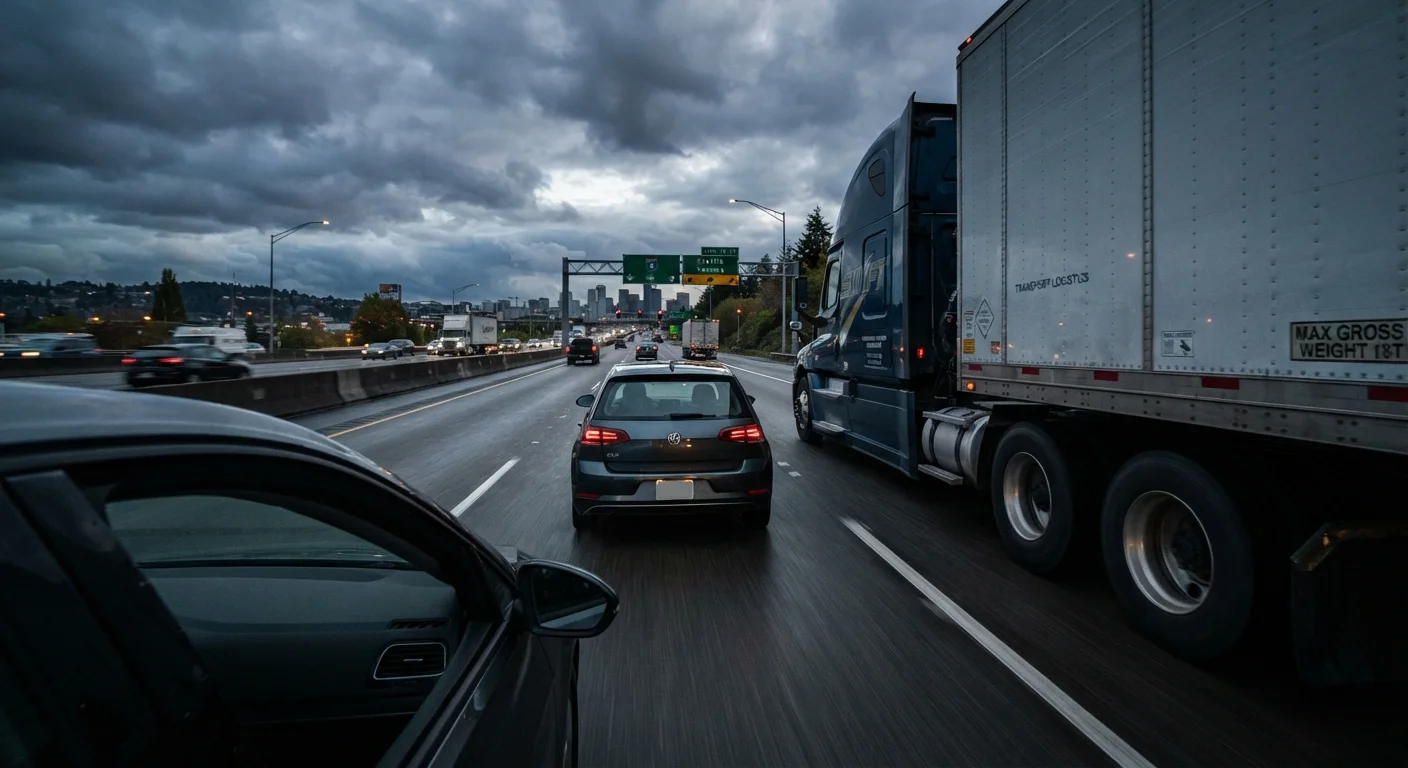
Commercial trucks have four significant blind spots, sometimes called No-Zones, where the truck driver has little or no visibility of surrounding traffic:
- Directly behind the trailer - extending roughly 30 feet back. The truck driver cannot see you at all in this zone.
- Directly in front of the cab - about 20 feet forward. The elevated cab height cuts off the driver's near-front view.
- The right side - spanning multiple lanes from the cab back along the trailer. This is the largest and most dangerous blind spot.
- The left side - a narrower but still significant zone running from the driver's door back along the trailer.
A practical rule of thumb: if you cannot see the truck driver's face in their side mirror, they almost certainly cannot see you. The goal is to spend as little time as possible in these zones. Pass trucks at a consistent speed rather than hovering beside them, and always pass on the left where the blind spot is smaller.
Safe Following Distance and Passing Around Trucks
Following a large truck too closely creates two problems at once: you disappear into the truck's rear blind spot, and you give yourself almost no time to react if the truck slows or debris falls from the load. A minimum following distance of four seconds is widely recommended when trailing a large truck under normal highway conditions - more in rain, fog, or heavy traffic.
Many drivers underestimate how inadequate the standard two-second rule becomes near heavy vehicles. Common following distance myths explain why most drivers need significantly more buffer than they think, especially at speed.
When passing, accelerate to complete the pass efficiently - don't linger alongside the trailer. Once past, resist the urge to immediately merge back in front of the truck. Allow generous clearance - wait until you can see the full front of the truck in your rearview mirror - before returning to the lane. Cutting back in too soon forces the truck driver to brake aggressively, with limited margin for error given their stopping distances.
Wide Turns, Merges, and Intersections with Trucks
One of the most misread maneuvers a truck makes is a wide right turn. Because the rear wheels track inward on a turn, truck drivers frequently swing left before turning right to prevent the rear of the trailer from jumping the curb or striking obstacles. This motion can look like the truck is moving out of the way - when in fact it's about to sweep sharply right.
Never position your vehicle between a turning truck and the curb, even if a gap appears. That space will close. Watch for the truck's turn signal and the driver's mirror positioning before committing to any move near an intersection. Navigating roundabouts and other intersection types covers how intersection geometry interacts with vehicle size in more detail.
On highway merges, give trucks room early. Trucks cannot accelerate or decelerate quickly in response to last-second merges. A safer merging approach near large vehicles means signaling early and adjusting speed before committing to the lane, not after.
Trucks Signal Intent - Watch for It Early
Commercial truck drivers are generally trained professionals who communicate their intentions through turn signals and positioning. Watching for these cues well in advance - rather than at the last moment - gives passenger car drivers the time needed to respond safely. If a truck is hugging the center line before an intersection, it is likely preparing for a wide right turn. Treat early signals as your cue to hold position, not accelerate.
Building the Right Mindset Around Large Vehicles
Confidence around large trucks comes from knowledge, not from familiarity. Experienced drivers sometimes grow complacent after years of uneventful highway miles - a tendency explored in detail when looking at how overconfidence develops behind the wheel. Around large trucks, assumptions are especially costly.
Your lane positioning also matters more than most drivers realize. Staying toward the center or left of your lane in situations where a truck is nearby increases your margin from the No-Zone on the right and gives you a clearer sightline past the cab. Lane positioning strategy directly affects your visibility and escape options near large vehicles.
Finally, check your mirrors and adjust your vehicle's condition before any long drive. Functioning mirrors, properly adjusted for your seating position, are non-negotiable when sharing the road with trucks. A pre-trip safety check takes only minutes and ensures your vehicle is ready for the demands of mixed traffic.
“The fundamental challenge around large trucks isn't just their size - it's the mismatch between what drivers expect and how trucks actually move. Passenger car drivers who understand stopping distances and blind spots make far better decisions in traffic.”
— Federal Motor Carrier Safety Administration, U.S. federal agency overseeing commercial truck and bus safety