
What an Extended Warranty Actually Is
Despite the name, most extended warranties sold on used cars are not warranties in the legal sense - they are vehicle service contracts. A manufacturer's warranty is a promise backed by the company that built the car; a service contract is a separate financial agreement, often sold by a third-party administrator, a dealership, or a finance company. That distinction matters, because service contracts are regulated differently across states and carry different consumer protections.
These contracts promise to pay for certain covered repairs after a deductible is met, for a defined period of time or mileage limit - whichever comes first. Understanding that baseline helps clarify what the fine print is actually doing: defining the edges of that promise. When you're also weighing the broader financial picture of used car ownership, see our breakdown of new vs. used car trade-offs for context on how warranties factor into the full cost comparison.
What the Coverage Sections Typically Include
Service contracts generally come in tiered structures. An exclusionary (or "bumper-to-bumper") plan lists what is not covered - everything else is theoretically included. An inclusionary (or "stated component") plan lists only the systems explicitly covered. The latter is far more common on used vehicles and far more restrictive in practice.
Typical stated-component plans cover the engine's core internal parts, the transmission, drive axles, and sometimes cooling and electrical systems. Higher tiers may add air conditioning compressors, fuel injection components, or turbochargers. The coverage summary in a brochure often sounds comprehensive; the actual covered-parts list in the contract is usually far shorter.
Predictable budget for unexpected mechanical repairs
A service contract converts unpredictable repair costs into a known monthly or upfront expense, which can help owners who prefer fixed budgeting over absorbing large, variable repair bills.
May cover high-cost powertrain failures
Engine and transmission repairs can run into the thousands of dollars. A contract that covers these components can offset its own cost with a single major claim.
Transferable contracts can add resale value
Some service contracts are transferable to a subsequent owner, which can make a used vehicle more attractive to buyers and potentially support a higher asking price.
Roadside assistance and rental car benefits
Many plans bundle roadside assistance, towing coverage, and rental car reimbursement - services that have tangible value independent of mechanical repairs.
The Exclusions That Matter Most
Exclusions are where most claim disputes originate. Nearly every service contract excludes the following by definition:
- Pre-existing conditions: Any failure that existed or was developing before the contract start date. Inspections required at enrollment are designed partly to document the vehicle's current state against you.
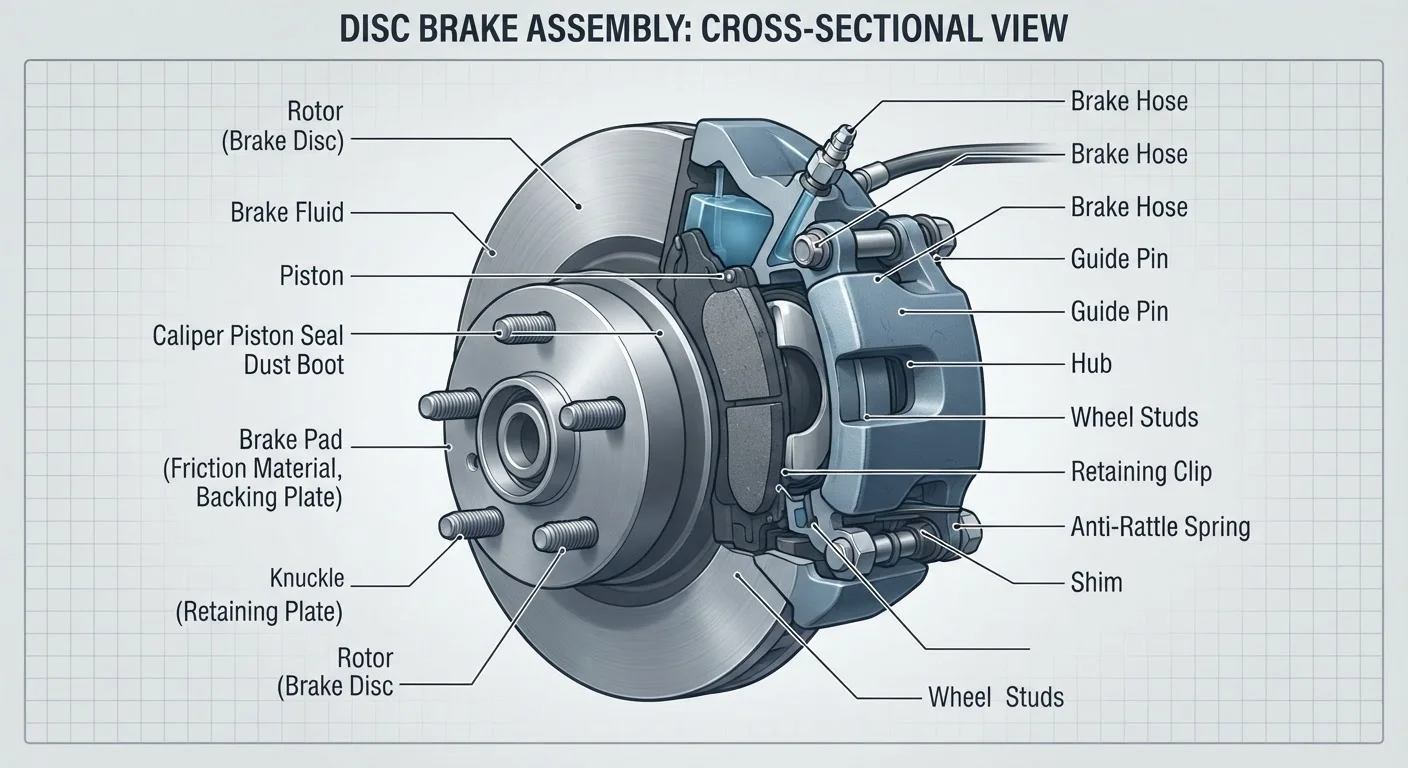
- Wear-and-tear items: Brake pads, rotors, belts, hoses, filters, spark plugs, clutch discs, and similar maintenance parts are almost universally excluded.
- Consequential damage: If a failed part causes a second component to fail, the second failure may not be covered unless you can prove it was a direct result of the first covered failure.
- Lack of maintenance: Contracts routinely require documented proof of oil changes and other scheduled services. Missing records can void a claim.
- Modifications: Aftermarket lifts, performance parts, or altered suspension systems typically void coverage on related systems.
Pre-Authorization Is Not Optional
Most service contracts require the owner to contact the administrator before authorizing any repair - not after. If a shop begins work before approval is granted, the claim is routinely denied regardless of whether the repair would otherwise have been covered. Always read the claims procedure section of your contract and keep the administrator's contact number accessible.
Understanding exclusions is the practical equivalent of reading the fine print in any contract. Much like decoding the language in a standard lease agreement, the coverage summary is rarely the full story.
Costs, Deductibles, and the Math Behind the Contract
The purchase price of a service contract for a used vehicle can range from a few hundred to several thousand dollars, depending on the vehicle's age, mileage, and coverage tier. But the sticker price is only part of the cost equation.
$4,000+
Average cost of a used-car transmission repair
Industry repair data consistently places automatic transmission replacement among the most expensive single repairs a used car owner can face, often ranging from $3,000 to $5,000 or more depending on the vehicle.
$1,500-$3,500
Typical service contract price range for used vehicles
Contract pricing varies considerably based on vehicle age, mileage, coverage tier, and provider; buyers financing a contract through a dealer typically pay more over time due to interest.
Per-visit deductibles - commonly between $100 and $200 - apply each time you bring the vehicle in for a covered repair. Some contracts use a per-component deductible instead, meaning multiple deductibles in a single visit. Over a three-year contract with several claims, deductibles alone can add hundreds of dollars to the real out-of-pocket cost.
Additionally, many contracts only reimburse repairs at a set labor rate, which may be lower than what your preferred shop charges. If your mechanic bills at $150/hour and the contract reimburses at $110/hour, you pay the difference on every labor-intensive job.
Pros and Cons at a Glance
Weighed against the real-world terms described above, extended warranties carry a defined set of advantages and drawbacks that any buyer should consider before signing.
Exclusions frequently limit real-world payouts
Stated-component contracts cover a narrower set of parts than buyers typically expect. High-frequency repairs like sensors, electrical modules, and cooling system components are often excluded or buried in exceptions.
Pre-existing condition clauses are broadly applied
Contract administrators can deny claims by arguing a failure was pre-existing, even when the symptom appeared after the contract started. Proving otherwise is the owner's burden.
Repair shop restrictions reduce convenience
Many contracts require repairs to be performed at authorized facilities or require pre-authorization before any work begins. Using a trusted independent mechanic may void the claim.
Total cost often approaches likely repair costs
Independent actuarial analyses of vehicle service contracts have suggested that, on average, consumers pay more in premiums and deductibles than they receive in covered repairs - though individual outcomes vary significantly.
Cancellation terms can favor the provider
Refunds for early cancellation are typically prorated against time elapsed and a cancellation fee, meaning owners who cancel midway through a contract may recover far less than expected.