The Depreciation Reality
Depreciation is the single largest cost most car owners never see itemized on a bill. A new vehicle can lose roughly 20% of its value within the first year, according to data commonly cited by automotive valuation services, and may shed another 10-15% over the following two years. That means a buyer who drives a new car off the lot absorbs the sharpest part of the depreciation curve immediately.
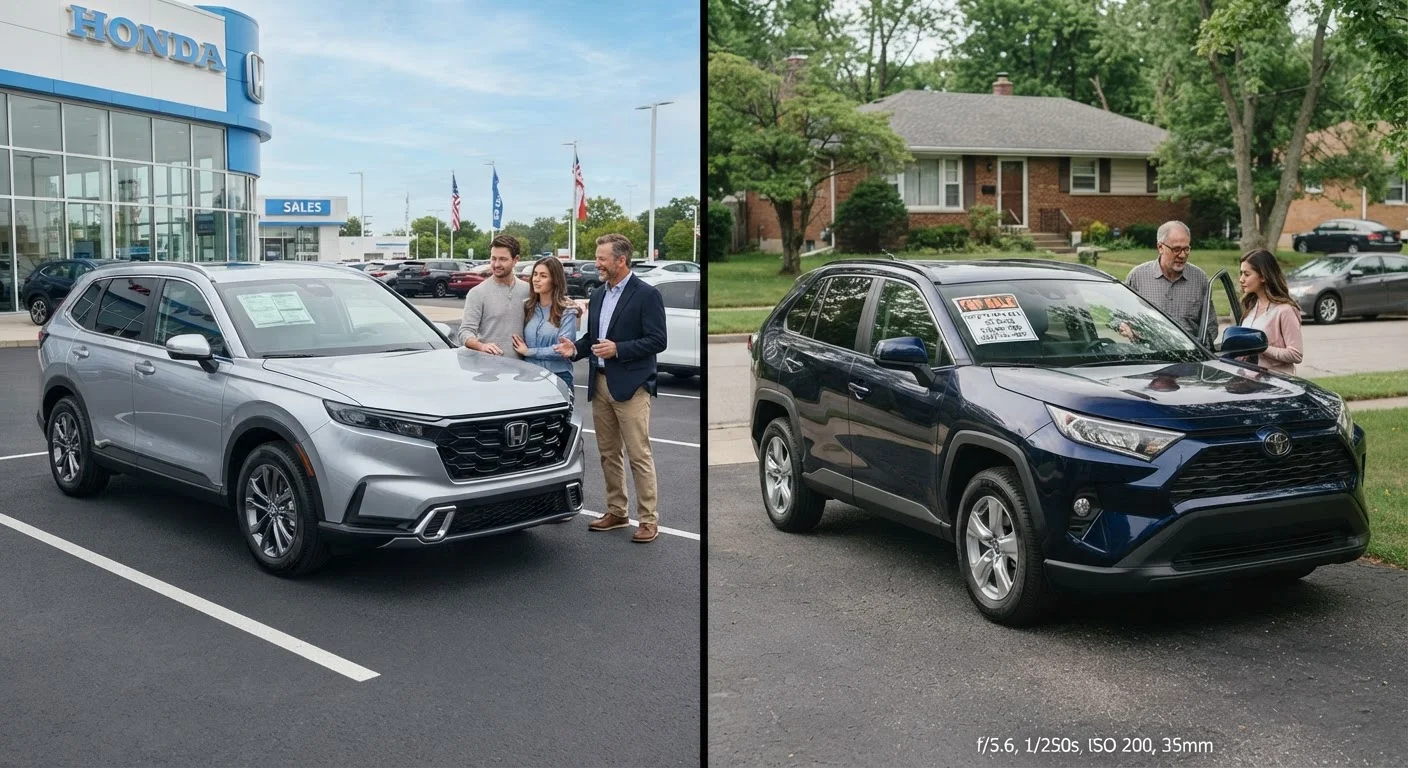
A used car buyer, by contrast, purchases a vehicle after the original owner has already absorbed that loss. The practical result: two buyers can drive near-identical vehicles for years, but the used-car buyer starts with a lower cost basis and faces a slower rate of ongoing depreciation. For buyers planning to sell or trade in within five years, this gap matters significantly. See our full breakdown of ownership costs beyond the sticker price for a broader view of how depreciation fits into lifetime vehicle expenses.
| Criterion | New Car | Used Car |
|---|---|---|
| Depreciation exposure | High - sharpest drop in year one | Lower - prior owner absorbed early loss |
| Typical loan interest rate | Generally lower | Generally higher |
| Warranty coverage | Full manufacturer warranty included | Partial, expired, or none |
| Purchase price | Higher | Lower |
| Latest safety technology | Current model-year standard | Varies by model year |
| Ownership history known | Yes - zero previous owners | Partially - via history report |
| Repair cost uncertainty | Low during warranty period | Higher, especially without warranty |
Financing Costs: Rates, Terms, and Total Interest Paid
New cars generally attract lower auto loan interest rates than used vehicles. Lenders view newer vehicles as lower-risk collateral because their value is more predictable and their condition is known. Manufacturer-backed financing programs sometimes offer promotional rates that further reduce borrowing costs on new models.
Used-car loans, however, typically carry higher rates - sometimes meaningfully so - and lenders may impose shorter maximum loan terms on older vehicles, which can push monthly payments higher even on a lower principal balance. Buyers should calculate total interest paid over the life of the loan, not just the monthly payment, to make an accurate comparison. A $5,000 lower purchase price on a used car does not automatically translate to $5,000 in savings once financing costs are factored in.
~20%
Average new-car value lost in year one
Automotive valuation analysts commonly estimate new vehicles lose roughly 20% of their value within the first 12 months of ownership.
1-2%+
Typical rate premium on used-car loans
Used-vehicle auto loans have historically carried interest rates one to two or more percentage points above comparable new-car financing, according to Federal Reserve consumer credit data.
3-5 yrs
Common manufacturer bumper-to-bumper warranty length
Most major automakers offer bumper-to-bumper warranty coverage ranging from three to five years or a set mileage threshold, whichever comes first.
Warranties, Reliability, and the Repair Equation
New vehicles come with manufacturer warranties - typically a bumper-to-bumper coverage period and a longer powertrain warranty - that transfer full repair risk to the automaker for a defined period. This effectively caps major repair expenses during the warranty window, which can provide meaningful financial protection.
Used cars generally have partial or no remaining factory warranty coverage, depending on age and mileage. Buyers can purchase extended service contracts, though these vary widely in what they cover and exclude. Our guide to extended warranties on used cars explains what these contracts typically include, what they leave out, and how to evaluate their actual value.
Certified pre-owned (CPO) programs occupy a middle ground: franchised dealers inspect vehicles against a manufacturer-defined checklist and provide a limited warranty backed by the automaker. CPO vehicles cost more than non-certified used cars but less than new ones, and they offer greater assurance than buying from an individual seller.
Reliability data from independent sources consistently shows that modern vehicles - new and used - are more durable than models from prior decades. However, maintenance history, accident records, and how a vehicle was driven all influence how a specific used car will perform. Reviewing a vehicle history report and having an independent mechanic inspect any used vehicle before purchase are widely recommended steps.
Making the Right Call for Your Situation
Neither option is universally superior. The financially optimal choice depends on how long you plan to own the vehicle, how many miles you drive annually, your credit profile, and how much repair uncertainty you can tolerate. Buyers who keep vehicles for ten or more years often find that the new-vs-used depreciation gap narrows over time, while those who trade in every three to four years may benefit more clearly from buying used.
It also helps to consider what else is in play. If you're weighing a lease as a third path, our comparison of leasing vs. buying covers how those numbers stack up. And if you already own a vehicle and are deciding whether to hold or move on, our framework for selling, trading in, or keeping your car offers a structured approach to that evaluation.
This article provides general financial and automotive information for educational purposes and does not constitute personalized financial or purchasing advice. Consult a qualified financial professional and conduct independent research before making a vehicle purchase decision.