How Each Option Actually Works
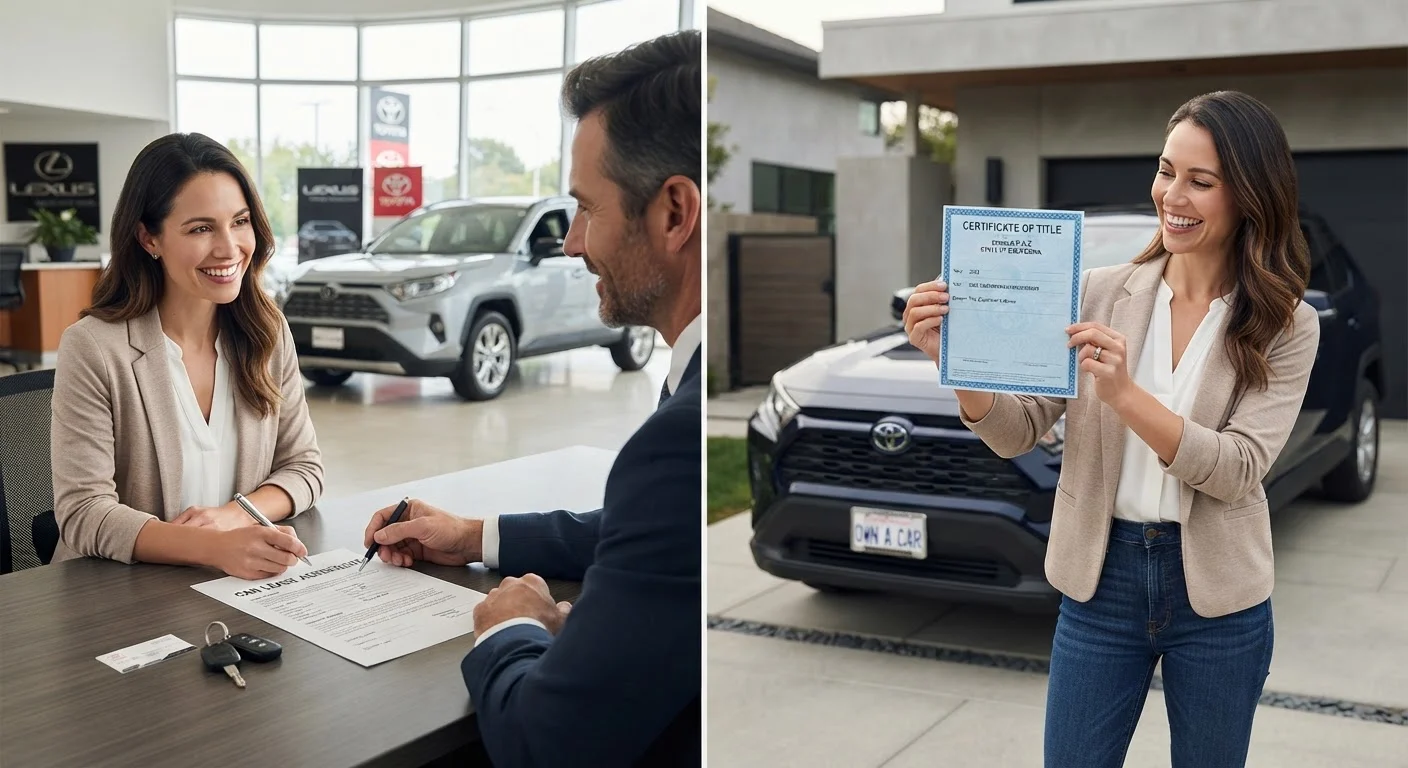
When you lease a vehicle, you're essentially renting it from the lender for a fixed term - typically 24 to 36 months. Your monthly payment covers the vehicle's expected depreciation during that period, plus finance charges and fees. At lease end, you return the car (or pay to purchase it), and the lender retains ownership throughout.
When you buy, you either pay cash outright or take out an auto loan. Monthly payments retire principal and interest, and once the loan is paid off, you own the asset free and clear. You can sell it, trade it, or drive it indefinitely - all without reporting to a lender.
The structural difference matters: leasing is a use agreement; buying is an acquisition. That distinction shapes everything from monthly costs to long-term financial outcomes. For a broader picture of ownership obligations, see The Full Picture of Car Ownership.
| Criterion | Leasing | Buying |
|---|---|---|
| Monthly payment | Lower (covers depreciation only) | Higher (covers full vehicle cost) |
| Ownership at term end | None - vehicle returned | Full ownership, free and clear |
| Mileage limits | Yes - overage fees apply | No restrictions |
| Modification freedom | Restricted or prohibited | Unrestricted |
| Upfront costs | Often lower at signing | Down payment typically required |
| Long-term cost (10+ years) | Higher - continuous payments | Lower once loan is paid off |
| Depreciation risk | Lender absorbs it | Owner absorbs it |
| Early exit flexibility | Limited - penalties apply | Sell or trade anytime |
What the Costs Look Like Side by Side
Lease payments are lower month to month because you're only financing the depreciation portion of the vehicle's value - not its total cost. On a $40,000 vehicle with a $26,000 residual value, you're effectively financing $14,000 (plus fees), spread across the lease term.
A loan payment on the same $40,000 vehicle finances the entire amount. That raises monthly obligations meaningfully, even at competitive interest rates. However, once the loan is retired - usually after 60 to 72 months - those payments stop. A leased vehicle requires a new payment every time you re-enter a lease cycle.
~30%
Lower average lease payment vs. comparable loan
Industry analyses consistently show lease payments running roughly 20-30% below loan payments for the same vehicle, reflecting the depreciation-only financing structure.
$0.25
Typical per-mile overage charge on leases
Many lease contracts set excess mileage fees between $0.15 and $0.30 per mile at return - costs that accumulate quickly for frequent drivers.
20%+
Average new vehicle depreciation in year one
According to automotive valuation research, many new vehicles lose 15-25% of their market value within the first 12 months of ownership.
Over a 10-year span, someone who buys, pays off a loan, and drives the vehicle for several additional years will typically spend significantly less than someone who leases continuously. The break-even advantage of buying becomes clearer the longer you hold the vehicle. The true cost of owning a car extends this analysis across depreciation, insurance, and running costs.
Restrictions, Flexibility, and Hidden Costs
Lease agreements carry conditions that buyers don't face. Common constraints include:
- Mileage caps: Most leases allow 10,000-15,000 miles annually. Overages typically cost $0.15-$0.30 per mile at turn-in.
- Wear-and-tear standards: Damage beyond defined thresholds triggers end-of-lease charges. Normal wear is allowed, but standards vary by lender.
- Early termination penalties: Breaking a lease before term end is expensive - sometimes equivalent to several months of remaining payments.
- Modification restrictions: Aftermarket changes are generally prohibited or must be reversed before return.
Buyers face none of these constraints once the loan closes. You can drive as many miles as needed, modify the vehicle, and sell or trade at any time without penalty. The trade-off is that you absorb depreciation directly - a new vehicle can lose 15-25% of its value in the first year alone.
Gap Insurance and Lease Agreements
If a leased vehicle is totaled or stolen, standard auto insurance typically pays the car's current market value - which may be less than what you still owe on the lease. Gap insurance (or a similar product) covers that difference. Many lease agreements include it automatically, but it's worth confirming before you sign. Buyers who finance a vehicle with a small down payment face the same risk and should verify their coverage with a licensed insurance professional.
If you're weighing how this compares to other rent-vs-own decisions in your financial life, the framework in Renting vs. Buying a Home: Weighing the Real Trade-Offs applies similar logic across a different asset class.
Which Path Fits Your Situation
Neither leasing nor buying is universally superior - the right answer depends on how you use your vehicle and what you value financially. Consider these factors:
- Annual mileage
- High-mileage drivers pay disproportionately under lease terms. If you regularly exceed 15,000 miles a year, buying removes that financial exposure.
- How long you keep vehicles
- If you trade in every two to three years regardless, leasing can reduce your total outlay. If you hold vehicles seven or more years, ownership's cost advantage becomes substantial.
- Upfront cash
- Leases often require less at signing than a purchase down payment, though this varies. Buyers who make larger down payments reduce long-term interest costs.
- Tax considerations (business use)
- Business owners may have different tax implications for leased versus purchased vehicles. A qualified tax professional can clarify what applies to your situation.
For those deciding between new and pre-owned vehicles within the buying path, New Car vs. Used Car: Weighing the Financial Trade-Offs offers a detailed breakdown of how depreciation, financing, and reliability factor in.