The Real Question Behind the Rent-vs.-Buy Debate
The conventional wisdom that buying is always better than renting has been challenged repeatedly by housing economists - and for good reason. Whether renting or owning comes out ahead depends on purchase price, local rent levels, how long you stay, what mortgage rates you qualify for, and what you'd otherwise do with a down payment. There is no universal answer.
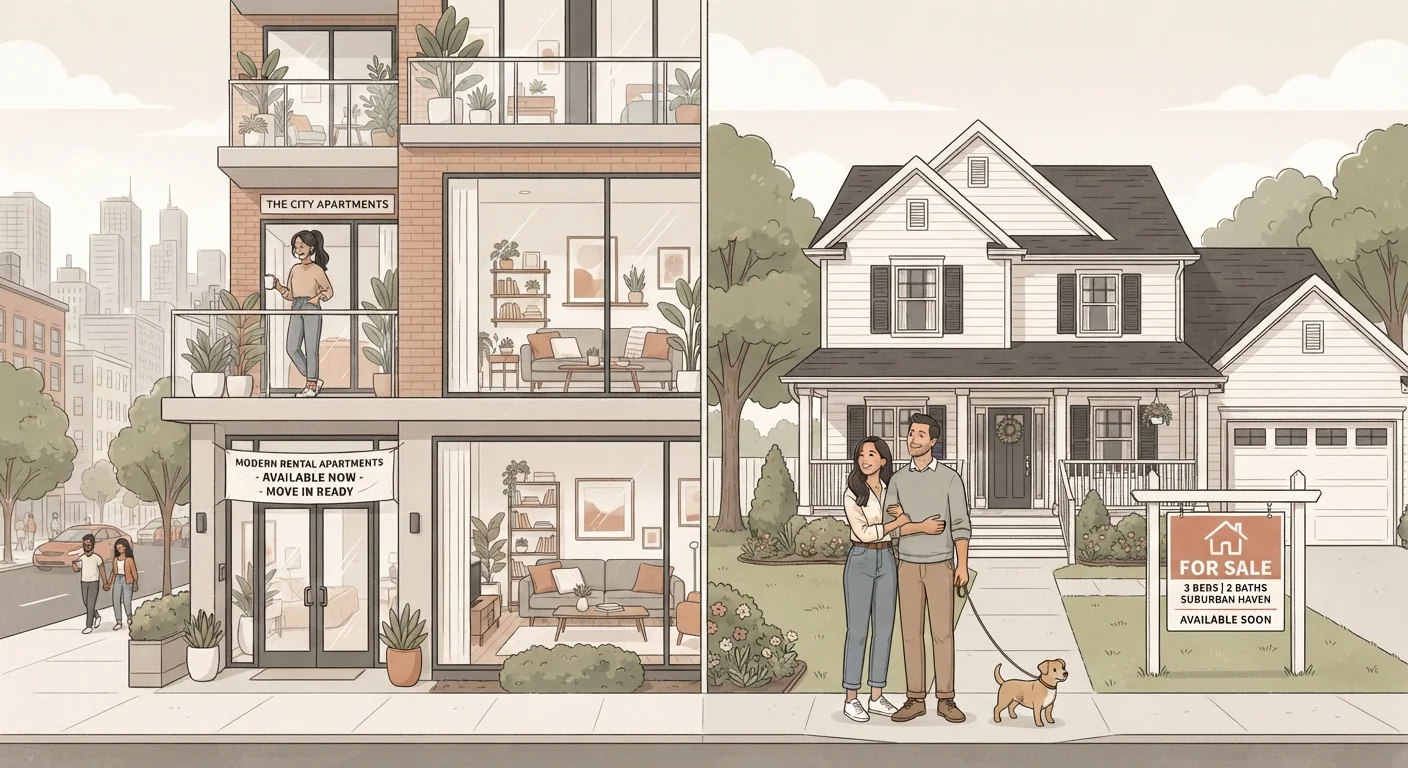
What the debate often misses is the lifestyle dimension. Renting and buying are not just financial instruments - they come with fundamentally different relationships to housing, risk, and daily life. Understanding those trade-offs honestly is more useful than running a single break-even calculation. See a framework for thinking through today's market for a deeper look at current conditions.
Lower upfront financial commitment
Renters typically pay first month's rent and a security deposit - far less than the down payment, closing costs, and prepaid expenses required to buy a home.
Freedom to relocate without transaction costs
Ending a lease involves far less friction than selling a home, making renting well-suited to people with uncertain job situations or plans to move within a few years.
No exposure to maintenance and repair costs
Major repairs - roof, plumbing, HVAC - are the landlord's responsibility under most leases, shielding renters from unpredictable large expenses.
Capital stays liquid and investable
Money not tied up in a down payment or home equity can remain in other investments, though this advantage depends on the individual's actual savings behavior.
The Case for Renting
Renting is frequently framed as "throwing money away," but that framing ignores what renters actually receive: housing, and the financial flexibility that comes with not owning. Monthly rent pays for shelter without locking up tens of thousands of dollars in a down payment or exposing the renter to property value swings.
Renters also sidestep the hidden costs of homeownership. Maintenance, property taxes, homeowner's insurance, HOA fees where applicable, and major repairs - a new roof, HVAC system, or water heater - fall entirely on the owner. These costs are real and often underestimated. Industry guidance commonly suggests budgeting 1-2% of a home's value annually for maintenance alone.
For anyone uncertain about where they'll be living in two to four years, renting preserves the ability to relocate without the transaction friction of selling a home. Real estate commissions, closing costs, and the risk of selling in a down market can erode years of equity if a homeowner is forced to sell too soon. For a side-by-side look, see a balanced look at the financial and lifestyle trade-offs.
Lease Terms Matter More Than Most Renters Realize
Before signing, renters should carefully review renewal clauses, rent escalation terms, subletting rules, and notice periods. A lease is a binding legal contract, and the protections it offers - or doesn't - vary significantly by state and even city. If anything in a lease is unclear, consulting a local tenant's rights organization or attorney can prevent costly misunderstandings later.
The Case for Buying
Homeownership offers something renting does not: the chance to build equity. Each mortgage payment includes a principal component that reduces what is owed, and if the property appreciates in value, the owner captures that gain. Over a sufficiently long horizon - typically at least five to seven years in most markets - buying has historically outperformed renting on a pure wealth-building basis for many households.
Buyers also gain stability. A fixed-rate mortgage locks in a predictable monthly payment for the loan term, whereas renters face the possibility of rent increases at lease renewal. Owners can also modify their space - renovate a kitchen, paint walls, adopt pets - without landlord approval. Understanding how borrowing costs affect affordability is essential before committing; what mortgage rates actually do to buying power explains the mechanics in plain terms.
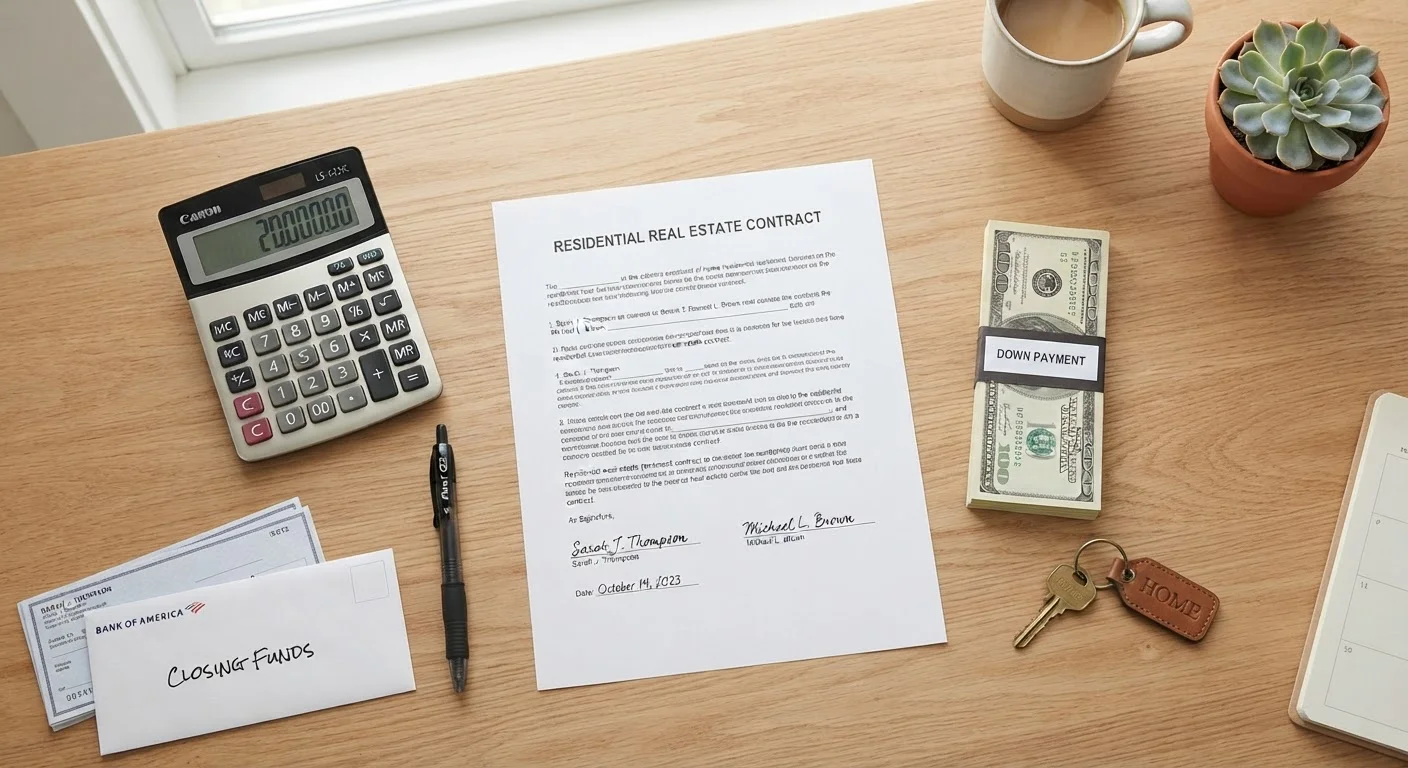
Upfront costs are substantial, however. Down payments, earnest money, and closing costs can total tens of thousands of dollars before a buyer moves in. Earnest money, down payments, and closing costs each serve different purposes - understanding them is part of being a prepared buyer. Exploring the full home-buying process can help first-timers know what to expect.
No equity accumulation from monthly payments
Rent payments provide housing but build no ownership stake, meaning renters don't benefit if local property values rise over time.
Rent can increase at lease renewal
Unlike a fixed-rate mortgage, rent is subject to market conditions and landlord decisions, which can make long-term housing costs less predictable.
Limited ability to personalize or modify the space
Most leases restrict painting, renovating, or structural changes, which can make a rented home feel less settled for long-term tenants.
Landlord decisions can disrupt tenancy
Owners may choose to sell, convert, or reclaim the property, leaving renters with little control over how long they can stay even with a good rental history.
Making the Decision for Your Situation
The most honest way to approach this decision is to separate the financial analysis from the lifestyle analysis - and then weigh both together. Financially, the break-even point (when buying becomes cheaper than renting on a total-cost basis) varies widely by city, neighborhood, and interest rate environment. Tools that model rent-vs.-buy scenarios can be helpful, but they are only as good as the assumptions fed into them.
On the lifestyle side, ask how confident you are in your job stability, how tied you are to a particular area, and how comfortable you are with the responsibilities of property ownership - from routine maintenance to emergency repairs. Waiting indefinitely for a market crash carries its own costs and risks, particularly in markets with persistently low inventory.
5-7 years
Typical break-even horizon for buying
Real estate analysts generally suggest buyers need to remain in a home at least five to seven years for purchase costs to be recouped through equity and appreciation.
1-2%
Annual maintenance cost estimate for homeowners
A commonly cited rule of thumb suggests budgeting 1-2% of a home's purchase price each year for ongoing maintenance and repairs.
2-5%
Typical closing cost range for home buyers
According to the Consumer Financial Protection Bureau, buyers generally pay closing costs equal to 2-5% of the loan amount, on top of their down payment.
Renters navigating lease terms should also understand their options. Month-to-month versus fixed-term leases each carry different trade-offs in terms of flexibility and stability. And if you reach the point of seriously considering a purchase, understanding fixed-rate vs. adjustable-rate mortgages is an important next step.
This article is for general informational and educational purposes only and does not constitute financial, legal, or real estate advice. Readers should consult a qualified financial adviser, real estate professional, or attorney regarding their individual circumstances.