What Happens Inside the Mill
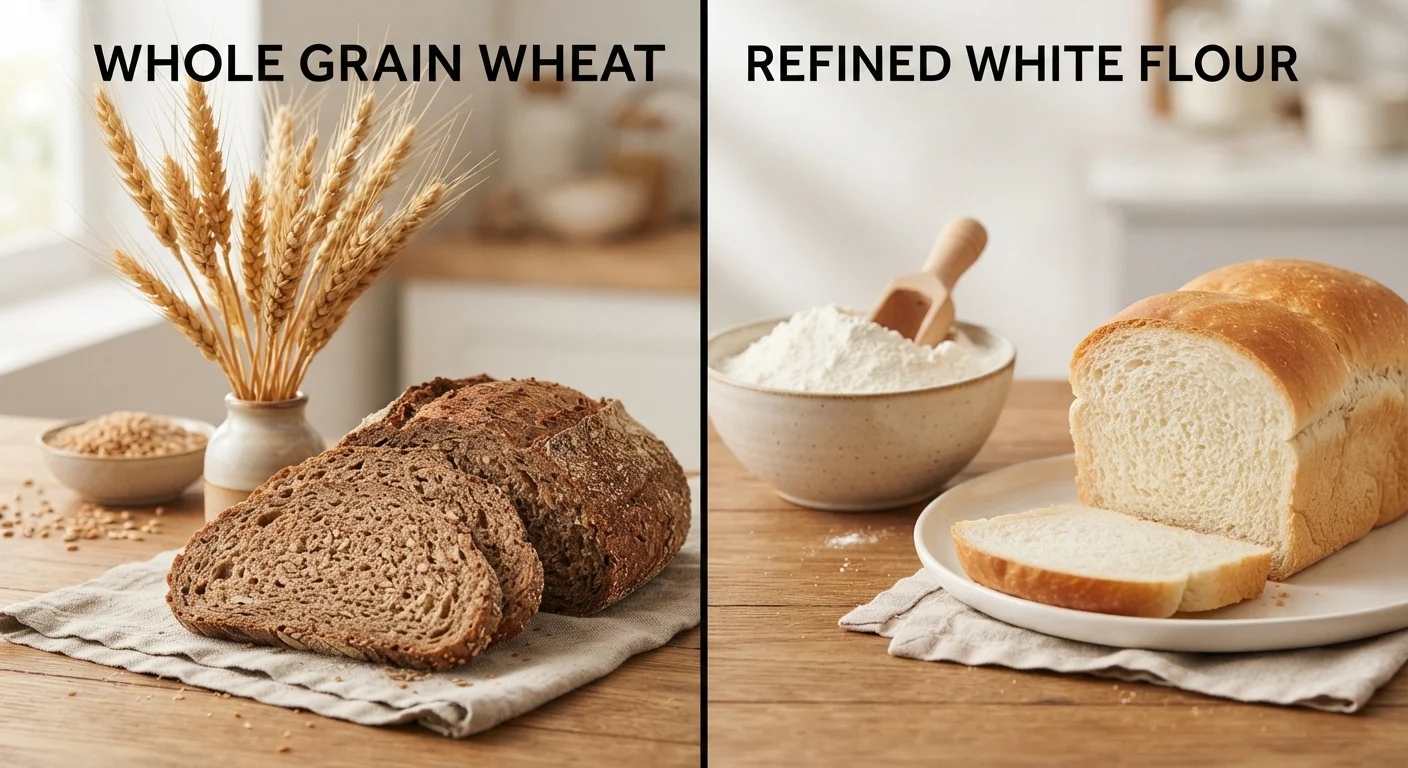
A grain kernel has three distinct layers: the bran (the fibrous outer coat), the germ (the nutrient-dense embryo), and the endosperm (the starchy interior). Whole grains keep all three intact. Refining, by contrast, strips away the bran and germ entirely, leaving only the endosperm.
That processing step is efficient for shelf life and texture - but it removes most of what made the grain nutritious. The bran carries the majority of the fiber and houses a significant portion of B vitamins like thiamin, niacin, and folate. The germ contributes healthy fats, vitamin E, and additional B vitamins. What remains after milling is largely starch with a much thinner nutritional profile.
| Criterion | Whole Grains | Refined Grains |
|---|---|---|
| Kernel layers retained | Bran, germ, endosperm | Endosperm only |
| Dietary fiber per serving | Higher | Lower (fiber removed) |
| B vitamins | Naturally present | Mostly removed; some added back via enrichment |
| Iron | Naturally present | Removed; restored in enriched products |
| Healthy fats (from germ) | Present | Removed |
| Glycemic response | Slower digestion, more gradual | Faster digestion, quicker glucose rise |
| Shelf life | Shorter (oils in germ can go rancid) | Longer |
| Texture and palatability | Denser, nuttier flavor | Softer, milder flavor |
To partially compensate, many refined grain products in the U.S. are enriched - meaning iron and certain B vitamins are added back after processing. Enrichment does restore some lost nutrients, but dietary fiber is not typically replaced, and the full complexity of phytochemicals and minerals found in the whole grain is not reproduced by enrichment alone.
How the Nutritional Difference Plays Out
Fiber is the most consequential difference in everyday nutrition terms. Fiber slows digestion, supports a feeling of fullness, feeds beneficial gut bacteria, and contributes to blood glucose regulation. When it's removed through refining, the remaining starch is digested more rapidly - which can produce a quicker rise in blood glucose compared to whole grain equivalents.
25%
Less fiber in typical enriched white bread vs. whole wheat
General nutritional comparison based on USDA FoodData Central figures for standard bread varieties.
3 or more
Recommended daily whole grain servings (adults)
The Dietary Guidelines for Americans recommend at least half of all grains consumed be whole grains, equating to roughly three or more servings daily for most adults.
~21%
Of U.S. adults meet whole grain intake recommendations
Research published in nutritional epidemiology literature has consistently found that whole grain consumption in the U.S. remains well below recommended levels across most demographic groups.
Beyond fiber, whole grains provide magnesium, zinc, selenium, and a range of antioxidants tied to the bran layer. Population-level research - including large observational studies - has consistently associated higher whole grain intake with reduced risk markers for cardiovascular disease and type 2 diabetes. These associations don't prove cause and effect on their own, but they're consistent enough that major health organizations including the USDA and the American Heart Association include whole grain recommendations in their dietary guidance.
It's worth noting: enriched refined grains still contribute meaningful calories, carbohydrates, and some micronutrients to the diet. They are not nutritionally empty. The distinction is one of degree, not kind - whole grains simply offer more nutritional value per serving for most people. For a broader look at how grain choices fit into overall eating habits, see eating patterns the evidence supports.
Reading Labels to Tell Them Apart
Food labels don't always make the distinction obvious. The word "wheat" or even "multigrain" on packaging does not guarantee a whole grain product. The reliable signal is seeing "whole wheat," "whole oats," "whole grain corn," or another whole grain listed as the first ingredient on the ingredient panel.
Color is also not a reliable indicator - some brown breads get their color from added molasses, not whole grain content. Similarly, products marketed with terms like "stone-ground" may still be refined depending on how much of the bran and germ are retained.
The Whole Grain Stamp, administered by the Oldways Whole Grains Council, can help identify verified products, though its presence is voluntary and not all whole grain products carry it. Understanding how to navigate these signals is part of reading nutrition labels effectively - something our guide to reading a nutrition label covers in practical detail.
When shopping, checking the ingredient list and the fiber content per serving together gives a clearer picture than any single claim on the front of the package. Our grocery shopping nutrition walk-through offers aisle-by-aisle guidance for putting this into practice.
This article is for general informational and educational purposes only and does not constitute medical or dietary advice. Consult a qualified healthcare professional or registered dietitian for guidance tailored to your individual health needs.