Why This Decision Is Harder Than It Sounds
Most people start a decluttering session with good intentions but stall out in the middle - not because they don't know what they want to keep, but because letting go feels loaded. Do you donate it and hope someone uses it? Or does throwing it away make more sense? The hesitation is real, and it often leads to bags that sit by the door for months.
Understanding the actual trade-offs between donating and discarding can make those calls faster and less emotionally draining. If you're just getting started, our beginner's guide to decluttering walks through how to approach the overall process before you get to the donate-or-toss question.
The short version: both choices have real merit, and neither one is shameful. What matters is that you make the choice deliberately.
The Case for Donating
Donating keeps usable items out of landfills and puts them in the hands of people, families, or organizations who may genuinely need them. Thrift stores, shelters, libraries, tool lending programs, and community free-box exchanges all depend on items that households no longer need.
Extends the useful life of functional items
Items donated in good condition can serve another household for years, reducing overall waste and the environmental cost of manufacturing new goods.
Supports local community organizations
Thrift stores, shelters, and community programs often rely on donations to fund services or provide directly to people in need.
Reduces landfill contribution
Every item that finds a second home is one fewer item entering the waste stream - a meaningful benefit at scale.
May offer a tax deduction
Donations to qualified nonprofit organizations may be deductible if you itemize - consult a tax professional to understand what applies to your situation.
Creates a sense of purposeful letting go
Knowing an item will be used by someone else can make it emotionally easier to release things that still feel 'too good to throw away.'
One important caveat: donation centers are not waste management services. Most have limited storage and volunteer staff, and they regularly turn away items they can't process or sell. Before you load the car, check what your local organization actually accepts - many publish updated lists online. Calling ahead is never a bad idea.
Also worth noting: donated items that can't be resold often end up discarded anyway, sometimes at a cost to the organization. Donating something in genuinely poor condition doesn't spare it from the landfill - it just adds a logistical step.
The Case for Discarding
There's a version of the donate mindset that becomes a form of avoidance - an unwillingness to accept that something has simply reached the end of its useful life. Discarding, when done thoughtfully, is a legitimate and sometimes more responsible option.
Damaged or worn items burden donation centers
Organizations spend real resources sorting and disposing of items they can't use. Donating something in poor condition can cost the organization more than it helps.
Not everything is accepted
Large furniture, mattresses, car seats, and many electronics are refused by most thrift stores, leaving donors stuck with items they thought were off their hands.
Discarding prevents hygiene and safety issues
Items like old pillows, worn undergarments, chipped cookware, or broken tools shouldn't be passed on - disposal is the cleaner, safer choice.
Holding 'for donation' can prolong clutter
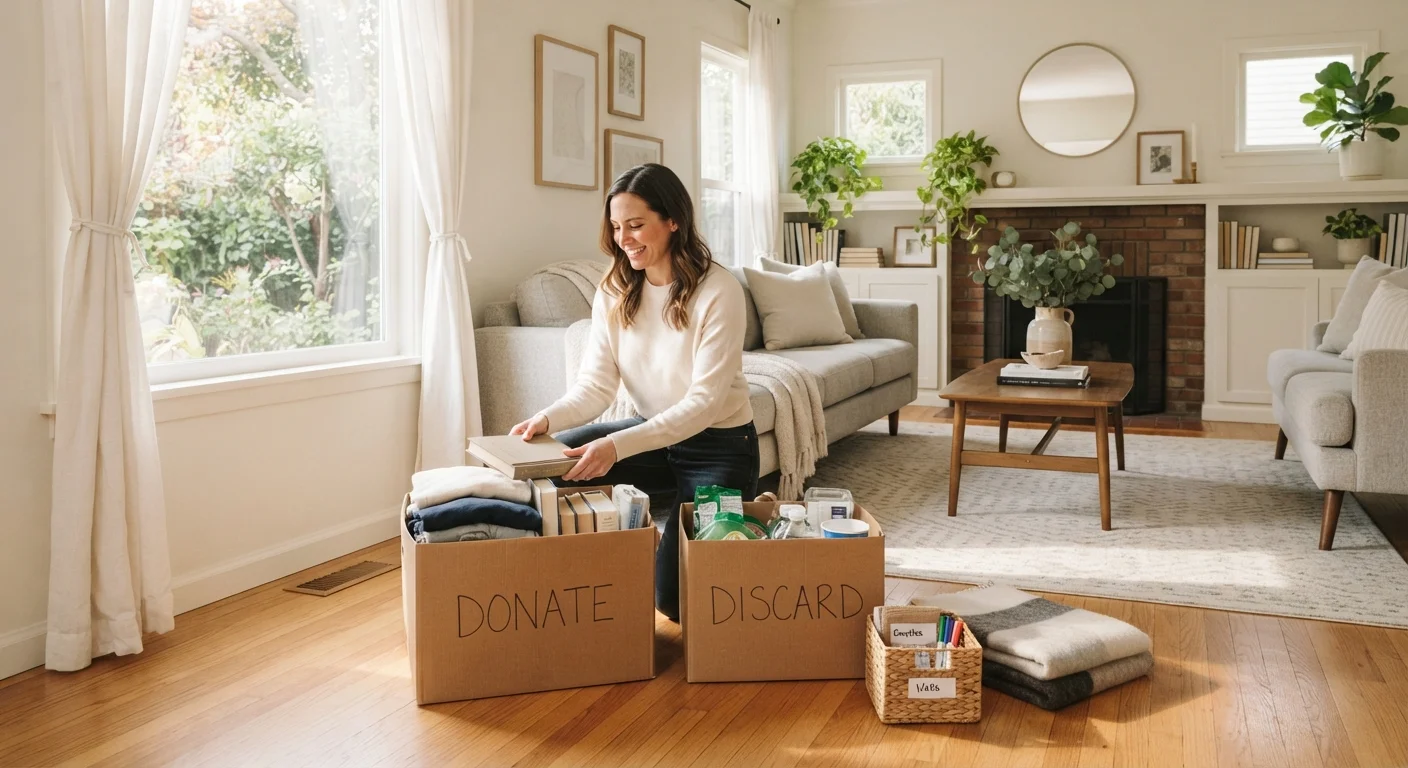
Bags and boxes set aside to donate but never dropped off can sit for months, effectively keeping clutter in the home under a different label.
Before tossing, consider whether the item qualifies for a more responsible disposal route. Electronics, batteries, paint, and certain chemicals often have designated drop-off programs through municipal waste services. Furniture in poor condition may be accepted by bulk pickup services. These options aren't donation, but they're not careless disposal either.
Specialty Disposal Routes Worth Knowing
Many municipalities offer free drop-off programs for electronics, hazardous household materials, and bulky items. Paint recycling programs, battery collection bins at hardware stores, and seasonal bulk pickup days are common options. Check your city or county's waste management website for what's available in your area - these programs exist specifically to handle items that neither donation centers nor standard trash pickup can responsibly process.
A Simple Framework for Making the Call
Rather than evaluating each item from scratch, a consistent decision rule saves mental energy. Here's one approach that works for most households:
- Would you give this to a friend? If the honest answer is no, it probably shouldn't be donated.
- Is it clean and functional? Items with stains, broken parts, missing pieces, or significant wear are usually discard candidates.
- Is there a realistic place to take it? If no local organization accepts it, holding onto it for an imaginary future recipient doesn't help anyone.
- Does it have specialized value? Certain items - tools, musical instruments, sports equipment - may be welcomed by specific programs even if general thrift stores don't want them.
Once you have a rhythm, decisions get faster. Building habits that prevent future clutter is the natural next step - the one-in-one-out rule and similar routines can help keep things from piling up again after a cleanout.
If you're organizing alongside a family, the calculus shifts a bit - kids' gear, toys, and outgrown clothing each come with their own considerations. Our article on decluttering with kids in the house offers practical guidance for that context.