Why Fertilizer Labels Use Three Numbers
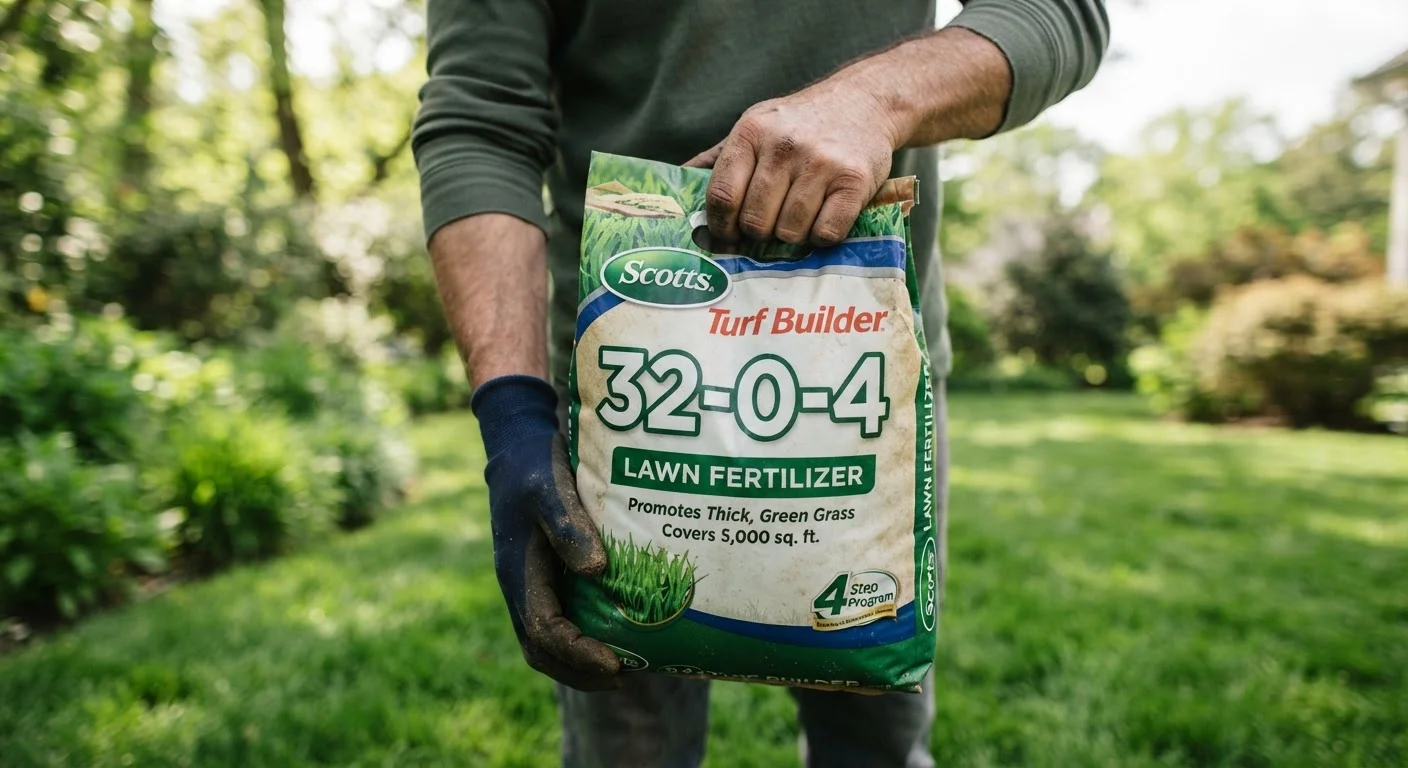
Walk down any lawn and garden aisle and you'll see fertilizer bags covered in bold numbers - 32-0-10, 10-10-10, 15-0-15. These aren't arbitrary. They represent the guaranteed minimum percentages of nitrogen, phosphorus, and potassium in that exact order, always. This standardized labeling format is required by law in the United States, so you can compare products reliably.
Understanding these numbers prevents two common mistakes: buying a fertilizer that doesn't match your lawn's actual needs, and applying too much of a nutrient your soil already has in excess. Neither one is a trivial concern - both cost money and can cause real damage to your turf and the environment around it.
~50%
Of U.S. lawns receive more fertilizer than needed
The EPA estimates that roughly half of home lawn fertilizer is over-applied, contributing to nutrient runoff into local water systems.
3-4x
Nitrogen demand vs. phosphorus and potassium
University turfgrass research consistently shows established lawns consume nitrogen at a far higher rate than the other two primary nutrients.
6.0-7.0
Ideal soil pH range for most grass types
According to cooperative extension guidelines across multiple U.S. states, nutrient availability is highest when soil pH falls within this range.
What Each Nutrient Actually Does
Nitrogen (N) is the growth engine. It drives the production of chlorophyll - the green pigment that powers photosynthesis - and it directly determines how fast and dark-green your grass grows. When a lawn looks pale or grows slowly, nitrogen deficiency is often the first culprit. It's also the nutrient grasses consume fastest, which is why most lawn fertilizers are nitrogen-heavy. That said, too much nitrogen pushes rapid, soft top-growth that can make grass more susceptible to disease and pest pressure.
Phosphorus (P) focuses on roots. It's especially important during seed germination and early establishment - which is why starter fertilizers for new lawns tend to have higher middle numbers. For established lawns, however, phosphorus accumulates in soil and rarely needs replenishment. In fact, over-applying it contributes to phosphorus runoff, which is a documented water quality problem in many parts of the country.
Potassium (K) works behind the scenes on plant resilience. It regulates water movement within grass cells, strengthens cell walls, and helps turf tolerate heat, cold, and drought stress. It also plays a role in disease resistance. If your lawn regularly struggles through summer heat or harsh winters, potassium levels are worth checking. If you're also noticing yellowing, see our guide on why grass turns yellow in summer for a fuller picture of possible causes.
Why a Soil Test Changes Everything
Most homeowners choose fertilizer by guessing - or by grabbing whatever's on sale. A soil test replaces guesswork with data. It measures the existing nutrient levels and pH of your soil, which directly affects how well grass can absorb any nutrients you apply. Even if you apply the right fertilizer, soil that's too acidic or too alkaline can lock nutrients out of reach of grass roots.
Soil tests are widely available through university cooperative extension programs, local garden centers, and mail-in lab services. Results typically come with specific amendment recommendations, which can save you money by telling you not to apply what you don't need. Many states have cooperative extension offices that offer low-cost testing - a quick search for your state's land-grant university extension service will point you in the right direction.
Get a Soil Test Before You Buy Fertilizer
Testing your soil first - rather than after - lets you spend money on exactly what your lawn is missing. Many cooperative extension offices charge as little as $15-$25 for a complete analysis. Results typically arrive within one to two weeks, and the recommendations can be applied that same season.
Choosing and Applying Fertilizer Wisely
Once you know what your soil needs, you can match a fertilizer ratio to that profile. A typical well-maintained lawn that needs routine feeding often does well with a nitrogen-dominant fertilizer with little or no phosphorus - something like a 20-0-10 - applied at the rate listed on the label, never more.
Timing matters just as much as chemistry. Cool-season grasses like tall fescue and Kentucky bluegrass peak in growth during fall and spring, so those are the most effective windows for fertilization. Warm-season grasses like Bermuda and St. Augustine respond best to feeding during late spring and summer when they're actively growing. Applying fertilizer to dormant grass is largely ineffective and can contribute to runoff.
For a complete picture of when to apply what, our season-by-season lawn care calendar maps out the full year for both grass types. And if you're fertilizing as part of a broader lawn renovation, pairing it with proper watering technique matters too - common lawn watering myths covers habits that quietly undermine even well-fed grass.
Finally, always water your lawn lightly after applying granular fertilizer. This helps move nutrients into the soil where roots can access them, and reduces the risk of fertilizer sitting on grass blades long enough to cause chemical burn.