Heat Dormancy vs. Actual Damage: Know the Difference
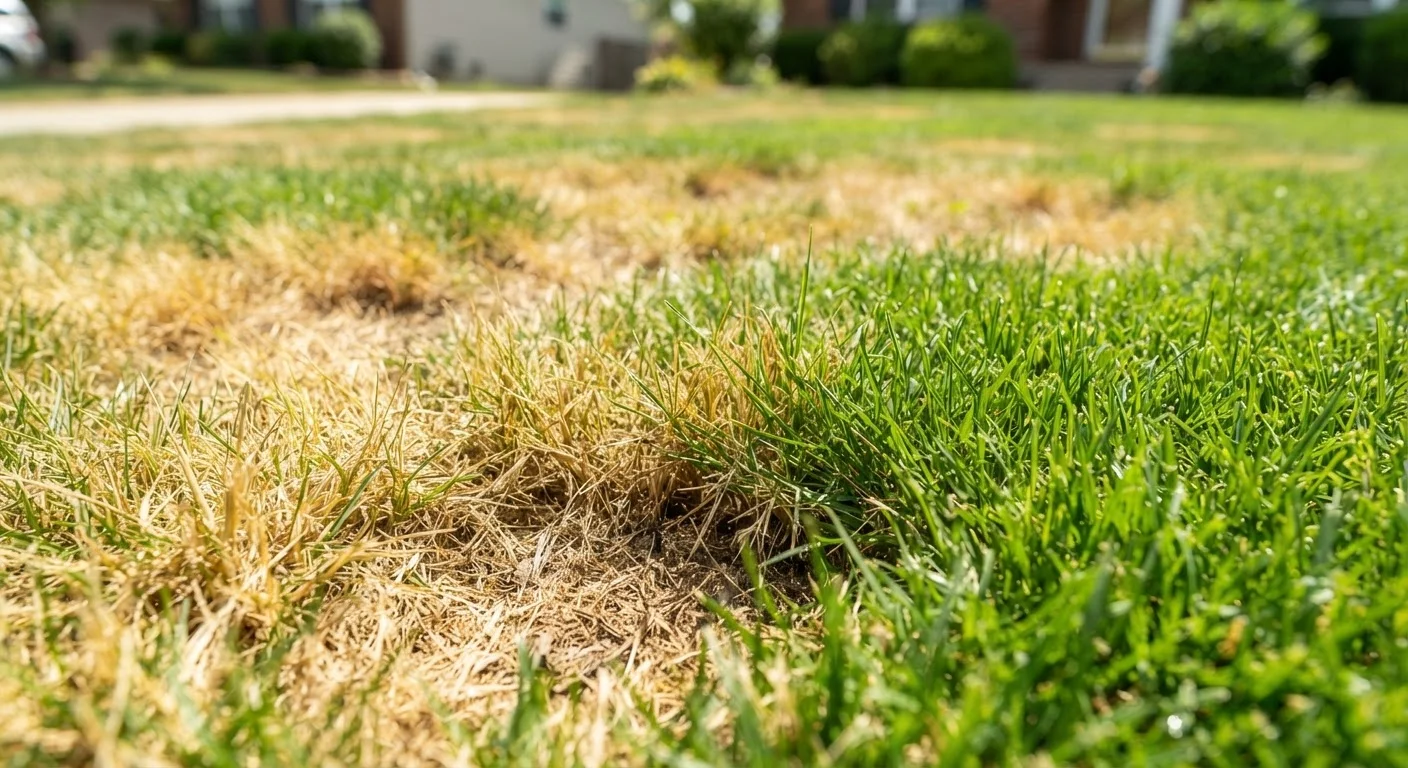
When summer temperatures climb into the 90s and stay there, some grass types respond by going dormant - a self-protective slowdown that causes blades to turn tan or pale yellow. This is most common in cool-season grasses like Kentucky bluegrass, tall fescue, and ryegrass, which thrive in the 60-75°F range. Dormancy is not death. The crown and root system remain alive underground, and grass typically greens up again once temperatures drop or rainfall resumes.
Warm-season grasses - bermudagrass, zoysia, St. Augustine - generally stay green through summer heat but can yellow when nighttime temperatures drop too low or when they're planted outside their appropriate climate zone.
To tell dormancy from damage, tug on a few yellowed blades. If they pull free easily with no resistance, the plant may be dead. If they hold firm at the base, the crown is likely still intact and dormancy is the more probable explanation. See our season-by-season lawn care calendar for guidance on managing your specific grass type through summer stress.
Water Problems: Too Little and Too Much
Drought stress is the most intuitive cause of yellow grass - when soil dries out, roots can't pull enough water to sustain green, actively growing blades. The yellowing typically starts at the tips of blades and spreads downward, and affected areas often feel crunchy underfoot.
But overwatering creates a different problem that looks surprisingly similar. Saturated soil squeezes out the oxygen that grass roots need to function. Roots suffocate, die back, and can no longer absorb nutrients - even if nutrients are present in the soil. Overwatered lawns may also develop a shallow root system that makes grass more vulnerable to heat stress, not less.
Water Deeply, Not Daily
Frequent shallow watering encourages roots to stay near the surface, making grass more vulnerable to heat and drought stress. Watering deeply once or twice a week - enough to wet the soil several inches down - trains roots to grow deeper where soil stays cooler and more consistently moist. Early morning is the best time to water, reducing evaporation and limiting moisture on blades overnight.
The fix for drought stress is deep, infrequent watering rather than frequent shallow sprinkles. Most lawns need around one inch of water per week, ideally applied in one or two sessions. For a deeper look at what actually works, our article on lawn watering myths explains common habits that quietly harm grass health.
Nutrient Deficiency: When the Soil Is Missing Something
A uniform, even yellowing - grass that looks pale all over rather than patchy - is a strong indicator of nitrogen deficiency. Nitrogen is the primary driver of green, leafy growth, and it depletes quickly through regular mowing, rainfall leaching, and the natural breakdown of organic matter in the soil.
Other deficiencies can cause yellowing too. Iron deficiency, for example, produces a characteristic pattern called interveinal chlorosis: the area between leaf veins turns yellow while the veins themselves stay green. This is more common in alkaline soils, where iron becomes chemically unavailable to plant roots even if it's physically present in the ground.
~1 inch
Weekly water most lawns need in summer
University cooperative extension services generally recommend one inch per week as a baseline, adjusted for soil type and local conditions.
½ inch
Maximum healthy thatch layer thickness
Turf scientists generally consider thatch layers thicker than half an inch problematic for root health and water absorption.
60-75°F
Optimal soil temperature for cool-season grasses
Cool-season grass types begin to slow growth and may enter dormancy when soil temperatures consistently exceed this range in summer.
Before applying any fertilizer, it's worth understanding what your lawn actually needs. Our guide on fertilizing a lawn and understanding N-P-K breaks down what each nutrient does and how to read a soil test result.
Disease, Pests, and Compaction: The Less Obvious Culprits
If your yellowing appears in distinct circular rings, irregular blotches, or follows a clear pattern across your lawn, a fungal disease is a likely suspect. Common summer lawn diseases include dollar spot (small tan patches with reddish borders), brown patch (large irregular circles), and pythium blight (greasy-looking patches that collapse quickly). High humidity combined with warm nights creates ideal conditions for fungal spread.
Pest damage - particularly from grubs feeding on roots below the surface - can also cause yellowing patches that feel spongy or lift up like loose carpet when pulled. Grub-damaged turf loses its anchor to the soil because the root system has been eaten away.
Soil compaction and thatch buildup are slower culprits. Compacted soil restricts both water infiltration and root growth, causing large areas of thin, stressed, yellowish turf. A layer of thatch (decomposed plant material) thicker than about half an inch can block water and air from reaching roots, compounding the problem.
If significant areas of your lawn remain struggling after addressing watering and nutrition, it may be worth considering whether turf is the right plant for that space. Our overview of ground covers worth growing instead of struggling grass explores durable, lower-maintenance alternatives for problem areas.
How to Diagnose What's Happening in Your Yard
Rather than guessing, walk your lawn and take note of the pattern. Use these visual clues as a starting framework:
- Uniform pale yellow across the whole lawn: likely nitrogen deficiency or heat dormancy
- Yellow tips only: early drought stress or mowing with a dull blade (which tears rather than cuts cleanly)
- Distinct rings or irregular patches: fungal disease
- Spongy patches that pull up easily: grub damage
- Yellowing near compacted paths, parking areas, or play zones: soil compaction
- Yellow between leaf veins: iron deficiency, often linked to high soil pH
A soil test - available through many cooperative extension offices and garden centers - can confirm nutrient levels and pH, taking much of the guesswork out of the equation. If you eventually want to restore a thin or damaged lawn, overseeding a thin lawn is a practical next step once the underlying cause has been addressed.
Soil Tests Take the Guesswork Out
Many homeowners skip soil testing, but it's one of the most practical tools available. A basic test reveals your soil's pH and nutrient levels, which directly affect how well grass can absorb what's already in the ground. Most land-grant university cooperative extension programs offer soil testing services for a modest fee, and some local garden centers provide test kits as well.