Why Watering Habits Matter More Than You Think
Most homeowners want a healthy lawn and assume more attention - including more water - is always better. But lawn watering is one of the areas where well-meaning habits can quietly work against you. Overwatering, mistimed irrigation, and shallow watering cycles are among the most common causes of stressed, disease-prone, or weed-dominated turf.
The good news: once you understand what grass actually needs from water - and why - the adjustments are straightforward. The myths below are widespread, but correcting them doesn't require special equipment or professional help. For a broader view of how watering fits into your lawn's annual rhythm, see our season-by-season lawn care calendar.
Myth
Watering your lawn at night is fine - it's cooler and less water evaporates.
Fact
Nighttime watering keeps grass blades wet for hours, creating ideal conditions for fungal diseases like brown patch and dollar spot.
Evaporation reduction is real, but it comes at a cost. When grass stays wet overnight - especially in humid climates - fungal spores have the time and moisture they need to establish. Early morning watering (roughly 6-10 a.m.) offers the best of both worlds: lower evaporation rates and enough daylight for blades to dry naturally before temperatures drop again.
Myth
A little water every day keeps grass consistently healthy.
Fact
Daily light watering encourages shallow root systems, making grass more vulnerable to heat, drought, and foot traffic stress.
Grass roots follow moisture. When the top inch of soil is always slightly damp, roots have no incentive to grow deeper where moisture is more stable. Infrequent but deep watering - enough to moisten soil 6 to 8 inches down - trains roots to reach further, building a more resilient lawn. Shallow-rooted grass wilts faster in dry spells and struggles to recover from stress.
Myth
Brown grass in summer means your lawn is dying and needs immediate heavy watering.
Fact
Many grass species go dormant during heat or drought stress, turning brown as a survival mechanism - not as a sign of death.
Dormancy is a normal, protective response. Cool-season grasses like Kentucky bluegrass and tall fescue are particularly prone to summer dormancy. A dormant lawn typically greens up again when temperatures moderate or rainfall returns. Over-irrigating a dormant lawn can actually cause problems - it encourages weed growth and can saturate compacted soil, promoting root disease. If you're unsure whether your grass is dormant or genuinely stressed, a soil moisture check and a tug test (dormant grass resists pulling) can help distinguish the two.
Myth
More water always helps a struggling lawn recover faster.
Fact
Overwatering is one of the leading causes of lawn decline - it suffocates roots, promotes disease, and invites weed pressure.
Grass roots need both water and oxygen. When soil is consistently waterlogged, air pockets are displaced and roots begin to suffocate - a condition called oxygen deprivation or root anoxia. Overwatered lawns often develop thatch problems, attract grubs, and become hospitable to opportunistic weeds. If your lawn looks waterlogged, yellowed, or feels spongy underfoot even without recent rain, cutting back on irrigation is often more helpful than adding more.
Myth
New sod or seed needs the same watering schedule as an established lawn.
Fact
Newly seeded or sodded areas need more frequent, lighter watering to keep the surface moist - a schedule that changes as roots establish.
Establishment is a distinct phase. Grass seed needs the top quarter-inch of soil to stay consistently moist for germination - which may mean light watering once or twice daily depending on heat and wind. Sod needs daily watering for the first one to two weeks while roots knit into the soil below. Once established, both should be gradually transitioned to a deep, infrequent schedule. Treating new grass like mature turf too soon is a common cause of patchy germination and poor sod take. For more on this transition, see our guide on overseeding a thin lawn.
Putting Better Watering Into Practice
Knowing the myths is half the battle. The other half is adjusting your routine in ways that stick. A few practical principles help pull everything together.
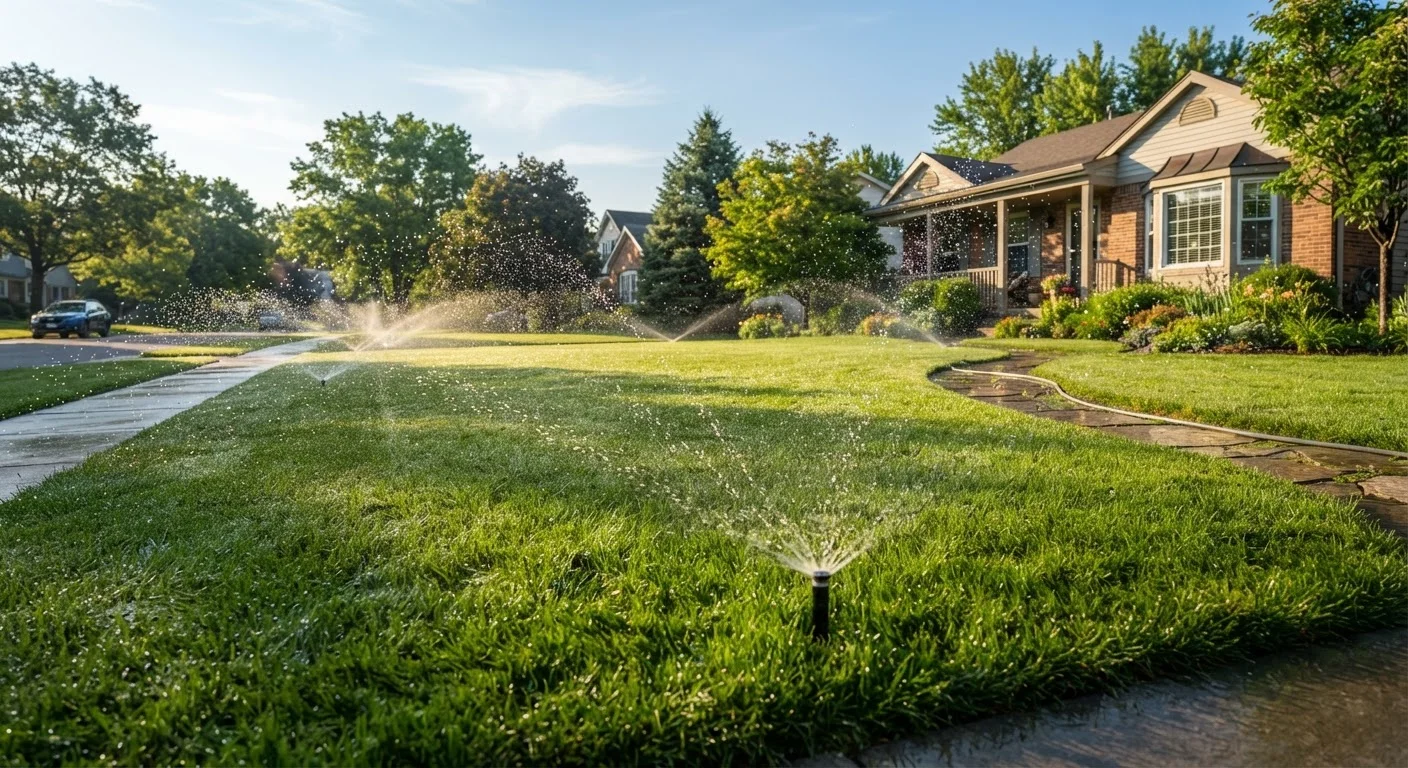
Water deeply, not frequently. Most established lawns benefit from one to one-and-a-half inches of water per week - applied in one or two sessions rather than daily sprinkles. This encourages roots to grow deeper, where soil moisture is more stable.
Use a simple gauge. Place a flat-bottomed container (a tuna can works well) in your sprinkler zone to measure how much water is actually being delivered per session. Most homeowners are surprised by the gap between assumption and reality.
Time your watering for early morning. The window between roughly 6 a.m. and 10 a.m. gives grass time to absorb water before heat accelerates evaporation, while also allowing blades to dry before evening - reducing fungal risk significantly.
Watch for Signs of Overwatering
A lawn that feels spongy, develops a layer of thatch, or shows yellowing despite regular irrigation may be getting too much water rather than too little. Fungus, algae growth near soil level, and an increase in weeds are also common overwatering indicators. Scaling back before adding more water is often the right first step.
Account for rainfall. A rain gauge or a simple weather-tracking app can prevent unnecessary irrigation after wet periods. Automatic irrigation systems with smart controllers or rain sensors can handle this automatically.
If you're weighing irrigation system options, our comparison of drip irrigation vs. sprinkler systems breaks down efficiency and use cases in detail. And if your lawn has struggled despite your watering efforts, yellowing in summer is often a separate issue - see why grass turns yellow in summer for a closer look at common causes.
~50%
Of residential water used outdoors
The U.S. Environmental Protection Agency estimates that roughly half of residential outdoor water use is lost to overwatering, runoff, or evaporation.
1-1.5 in.
Water per week most lawns need
University cooperative extension programs consistently cite one to one-and-a-half inches per week as the general target for established cool- and warm-season grasses.
Mulching your lawn clippings is one more complementary habit worth considering - it helps retain soil moisture between watering sessions. Our guide on mulching techniques and real benefits explains how to do it effectively.