What Mulch Actually Does for Your Soil
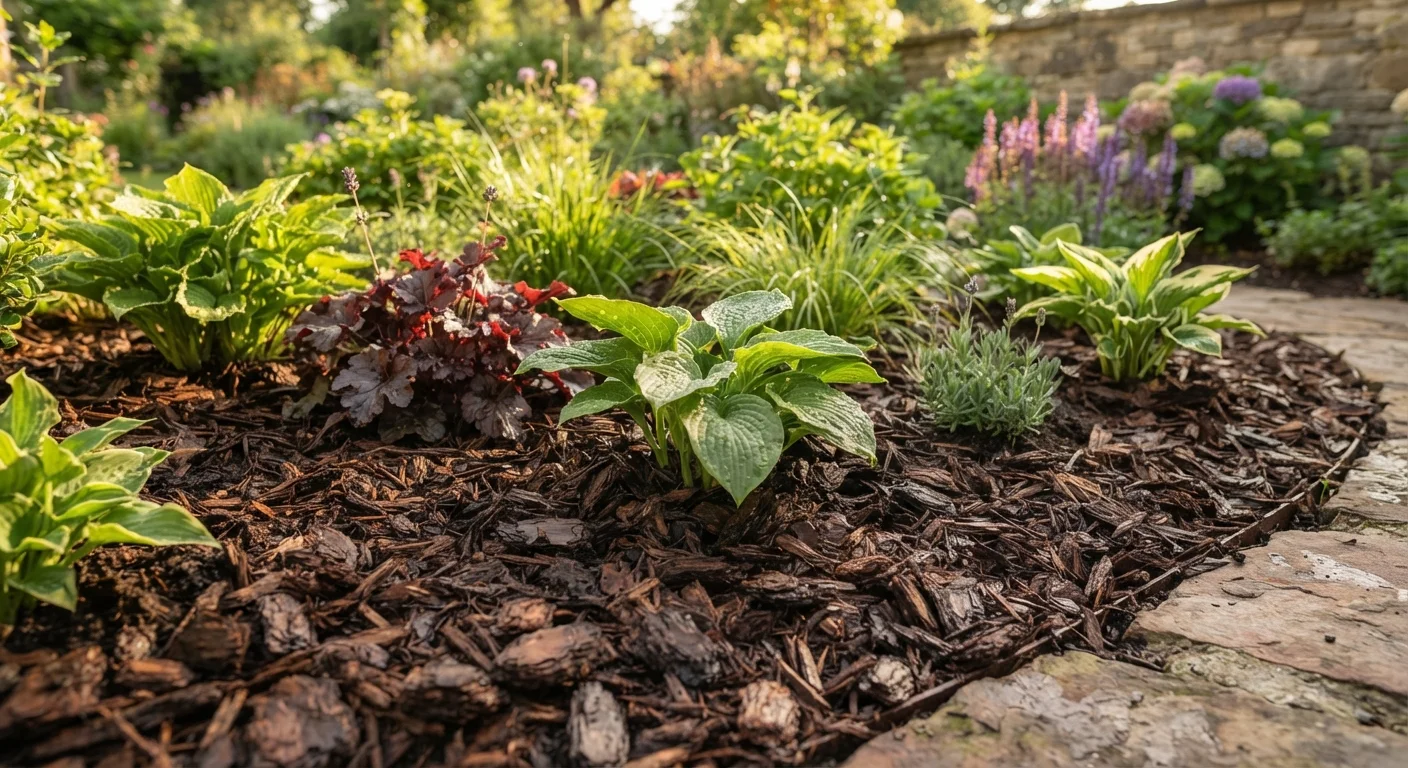
Mulch earns its place in the garden by doing several things at once. Its most immediate benefit is moisture retention. By covering bare soil, mulch slows evaporation so that rain and irrigation water stay in the root zone longer. In hot or dry climates, this can meaningfully reduce how often you water-though mulch doesn't eliminate the need for watering altogether.
Mulch also acts as a thermal buffer, moderating the temperature swings that soil experiences between day and night, and between seasons. In summer, it keeps roots cooler. In winter, it insulates the ground and can prevent repeated freeze-thaw cycles that heave plant roots out of the soil.
Weed suppression is another well-known benefit. A sufficiently thick layer of mulch blocks light from reaching the soil surface, which prevents many weed seeds from germinating. This works best on new weed seeds; it's less effective against established perennial weeds. For a broader look at managing weeds without chemical intervention, see strategies for controlling weeds naturally.
Finally, organic mulches contribute to soil health as they break down. Decomposing wood chips, straw, or leaves feed soil microbes and earthworms, gradually improving the soil's structure and nutrient content. This is a slow process-don't expect quick results-but over several seasons it adds up.
2-3 inches
Optimal mulch depth for most garden beds
University cooperative extension programs consistently recommend this range to balance moisture retention with adequate soil aeration and root health.
25-50%
Potential reduction in soil water evaporation
Research from land-grant university extension programs suggests mulched beds can retain significantly more moisture than bare soil, reducing irrigation frequency in warm seasons.
10°F
Approximate soil temperature moderation in summer
A layer of organic mulch can keep soil measurably cooler during peak summer heat, helping protect shallow root systems from heat stress.
What Mulch Won't Do (Common Misconceptions)
Mulch is often treated as a cure-all, and that leads to disappointment. Here's what it can't reliably do:
- It won't eliminate weeds entirely. Established weeds with deep root systems will push through. Seeds blown in from elsewhere will still germinate on top of the mulch itself if conditions are right.
- It won't fix poor soil on its own. If your garden bed has compacted, nutrient-depleted soil, mulch on top won't reverse that. Soil amendment-through compost or other organic matter worked into the ground-is needed. Pairing mulch with a consistent composting practice is far more effective. Learn more in our guide to composting kitchen and yard waste at home.
- It won't replace irrigation. Mulch reduces water needs but doesn't eliminate them. Plants still need consistent moisture, and how you deliver that water matters. See our breakdown of drip irrigation versus sprinkler systems for more on efficient watering.
- It won't substitute for proper soil pH management. If your plants are struggling due to imbalanced pH, mulch won't correct that. Some organic mulches may shift pH slightly over time, but not reliably enough to treat a problem. Consult our article on soil pH and plant health for targeted guidance.
Refresh Before Adding, Don't Always Replace
If last year's mulch is still in reasonably good condition-not compacted or completely decomposed-you can simply add a fresh layer on top rather than removing and replacing it entirely. This saves time and still delivers the key benefits. Just make sure the total depth doesn't exceed 4 inches once topped up.
How to Apply Mulch Correctly
The right depth is the most critical variable. Aim for 2 to 4 inches of mulch across the bed. Thinner than 2 inches provides minimal benefit; thicker than 4 inches can suffocate roots, prevent water from reaching the soil, and create conditions favorable for rot and pests.
Leave a clear gap-at least 2 to 3 inches-around the base of any plant stem, shrub, or tree trunk. This is where mistakes most commonly happen. Mulch piled against trunks traps moisture against the bark, which can cause fungal decay and invite insects. This practice even has a name in the gardening world: volcano mulching, and it does real damage over time.
Before applying mulch, pull visible weeds and lightly water the bed if the soil is dry. Lay mulch evenly and extend it to the drip line of trees and shrubs if possible-this is the outer edge of the canopy, roughly where roots extend to and where rainfall naturally falls.
Timing matters somewhat. Applying mulch in spring, after the soil has begun to warm, helps lock in that warmth and get the growing season off to a good start. A fall application before the ground freezes provides winter insulation. If you're planning fall garden work, our guide on fall garden cleanup pairs well with this step.
For vegetable gardens specifically, timing mulch application after seedlings are established-rather than immediately at planting-avoids accidentally trapping excess moisture around tender young stems. First-time vegetable gardeners often overlook this; see common first-timer vegetable garden mistakes for related guidance.
Choosing the Right Type of Mulch
No single mulch suits every situation. Here's a practical breakdown:
| Mulch Type | Best For | Notes |
|---|---|---|
| Shredded hardwood / wood chips | Trees, shrubs, perennial beds | Long-lasting; breaks down slowly to feed soil |
| Straw | Vegetable gardens | Light, easy to move; decomposes faster |
| Shredded leaves | Most garden beds | Free if you have trees; excellent soil amendment |
| Pine needles | Acid-loving plants (blueberries, azaleas) | Slow to break down; modestly lowers pH over time |
| Gravel / stone | Drought-tolerant, xeriscape plantings | Permanent; no soil benefit; can reflect heat |
| Landscape fabric | Paths, under inorganic mulch | Doesn't improve soil; can impede water if degraded |
If you're gardening with native plants or low-maintenance ground covers, mulch choices shift accordingly. Native plantings often thrive with locally sourced wood chips, while ground cover plantings may need less mulch coverage once established. Explore your options in our guide to ground covers as lawn alternatives.
“The single most common mulching mistake is simply applying too much of it. A thick, smothering layer does more harm than bare soil in many cases - roots need air and water to reach them, not a sealed cap.”
— Extension Horticulture Specialist, Land-grant university cooperative extension program