How Each System Actually Works
Understanding the mechanics behind each method makes the tradeoffs much clearer.
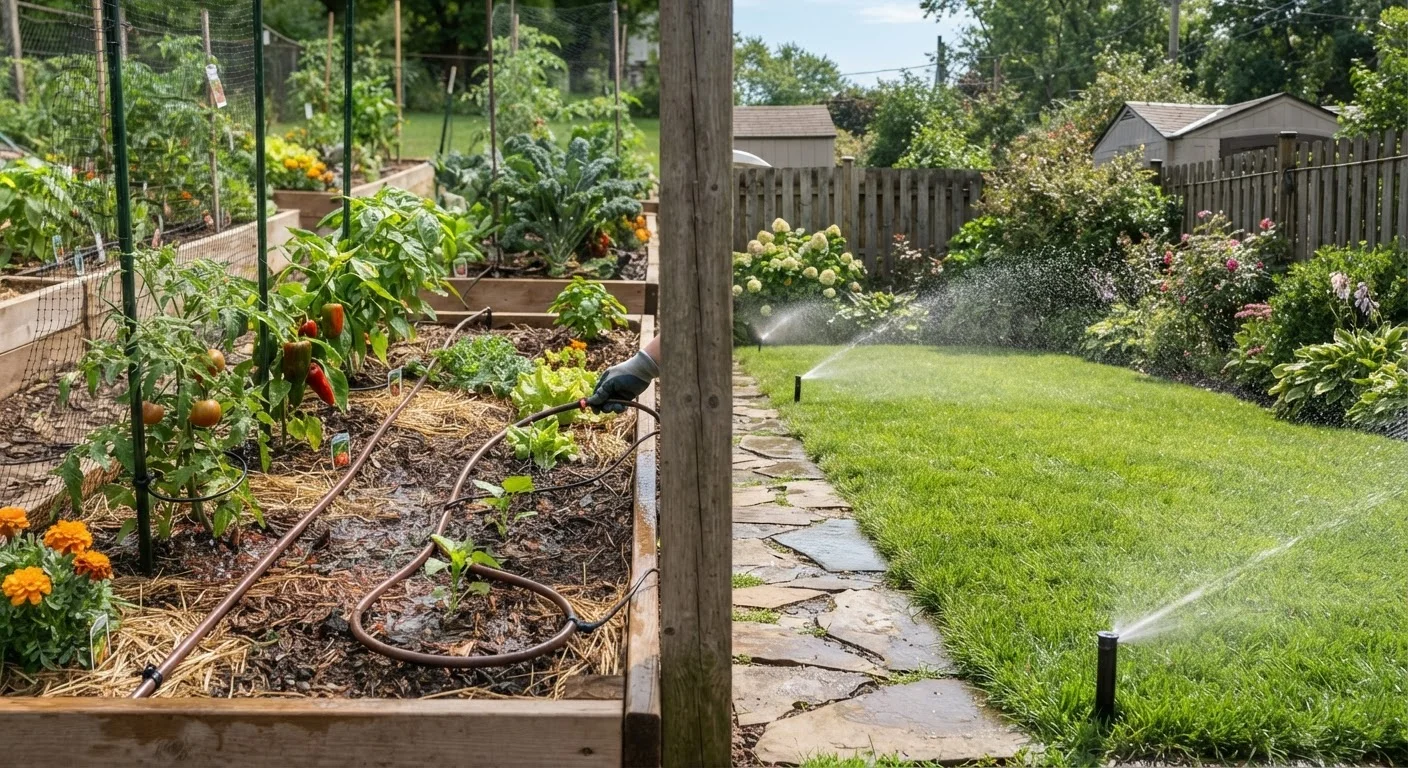
Drip irrigation runs low-pressure tubing along or just beneath the soil surface. Emitters - small fittings inserted into the tubing - release water slowly, typically at rates between 0.5 and 2 gallons per hour, directly at the base of individual plants. Because water goes straight to the root zone with minimal surface exposure, less moisture is lost to evaporation or wind.
Sprinkler systems distribute water through pressurized heads that spray or rotate above ground level. Pop-up heads in lawns, rotary heads in larger areas, and fixed spray heads in tighter spots all work on the same principle: water is projected into the air and falls over a radius ranging from a few feet to over 30 feet. This overhead delivery is efficient for uniform coverage but inherently loses some water before it reaches the soil.
Both systems can connect to a standard outdoor spigot or an in-ground supply line, and both pair easily with programmable timers or smart irrigation controllers. The physical differences in delivery, however, drive nearly every practical distinction between them. For a deeper look at how common watering habits affect plant health, see our guide on lawn watering myths that quietly damage grass.
Water Efficiency: Where Each System Stands
Efficiency is one of the most cited reasons homeowners switch to or choose drip irrigation - but the full picture is more nuanced.
30-50%
Potential water savings with drip vs. sprinklers
The EPA's WaterSense program estimates drip irrigation can use 30-50% less water than conventional sprinkler irrigation for comparable plantings.
~50%
Outdoor water use lost to inefficiency
The EPA estimates roughly half of outdoor residential water use is wasted due to evaporation, wind, and overwatering - inefficiencies drip systems are designed to address.
Drip irrigation is widely regarded by agricultural and water-use researchers as among the most efficient irrigation methods, largely because it reduces the distance water must travel through the air before reaching soil. Evaporation losses - significant with sprinklers, especially in hot or windy conditions - are minimal with drip. Water also stays off plant foliage, which reduces the risk of fungal diseases in susceptible plants like tomatoes, squash, and roses.
Sprinklers, by contrast, lose water to evaporation and wind drift. Running them during early morning hours (before temperatures and wind pick up) is the most effective way to limit those losses. Even with optimal timing, overhead systems are generally less efficient per square foot than drip - but they cover ground much faster, which matters for large lawns where drip tubing would be impractical.
Pairing either system with mulch amplifies water retention significantly. Our article on how to use mulch correctly explains why that layer of organic material matters so much for soil moisture.
Cost and Installation: What to Expect
Neither system is free, and both involve ongoing costs beyond the initial setup.
| Criterion | Drip Irrigation | Sprinkler Systems |
|---|---|---|
| Water delivery method | Root-zone, low-pressure emitters | Overhead spray or rotation |
| Typical efficiency | High - low evaporation loss | Moderate - losses vary with conditions |
| Best plant types | Garden beds, shrubs, vegetables | Lawns, large open areas |
| Installation complexity | Low to moderate (no trenching) | Moderate to high (may require trenching) |
| Upfront cost (small yard) | Generally lower | Generally higher for in-ground systems |
| Maintenance needs | Emitter cleaning; seasonal checks | Head adjustment; winterization |
| Automation compatibility | Yes - timers and smart controllers | Yes - timers and smart controllers |
| Foliage disease risk | Lower - leaves stay dry | Higher with poor timing |
Drip irrigation kits for small garden beds are widely available and relatively affordable. A basic setup covering a modest raised bed or border can come together in an afternoon with simple hand tools - no trenching required. Costs scale, however, as coverage area grows. Managing multiple zones of drip tubing across a large yard adds complexity in terms of both materials and scheduling.
Emitters and tubing should be inspected seasonally, as clogging is a common issue. Inline filters and pressure regulators (which regulate water flow to safe levels for drip systems) help, but emitters may still need cleaning or replacement over time.
In-ground sprinkler systems involve more significant installation costs, especially when professionally installed. Trenching, pipe laying, head placement, and backflow preventer installation typically require permits in many municipalities - check with your local building department before beginning. Once installed, though, a well-designed sprinkler system is largely self-contained and can run for years with seasonal adjustments and head maintenance.
Above-ground sprinkler setups (hose-end oscillating or impact sprinklers) are a lower-cost entry point but require manual repositioning and lack the automation of a zoned system.
Matching the Right System to Your Yard
The honest answer to "which is better" is: it depends on what you're watering.
For vegetable gardens, raised beds, and planting borders, drip irrigation consistently outperforms sprinklers. Plants in these settings benefit from steady, low-volume moisture delivered to the root zone without wetting leaves. If you're growing in raised beds, our comparison of raised beds vs. in-ground planting can help you think through your full garden design alongside your irrigation choice.
For lawns and large open turf areas, sprinklers remain the practical standard. Grass needs overhead water distribution to germinate and establish evenly, and drip tubing in a lawn is neither realistic nor effective.
Many homeowners combine both: drip lines for beds and borders, sprinklers for lawn zones. This hybrid approach lets you tailor water delivery to each part of your yard rather than forcing one system to do everything. Wherever your lawn struggles and bare or patchy areas persist, low-maintenance ground cover alternatives may also reduce your overall irrigation demand.
Local Water Restrictions May Influence Your Choice
Many municipalities impose seasonal watering schedules or restrictions on overhead irrigation during drought conditions. Drip systems are sometimes exempt from these rules because of their efficiency. Before investing in either system, check with your local water utility or municipality to understand any applicable regulations or rebate programs that might apply to efficient irrigation equipment.