The Core Trade-Off: Control vs. Scale
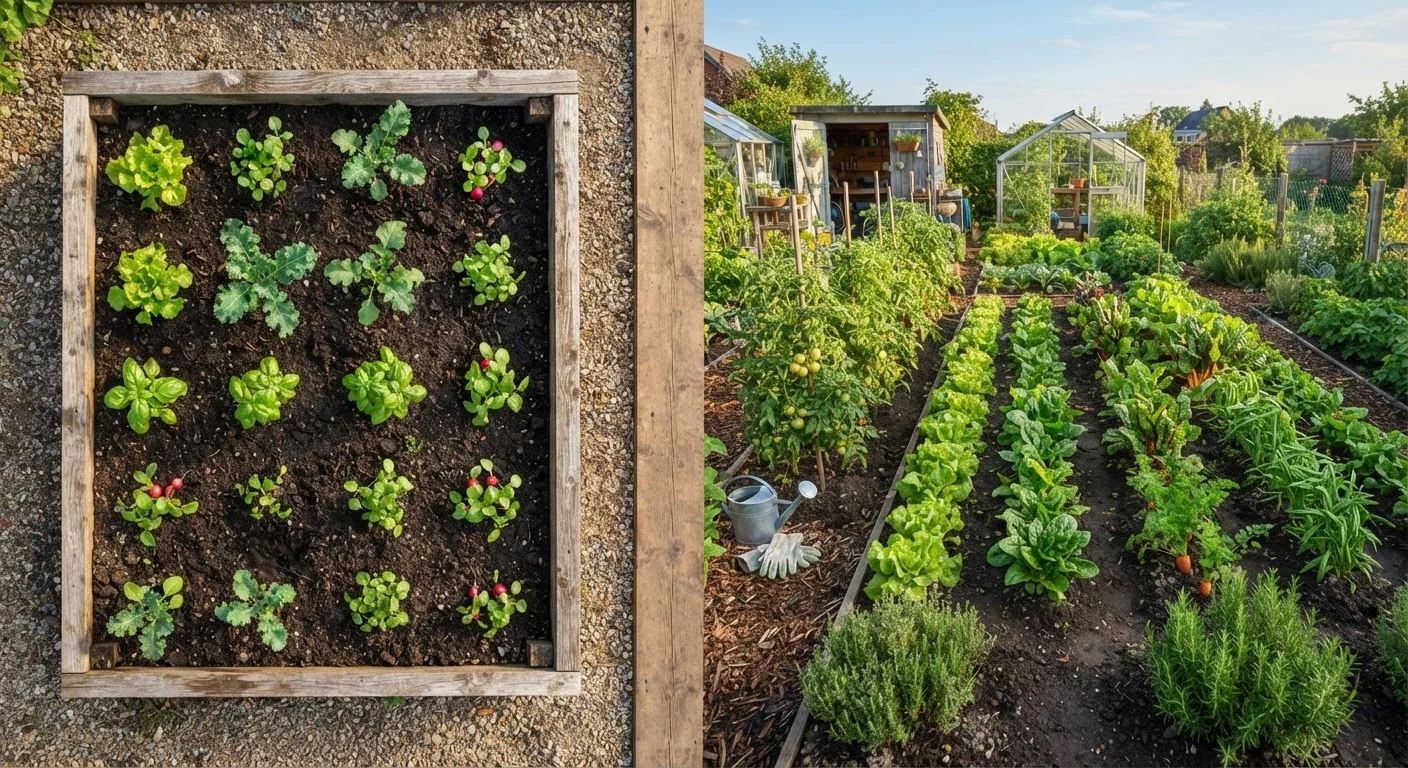
Every gardening decision involves a trade-off between what you can manage and what you can afford - in money, time, and effort. Raised beds and in-ground planting represent two genuinely different philosophies about where that balance should sit.
Raised beds are essentially containers on a larger scale. You build a frame - typically from lumber, stone, or composite material - fill it with a blended growing medium, and plant directly into that mix. Because you're creating the environment from scratch, you control drainage, soil texture, and nutrient content precisely. That control comes at a cost: materials for even a modest 4×8-foot bed can run $100-$300 or more depending on frame material and soil volume needed.
In-ground planting works with what's already there. You prepare existing soil through amendment, tilling, or both, then plant directly into it. The scale ceiling is much higher - you're limited mainly by your property and your energy - and startup costs are far lower. The trade-off is that you're working with your native soil's strengths and weaknesses, which may require patient, ongoing improvement.
Neither approach is universally superior. The right choice depends on your specific yard conditions, physical needs, and goals. Understanding what each system actually demands - and what it delivers - makes that decision much clearer.
Soil: What You're Starting With vs. What You're Building
Soil quality is often the deciding factor. In-ground gardening succeeds when your native soil is loamy, well-draining, and reasonably fertile - conditions that many American yards don't naturally provide. Heavy clay soils compact easily and drain poorly; sandy soils drain too fast and hold few nutrients; rocky or shallow soils limit root depth. Improving native soil takes real effort: repeated amendments with compost, cover cropping, and years of organic matter buildup. It's achievable, but it's a long game.
Raised beds sidestep this entirely. You fill with a mix - typically combining topsoil, compost, and an aerating component like perlite or aged bark - and plants go into ideal conditions from day one. This is particularly valuable in urban settings where soil may be compacted or potentially contaminated from prior land use. If you suspect contamination, a soil test is worth doing before deciding either way; your local cooperative extension office can advise on testing options.
For ongoing soil health in either system, organic matter is your best tool. Mulching correctly helps retain moisture and feeds soil biology over time - a practice that benefits both raised beds and in-ground plots. Soil pH matters too: understanding your soil's pH can explain why plants struggle even in otherwise well-prepared ground.
| Criterion | Raised Beds | In-Ground Planting |
|---|---|---|
| Startup cost | Higher (frame + soil materials) | Lower (mainly labor + amendments) |
| Soil control | Complete - you fill from scratch | Depends on native soil quality |
| Drainage | Excellent; free-draining by design | Variable; depends on site and soil |
| Weed pressure | Low initially; manageable ongoing | Higher; requires consistent effort |
| Scalability | Limited by cost per unit | Easily expanded at low cost |
| Accessibility | High - adjustable working height | Lower - requires bending to ground |
| Root depth | Constrained by bed depth | Unrestricted for deep-rooted crops |
| Spring warmup | Faster - extends planting window | Slower to warm in cold climates |
Drainage, Season Length, and Weed Pressure
Raised beds drain more freely than flat ground, which is a meaningful advantage in wet climates or low-lying yards. Excess water moves through the growing medium and out the open bottom, reducing the waterlogged conditions that rot roots and invite disease. They also warm up faster in spring - elevated soil absorbs heat more quickly than ground-level soil - which can extend your planting window by a week or two in cooler regions.
Weed pressure is another practical difference. A raised bed filled with clean soil starts nearly weed-free, and the confined footprint makes hand-weeding fast and manageable. In-ground gardens open the full soil surface to wind-blown seeds, encroaching grass, and dormant weed seeds already in the ground. With consistent effort - and the right non-chemical weed management strategies - in-ground weed pressure is controllable, but it requires ongoing attention.
Watering strategy matters in both systems. Raised beds dry out faster due to better drainage and air exposure on multiple sides - particularly smaller or wooden-framed beds. If you're considering automated watering, drip irrigation vs. sprinkler systems is worth thinking through before you plant, since each system suits different bed configurations.
6-8 inches
Minimum raised bed depth for most vegetables
Most extension services recommend at least 6 inches of quality growing medium; root crops and tomatoes benefit from 12 inches or more.
4 feet
Recommended max raised bed width
A 4-foot width allows most adults to reach the center from either side without stepping into the bed, preventing soil compaction.
3-5 years
Typical time to significantly improve poor native soil
Soil scientists and extension educators generally note that meaningful structural improvement in compacted or depleted soil takes multiple seasons of consistent amendment.
Cost, Effort, and Long-Term Maintenance
Upfront cost differences are real and worth planning for. A single 4×8-foot raised bed requires lumber or another frame material, hardware, and enough growing medium to fill the volume - which adds up faster than most beginners expect. Scaling to multiple beds multiplies those costs. In-ground gardening's primary cost is labor: soil amendment, bed preparation, and ongoing cultivation. Amendments - compost, aged manure, cover crop seed - cost money over time, but rarely at the same scale as building raised bed infrastructure.
Over a longer horizon, the calculus shifts somewhat. Raised beds, if maintained, preserve their growing medium quality more easily because there's no foot traffic compaction and the contained environment is easier to refresh each season. In-ground beds require consistent soil care but avoid the eventual need to replace or repair frame materials.
If you're new to vegetable gardening, starting with one or two raised beds gives you a controlled learning environment before scaling up. Common first-timer mistakes in vegetable gardening apply to both systems, but they're often easier to manage in a smaller, well-defined space.