Why First-Year Gardens Struggle
Starting a vegetable garden feels straightforward - put seeds in the ground, water them, and wait. But experienced gardeners know the process involves more judgment than it first appears, and the most common mistakes aren't obvious until something goes wrong. The good news is that most first-year failures trace back to a handful of predictable errors, all of which are preventable with a little upfront knowledge.
This guide walks through the missteps that trip up new vegetable gardeners most often - not to discourage, but to help you sidestep a season of frustration and actually enjoy your harvest. Whether you're working with a raised bed, a container setup, or an in-ground plot, the same core principles apply.
~35%
First-year gardens that underperform due to soil issues
Horticultural educators commonly cite poor soil preparation as the leading cause of disappointing first-year vegetable gardens.
6-8 hrs
Daily direct sunlight most vegetables require
Most fruiting vegetables - tomatoes, peppers, cucumbers - need a minimum of six to eight hours of direct sun to produce reliably.
1 inch
Typical weekly water need for vegetable gardens
Most vegetable crops require roughly one inch of water per week from rain or irrigation, though this varies by soil type and temperature.
The Most Common Mistakes - and How to Avoid Them
The errors below show up repeatedly in first-year gardens across every climate and region. Understanding why they happen makes them much easier to prevent.
Planting too many varieties at once, turning the first garden into an unmanageable experiment.
Why it happens: Enthusiasm and seed catalog browsing lead new gardeners to over-commit before they understand how much space and attention each crop actually needs.
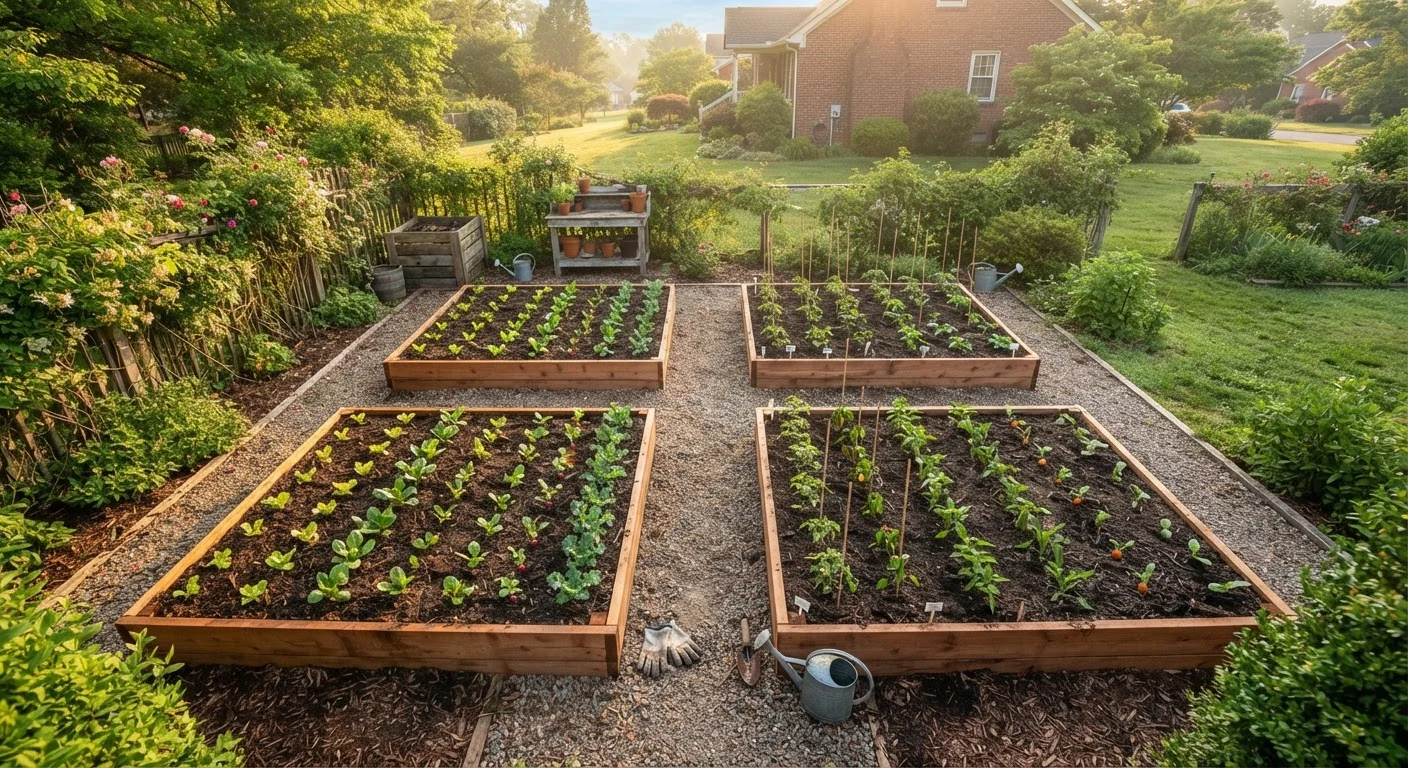
Ignoring plant spacing requirements and crowding vegetables too close together.
Why it happens: Seedlings look tiny when transplanted, so the recommended spacing on seed packets seems excessive. Gardeners often assume plants can adapt.
Watering shallowly and frequently instead of deeply and less often.
Why it happens: A quick daily sprinkle feels attentive, but it only moistens the top inch of soil, encouraging roots to stay near the surface where they're vulnerable to heat and drought.
Starting with poor or unamended soil and expecting vegetables to thrive anyway.
Why it happens: Beginners often focus on seeds and sunlight while underestimating how much soil quality drives plant health. Bare ground that grew grass doesn't automatically support vegetables.
Planting at the wrong time of year - either too early or too late for the local climate.
Why it happens: Gardeners follow general advice without adjusting for their specific region, or they rush planting in early spring because warm days feel encouraging.
Neglecting consistent observation and assuming the garden can run itself.
Why it happens: Life gets busy, and once plants are in the ground, it's easy to assume they'll progress without daily attention. Problems like pests, disease, or moisture stress go unnoticed until they're serious.
Building good gardening instincts is a lot like building any home skill - the learning curve flattens quickly once you understand the fundamentals. If you're new to home projects in general, the primer for new homeowners offers a useful parallel mindset for approaching hands-on projects with realistic expectations.
Know Your Last Frost Date
Planting warm-season vegetables like tomatoes, peppers, or squash before your area's last expected frost date can kill seedlings overnight. Look up your USDA Hardiness Zone and local frost date through your county extension service before putting anything in the ground. This single step prevents one of the most heartbreaking and avoidable losses in a first-year garden.
Setting Your Garden Up for Long-Term Success
Beyond avoiding the mistakes above, a few proactive habits significantly improve your odds of a productive season.
Don't Skip a Soil Test
Gardening on untested soil is one of the most common reasons vegetables underperform despite regular watering and fertilizing. A basic soil test - available through most county extension offices - tells you your soil's pH and nutrient levels so you can amend accurately rather than guessing. Without this information, you may be adding fertilizer your soil doesn't need or missing deficiencies that explain stunted growth.
Use mulch strategically. A two-to-three inch layer of organic mulch - straw, shredded leaves, or wood chips - around your plants conserves moisture, regulates soil temperature, and suppresses weeds. It does real work, but only when applied correctly. Our guide to mulching explains the techniques that actually matter.
Keep records. Even a simple notebook with planting dates, varieties, and observations creates a reference that makes your second year dramatically easier. Note what thrived, what struggled, and what you'd plant differently - that information is more valuable than any gardening book.
Vegetable gardening rewards patience and observation over perfection. Expect some setbacks, stay curious when plants behave unexpectedly, and treat the first season as a productive learning experience rather than a performance. Most gardeners who stick with it find that each year gets noticeably easier as the soil improves and their instincts sharpen.