What Is Soil pH, Exactly?
Soil pH is a measure of how acidic or alkaline your soil is, expressed on a scale from 0 to 14. A reading of 7.0 is neutral. Numbers below 7.0 indicate acidic soil; numbers above 7.0 indicate alkaline (also called basic) soil. Most garden soils fall somewhere between 4.5 and 8.5, though ideal ranges vary by plant type.
The pH scale is logarithmic, which means a soil with a pH of 5.0 is ten times more acidic than one at 6.0 - not just a little more. That's why small differences on the scale can have big effects on your plants.
Soil pH
A numerical measure of how acidic or alkaline your soil is, on a scale of 0-14. It directly affects which nutrients plants can absorb from the soil.
Acidic soil
Soil with a pH below 7.0. Common in high-rainfall and forested regions, acidic soil can make some nutrients toxic and lock away others.
Alkaline soil
Soil with a pH above 7.0. Often found in arid regions or areas with limestone geology, alkaline soil limits the availability of iron, zinc, and other micronutrients.
Chlorosis
A condition where plant leaves turn yellow because they cannot access enough iron or other nutrients, often caused by pH being too high or too low.
Lime
A ground limestone product added to acidic soil to raise pH. It works slowly over months and also supplies calcium (and magnesium in dolomitic lime).
Elemental sulfur
An amendment used to lower soil pH in alkaline conditions. Soil bacteria convert it to a mild acid over time, gradually making the soil more acidic.
Your region's geology, rainfall patterns, and the organic matter in your soil all influence natural pH. Heavily forested areas and high-rainfall regions tend toward more acidic soils, while arid or heavily irrigated areas often trend alkaline.
Why pH Affects Plant Health
Soil pH doesn't directly feed plants - but it controls whether the nutrients in your soil are chemically available for roots to absorb. Think of it as a lock on a door: nutrients like nitrogen, phosphorus, iron, and manganese may be physically present in the soil, but if the pH is too high or too low, the lock won't open and plants can't access them.
When soil is too acidic (below about 5.5), aluminum and manganese can reach toxic concentrations, and phosphorus becomes locked away. When soil is too alkaline (above about 7.5), iron and zinc become unavailable, which often causes yellowing leaves - a condition called chlorosis.
Fix pH Before Adding Fertilizer
If your plants look nutrient-deficient - pale leaves, stunted growth, poor fruiting - test your soil pH before reaching for fertilizer. Adding more nutrients to soil with the wrong pH often produces little benefit and can sometimes make conditions worse. Correcting pH first allows the nutrients already in your soil to become accessible again.
This is why feeding struggling plants more fertilizer doesn't always help. If the pH is wrong, you can pour nutrients into soil all season and your plants will still be unable to use them. Fixing pH first is almost always the smarter move. See our guide to understanding fertilizer N-P-K numbers to learn how nutrients and soil conditions work together.
How to Test Your Soil pH
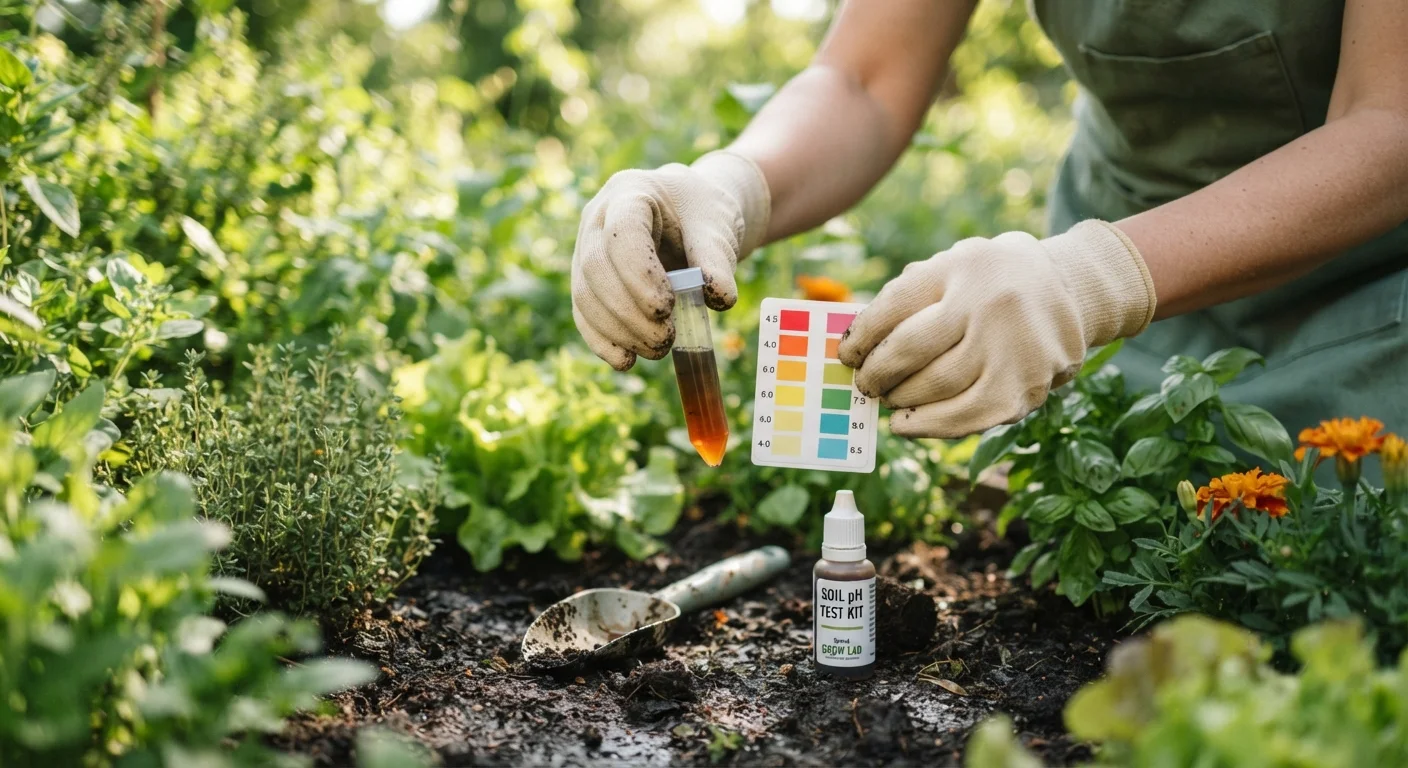
Testing your soil is the essential first step before making any adjustments. Guessing and amending blindly can make problems worse. You have a few practical options:
- Home test kits: Liquid drop kits and paper pH strips are widely available and inexpensive. They're useful for quick checks, though accuracy can vary.
- Digital pH meters: Probe-style meters inserted directly into moist soil give a fast reading. Results can vary by brand and calibration; rinse and dry probes between uses.
- Cooperative extension lab tests: Your state's cooperative extension service offers soil testing - often for a modest fee - that returns detailed pH readings along with nutrient levels and amendment recommendations. This is the most reliable option, especially before a major planting project.
To get a representative sample, collect small amounts of soil from several spots in your garden bed (avoiding recent amendment zones), mix them together, and test that combined sample. A single scoop from one corner won't tell the full story.
Adjusting pH: Raising and Lowering It
Once you know your pH, you can make targeted changes - but do so gradually. Dramatic swings can harm soil biology and stressed plants alike.
Raising pH (Making Soil Less Acidic)
Garden lime - typically ground limestone - is the standard amendment for acidic soil. Calcitic lime adds calcium; dolomitic lime adds both calcium and magnesium. Your soil test results can help indicate which type is more appropriate. Work lime into the top several inches of soil in fall where possible, as it acts slowly over months.
Lowering pH (Making Soil Less Alkaline)
Elemental sulfur is commonly used to acidify alkaline soil. Soil bacteria convert it into sulfuric acid over time, a process that works faster in warm, moist conditions. Organic matter like pine needle mulch or composted leaves can gradually contribute mild acidity as well. See our guide to mulching for more on how organic materials affect soil over time.
Don't Over-Amend Without Retesting
Applying too much lime or sulfur in a single season can push pH past the target range and create new problems. Always follow amendment rate guidelines based on your soil test results, apply in stages if needed, and retest before adding more. Soil chemistry changes slowly - give adjustments time to work.
Retest your soil two to three months after applying any amendment before adding more. Patience is essential - over-correcting pH is a common and easily avoided mistake.
Matching Plants to Your Soil
Sometimes the most practical approach isn't changing your soil - it's choosing plants that suit what you already have. Blueberries, azaleas, and rhododendrons thrive in acidic conditions that would stress other plants. Lavender, clematis, and many ornamental grasses tolerate more alkaline soil well.
If your lawn is struggling and pH is part of the problem, it may be worth considering whether low-maintenance ground covers might suit your conditions better than continually fighting your soil chemistry.
For gardeners drawn to raised beds, there's a meaningful advantage: you fill them with a custom soil mix, giving you more starting control over pH from day one. Our article on raised beds vs. in-ground planting walks through that trade-off in depth.
Whether you amend your soil or work with it, understanding pH transforms troubleshooting from guesswork into informed action. A single test can explain months of mysterious plant problems - and point you toward a real solution.